Shanghai Ocean University is offering PhD scholarships for the majors of Aquaculture, Hydrobiology, Fishery Economics and Management, Fishery Resources Management and Fishery Environment Protection and Management. The scholarship program is open to international candidates under 35 years old who have a master’s degree with a good academic record and outstanding research potential. The scholarships include a full tuition fee waiver, accommodation, living allowance and medical insurance. Applicants are highly recommended to submit the application before March 30, 2022. The final application deadline is April 15, 2022.
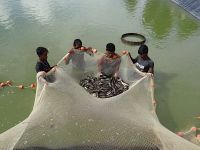
Exploration of canal resources as a potential source for fish production in the Indian Sundarbans; Expansion of new host range of isopod Tachaea spongillicola infestation to fish species could pose a risk to aquaculture food industry in southeast Asian countries; Aspects of air-breathing fish farming practiced at Mathurapur-II Block, West Bengal, India; Magical role of live foods in boosting spawn survival of climbing perch: A success in the farmer’s field; NACA Newsletter.
7 March 2022D.N. Chattopadhyay, S. Adhikari, B.N. Paul, R.N. Mandal, G.S. Saha, B.R. Pillai and S.K. Swain | 1809 Downloads | .pdf | 3.81 MB
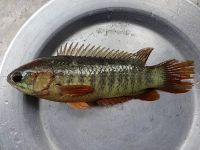
Climbing perch inhabit water bodies ranging from fresh to brackish waters across a wide range of environments, and are widely distributed throughout south and southeast Asia through to southern China. In India it is prized both as a foodfish and as a traditional medicinal food. This article describes the induced breeding of climbing perch and the interaction of scientists and farmers to improve survival of larvae and fry in through the use of live feeds (rotifer) in small-scale hatcheries in India.
7 March 2022Subrato Ghosh and Pulakesh Purkait | 2172 Downloads | .pdf | 4.95 MB
Climbing perch Anabas testudineus is a high-priced fish, nutritious and economically profitable for small- to medium-scale fish farmers, who can obtain fry from local paddy fields and low-lying inundated areas in late summer, monsoon and post-monsoon periods. Climbing perch is a facultative air-breathing fish that is able to move between water bodies by undertaking short migrations overland. This article describes techniques for climbing perch and major carp aquaculture, including use of biofloc systems, preparation of live feeds including mealworms, and some concerns regarding the hybridisation of native Indian strain of A. testudineus with an imported Vietnamese strain.
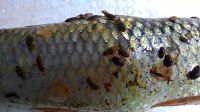
Our article in the journal Aquaculture highlighted the first record of the isopod Tachaea spongillicola infesting wild fish species of aquaculture importance, particularly of carps. T. spongillicola was first recorded in freshwater sponges, 114 years ago and later recorded infesting freshwater prawns. Our recent study has further recorded infestation of this isopod in wild fish species. The expansion of host range from freshwater sponges to freshwater prawns and now to freshwater fish could pose a risk to aquatic industries in the years to come. We hypothesise that climate change could be a major factor contributing towards the expansion of the host range of parasites.