The goal of this project was to optimise the economic yield from mixed shrimp aquaculture-mangrove forestry farming systems in Ca Mau Province, Vietnam, in a sustainable manner. Specific objectives were to investigate factors controlling the yields of shrimp and wood from shrimp farming-mangrove systems, experiment with shrimp pond and mangrove forest management to evaluate different culture options, identify improved practices and assist government to transfer the results of the project to the wider coastal farming community.
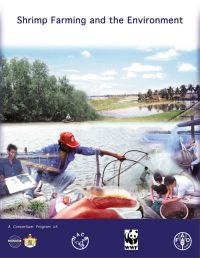
This article describes the international Consortium Programme on Shrimp Farming and the Environment, which was formed based on the recommendations of the World Bank review on shrimp aquaculture and the environment (1998), a 1999 NACA/WWF meeting in Bangkok, Thailand on shrimp management practices, and an FAO Bangkok technical consultation on policies for sustainable shrimp aquaculture (12/1997). The article was prepared for publication in InterCoast Issue #39, Cross Portfolio Learning for Enhancing Integrated Coastal Management.
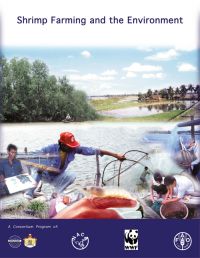
This collection of publications originates from the International Consortium Program on Shrimp Farming and the Environment, which was implemented by the World Bank, the Network of Aquaculture Centres in Asia-Pacific (NACA), the World Wildlife Fund (WWF), the Food and Agriculture Organization of the United Nations (FAO), and the United Nations Environment Programme (UNEP). The consortium supported 35 complementary case studies prepared by more than 100 researchers in more than 20 shrimp farming countries.
The Manual of Procedures for the Implementation of the Asia Regional Technical Guidelines on Health Management for the Responsible Movement of Live Aquatic Animals provides background material and detailed technical procedures to assist countries and territories in the Asia Region in implementing the Asia Regional Technical Guidelines on Health Management for the Responsible Movement of Live Aquatic Animals. The Technical Guidelines were initiated due to increased recognition that disease emergence is often linked to live aquatic animal movements.
The Asia Regional Technical Guidelines on Health Management for the Responsible Movement of Live Aquatic Animals and their associated implementation plan, the Beijing Consensus and Implementation Strategy provide expert guidance for national and regional efforts in reducing the risks of disease due to trans-boundary movement of live aquatic animals. The Technical Guidelines were initiated due to increased recognition that disease emergence is often linked to live aquatic animal movements and causes significant socio-economic losses.