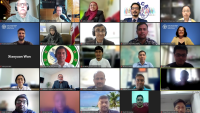
On 28-29 November FAO and NACA collaborated on a virtual workshop to develop a regional strategy for aquatic organism health, using a progressive management pathway for improving aquaculture biosecurity. The workshop was held under the auspices of the project “Responsible use of fisheries and aquaculture resources for sustainable development component 3: Biosecurity and health management”. The workshop involved 31 experts from 16 countries, including national focal points, FAO and NACA. The objectives of the workshop were to: Present and analyse country responses to a self-assessment survey on biosecurity and health management capacity and performance; to provide guuidance to country participants on conducting a SWOT analysis; and to prepare a detailed plan for Phase II of the initiative.
With the implementation of the new aquatic animal disease reporting in the Asia Pacific region from January 2021, and in lieu of the published QAAD Reports (last issue published was 4th quarter of 2020), NACA is publishing reported aquatic animal diseases submitted by countries in the Asia-Pacific region. This report covers the second quarter of 2022 and the original and updated reports can be accessed at the QAAD page.
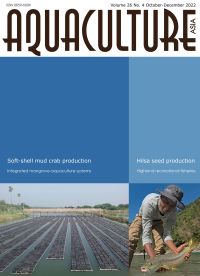
In this issue:
Sustainable livelihood model for coastal families through seabass fingerling production: A success story; A pilot of integrated mangrove-aquaculture as a nature-based solution to mitigate climate change in West Bengal, India; Recreational fisheries in Uttarakhand; Soft-shell mud crab production for export in Purba Medinipur, West Bengal, India; Conducting artificial fertilisation, hatching and spawn development of Indian shad, Tenualosa ilisha: Pathfinding hilsa domestication; NACA Newsletter.
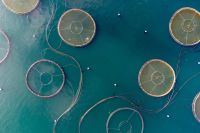
Ocean University of China and partners will convene the forum from 20 to 22 November 2022. The forum will cover the following: Topic 1: International talent cultivation and training;Topic 2: Science and technology innovation; Topic 3: Industrial synergy. The forum will host discussions about the implementation of the “Blue Transformation” strategy, further expansion of the space for fisheries and aquaculture, and ways of improving the production capacity of aquatic products, with the purpose of facilitating the achievement of the UN Sustainable Development Goals. Participation is free but registration is required. Registration closes on 22 October.
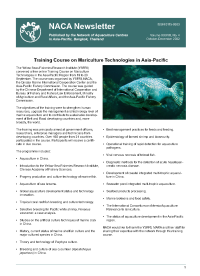
In this issue:
Training Course on Mariculture Technologies in Asia-Pacific; FAO/NACA Virtual Workshop on Aquaculture Transformation in Asia and the Pacific Region; Belt & Road Forum for International Freshwater Fishery Industry Innovation; 8th Global Conference on Gender in Aquaculture and Fisheries, 21-23 November; Reported Aquatic Animal Diseases in the Asia-Pacific Region during the First Quarter of 2022; International Training Course on Biology and Pathology of the Penaeid Shrimp 2022; Angkasa Putra inaugurated as first President of the South-East Asian Fisheries and Aquaculture Student Association; Artemia webinars: Video recordings of technical presentations available.