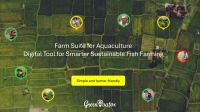
Farm Suite by Greenovator is a digital farm management tool tailored for aquaculture in Myanmar. The platform helps farms and agribusinesses streamline planning and daily operations by tracking activities, inputs, and yields through a real-time, business-grade dashboard. Recognised as a top-3 innovation in the Grow Asia Challenge, Farm Suite provides an affordable, professional alternative to manual record-keeping. With its mobile app interface, it delivers actionable insights that empower aquaculture managers to boost productivity and sustainability. This pitch was presented by Yin Yin Phyu.
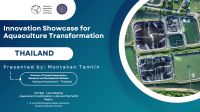
This video by Montakan Tamtin, Department of Fisheries, features two presentations from Thailand’s delegation to the 3rd High-Level Meeting on Aquaculture Transformation in Asia and the Pacific Region. The first showcases innovation and nature-based solutions in aquaculture via the IDRC-funded AQUADAPT Project; the second presents Thailand’s pilot initiative for low-carbon shrimp farming under an FAO Technical Cooperation Programme.
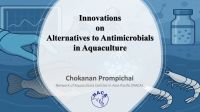
This video by Chokanan Prompichai, NACA, presents two promising innovations aimed at reducing antimicrobial use (AMU) in aquaculture, showcased as part of Thailand’s National Innovation and Investment Plan (NIIP) and via the IDRC-funded InnoVet-AMR 2.0 Project. NanoVac, developed by AIT, uses nanobubbles to deliver vaccines to tilapia, while ShrimpGuard, developed by BIOTEC and KU, is a bacteriophage-based solution for managing shrimp diseases. Both technologies offer potential to combat antimicrobial resistance (AMR) without leaving chemical residues. The presentation compares their readiness, challenges, and adoption, incorporating feedback from shrimp farmers across Thailand. It highlights the need for cost-effective, easy-to-use solutions that align with farmers' real-world needs and regulatory frameworks.
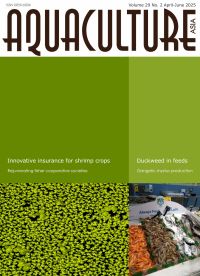
In this issue:
- From risk to resilience: Innovative crop insurance solutions for securing shrimp aquaculture in India
- Efforts to rejuvenate primary fisher cooperative societies in South 24 Parganas District, West Bengal
- Captive production of Gangetic mystus (Mystus cavasius): A guide for farmers
- Shrimp farm biosecurity in Saudi Arabia: A journey from past practices to future vision
- Wolffia globosa (duckweed) in aquafeeds for profitability and eco-friendly sustainable aquaculture
- NACA Newsletter
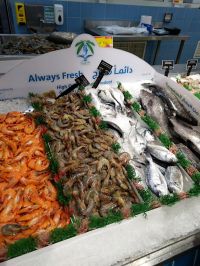
Shrimp aquaculture in Saudi Arabia has evolved significantly since its inception in the 1990s, transitioning from freshwater tilapia farming to large-scale marine shrimp production, primarily focused on Penaeus vannamei. This shift was driven by market demand, environmental suitability, and the impact of disease outbreaks such as white spot syndrome. However, early development faced major biosecurity challenges, including inadequate regulation, limited local hatchery capacity, insufficient disease monitoring, and a lack of trained personnel.
In recent years, the Ministry of Environment, Water & Agriculture (MEWA) has undertaken a comprehensive reform of shrimp farm biosecurity, aligned with the country’s Vision 2030 objectives. This includes regulatory controls on live shrimp imports, development of disease monitoring infrastructure, biosecurity training, and enhanced collaboration with private sector and academic institutions. MEWA has also promoted technology transfer, workforce development, and sustainable hatchery expansion. While progress is evident, future priorities include improving local broodstock availability, expanding real-time disease diagnostics, and strengthening biosecurity human resource capacity to ensure long-term industry stability and resilience.