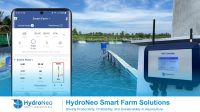
In this presentation, Fabian Reusch, founder of HydroNeo, shares the story of how HydroNeo began and the lessons learned along the way of building a tech startup in Thailand. Aimed at fellow aquaculture entrepreneurs and startup founders, his talk is an open and honest reflection on the realities of the journey — not a polished, glamorous pitch that only highlights the wins, but a candid look at both successes and setbacks, the difficult decisions, and the ongoing challenges that shape the real path of building a company.
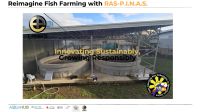
This presentation by Elisa Claire Sy of E-Primate, showcases how RAS-P.I.N.A.S - a closed-loop, water-efficient technology - enables high-density, land-based fish farming using biofiltration, aeration, and mechanical treatment strategies. Discover how RAS conserves water and land, minimises disease risk, and offers flexibility in farm siting, while recognising the trade-offs of energy demands and infrastructure costs. Learn why RAS is gaining momentum as a key innovation in Asia's sustainable aquaculture future.
This video by Chokanan Prompichai, NACA, presents two promising innovations aimed at reducing antimicrobial use (AMU) in aquaculture, showcased as part of Thailand’s National Innovation and Investment Plan (NIIP) and via the IDRC-funded InnoVet-AMR 2.0 Project. NanoVac, developed by AIT, uses nanobubbles to deliver vaccines to tilapia, while ShrimpGuard, developed by BIOTEC and KU, is a bacteriophage-based solution for managing shrimp diseases. Both technologies offer potential to combat antimicrobial resistance (AMR) without leaving chemical residues. The presentation compares their readiness, challenges, and adoption, incorporating feedback from shrimp farmers across Thailand. It highlights the need for cost-effective, easy-to-use solutions that align with farmers' real-world needs and regulatory frameworks.
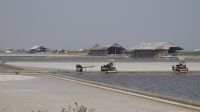
Salinity is a growing global challenge, affecting soil productivity, freshwater availability, and aquatic ecosystems. Inland saline aquaculture presents a sustainable opportunity to utilise salt-affected water resources for food production. This article examines the prospects and challenges of aquaculture in inland saline environments, focusing on soil and water characteristics, species tolerance, and mitigation strategies. It highlights the potential of using brackish groundwater for aquaculture, reducing pressure on freshwater supplies while making use of degraded lands. The study also discusses the physiological adaptations of fish to salinity stress, the role of key ions in aquaculture success, and the integration of saline aquaculture with traditional farming systems. Inland saline aquaculture could play a critical role in enhancing food security, optimising water resource use, and mitigating environmental degradation in semi-arid and arid regions.
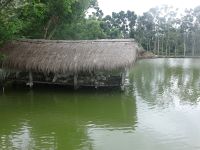
Small and medium-scale aquaculture in West Bengal has evolved to incorporate cost-effective, sustainable practices that reduce input costs while maintaining productivity. This article explores various low-cost aquaculture techniques used by rural fish farmers, emphasising farm-made feed formulations, pond fertilisation methods, and integrated farming systems. Farmers utilise non-conventional feed additives to enhance fish health and growth while reducing reliance on expensive commercial products. Fermented feed supplements and probiotic formulations have been successfully implemented to improve water quality and plankton production. Integrated fish farming, incorporating compost manure, vermicomposting, and polyculture with species like giant freshwater prawn, has increased productivity and economic returns.