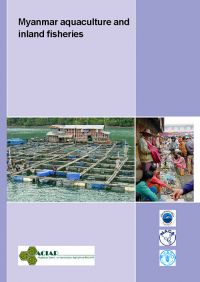
Fish and fish products are crucial in the nutrition and livelihoods of the Myanmar people. However, little information is available on their patterns of consumption, inter-regional differences, availability and types of fish consumed. This report is the outcome of two concurrent missions, one to coastal areas and one to inland areas. The report includes the findings of the missions as well as conclusions and recommendations in support of the long-term sustainability of fishery resources in Myanmar.
This report, the 39th in the series, contains information about the aquatic animal health status of fifteen states in the Asia-Pacific region. The foreword discusses the 7th Symposium on Diseases in Asian Aquaculture.
This report, the 38th in the series, contains information about the aquatic animal health status of seventeen states in the Asia-Pacific region. The foreword discusses the OIE/NACA Regional Workshop on Aquatic Animal Health.
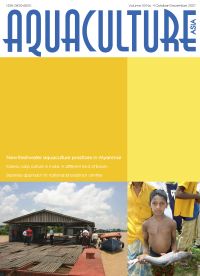
In this issue:
A different form of dumping: The need for a precautionary approach for yet another new species for shrimp farming in Asia. Sustainable livelihoods of pangus farming in Bangladesh. Business approach to national broodstock centres in Vietnam. Freshwater aquaculture in Myanmar. Traditional carp culture in Central Europe. Egg and larval quality in sand bass Psammoperca weigiensis. Effect of protein and lipid level of growth performance of tiger grouper Epinephelus fuscoguttatus.
This final report of the project “Strengthening Aquatic Animal Health Capacity and Biosecurity in ASEAN” contains two parts: A. Recommended Minimum Operational Requirements for Implementing National Aquatic Animal Health Strategies within ASEAN and B. ASEAN progress in the implementation of National Aquatic Animal Health Strategies. The report provides guidance for countries in ASEAN to implement key elements of national aquatic animal health strategies, and for monitoring progress of national strategy implementation in ASEAN member countries.