Culture-based fisheries exchanges between Lao PDR and Cambodia. Culprit behind massive shrimp die-offs in Asia unmasked. Presentations from the final technical consultation on EMS/AHPNS of shrimp available for download. Aquaculture certification workshop held in Viet Nam. Aquaculture in a genetic plunge towards extinction? NACA implements World Bank training program on Good Aquaculture Practices. Study tour on aquaculture and wetland management for delegation from Assam, India. Koh Yao Noi Tree Bank and mangrove replanting continues. Consistent fish names key to consumer confidence. We are hiring! Request for contributions: Global Advances in Ecology and Management of Golden Apple Snails (2nd edition).
24 April 2013 | Suko Ismi, Tatam Sutarmat, N.A. Giri, Michael A. Rimmer, Richard M.J. Knuckey, Anjanette C. Berding and Ketut Sugama | 7033 Downloads | .pdf | 1.58 MB
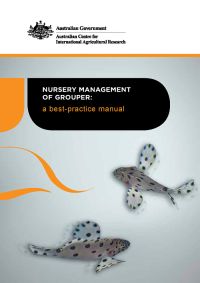
This manual provides practical guidelines for those engaged in the nursery culture of groupers in Indonesia as well as elsewhere in the tropics. It provides information on husbandry of groupers in the nursery phase, to reduce losses due to disease and cannibalism, and thus to increase the profitability of grouper nursing. The guidelines are derived from outcomes of ACIAR-funded research as well as other published information on grouper nursery management.
24 April 2013 | Ketut Sugama, Michael A. Rimmer, Suko Ismi, Isti Koesharyani, Ketut Suwirya, N.A. Giri and Veronica R. Alava | 7467 Downloads | .pdf | 2.5 MB
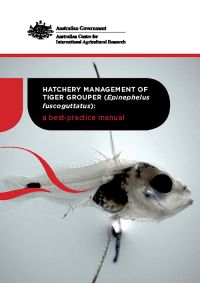
This manual provides guidelines for the production of tiger grouper fingerlings. It outlines best-practice methods for broodstock maintenance, spawning, egg incubation and rearing of larvae through to 2–3 cm, fully metamorphosed juveniles. The guidelines have been developed from the outcomes of ACIAR-funded research, as well as from the experience of Indonesian, Philippine and Australian scientists and commercial hatchery operators, and published information. It provides an aid for improving the availability of grouper seed stock.
This document presents a tool in the form of an audit table that can be used to broadly screen and identify gaps in the management systems of government agencies responsible for regulating aquaculture. These gaps, once identified, can be a first step toward building regulatory frameworks that can better deliver on jurisdictional ecologically sustainable development and ecosystems approach to aquaculture objectives. The end product of an assessment is a report for consideration by decision makers.
4 March 2013 | C.V. Mohan and Brian Davy | 5298 views | .mp4 | 29.61 MB
Farmers organised as a cluster engage in collective planning, decision making and implementation of crop activities, using a participatory approach to accomplish their common goals. The evidence shows that if farmers can see benefits, particularly long-term benefits, they will change their farming practices under a variety of conditions and drivers. With provision of adequate support and services they can be part of the solution in moving aquaculture towards sustainability.
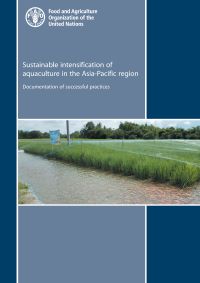
The objective of the consultation was to develop a regional strategic policy framework to guide national governments and regional organisations in promoting sustainable intensification of aquaculture in the Asia-Pacific region. The consultation also identified priority actions and, where possible, practical measures for their implementation, focussing on intensifying aquaculture through more efficient use of resources and environmentally sound practices rather than by increasing inputs to the system.
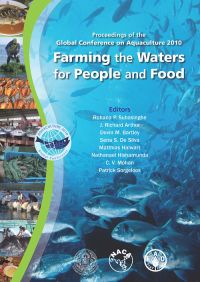
27 May 2012 | Rohana P. Subasinghe, J. Richard Arthur, Devin M. Bartley, Sena S. De Silva, Matthias Halwart, Nathanael Hishamunda, C.V. Mohan and Patrick Sorgeloos (Eds.) | 3804 Downloads | .pdf | 12 MB
The Global Conference on Aquaculture 2010 reviewed the present status and trends in aquaculture development, addressed emerging issues relevant to aquaculture development, assessed opportunities and challenges for future aquaculture development and built consensus on advancing aquaculture as a global, sustainable and competitive food production sector. This volume provides information on how aquaculture could be mobilized to alleviate global poverty and improve food and nutrition security in the coming decades.
17 January 2012 | Nguyen Thi Bang Tam, Nguyen Hai Dang and Nguyen Xuan Cuong | 1626 Downloads | .pdf | 1.93 MB
This practical manual "Guide to establishment of community-based aquaculture management groups" was prepared by the national team of Vietnam under the ASEAN Foundation supported project "Strengthening capacity of small holder ASEAN aquaculture farmers for competitive and sustainable aquaculture".
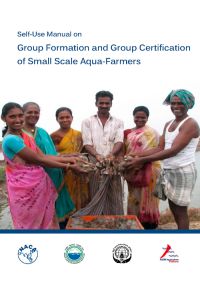
This manual is intended for the use by the current and prospective small-scale farmer groups who are interested in obtaining accreditation for their production process. The objective is to provide them an easy-to-follow, stepwise guide that can be used as a practical tool in their venture of attaining group certification. However, this can be used by the field extension officers and certifiers who are directly involved in the process or other interested parties.
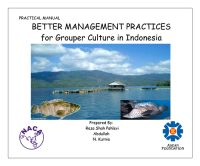
9 January 2012 | Reza Shah Pahlevi, Abdullah and N. Kurnia | 4164 Downloads | .pdf | 3.66 MB
This practical manual covers key aspects for successful grouper farming including formation of farmer groups, cage crop planning, crop calendar and better management practices for cage aquaculture of grouper. These include site selection, design, cage preparation, seed selection and stocking practices, feed, water and health management, harvest and post-harvest, record keeping, marketing and capital strengthening. It is designed for use by small-scale farmers.
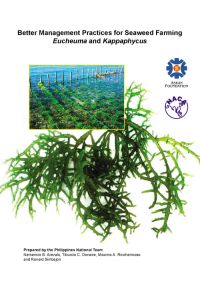
9 January 2012 | Nemencio B. Arevalo, Tiburcio C. Donaire, Maximo A. Ricohermoso and Ronald Simbajon | 3294 Downloads | .pdf | 8.53 MB
This practical manual "Better management practices for seaweed farming" is produced by the Philippines national team under the ASEAN Foundation supported project "Strengthening capacity of small holder ASEAN aquaculture farmers for competitive and sustainable aquaculture" implemented by NACA in five ASEAN countries. The long-term objective of the project was to assist ASEAN small- scale aquaculture farmers improve their livelihoods by being competitive in markets and improving farm management practices to deliver quality and sustainably produced aquaculture products.
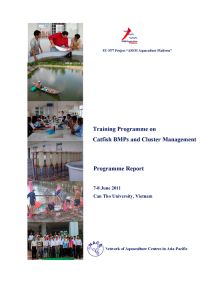
This is the report of a training programme on better management practices (BMPs) for catfish aquaculture and cluster-based management, which was held at the Faculty of Fisheries and Aquaculture, Can Tho University, Vietnam, 7-8 June 2011. The purpose of the training programme was to build capacity and awareness of selected cluster leaders, lead farmers and provincial extension officers on catfish BMPs, implementation of BMPs, group formation and operation.