Fish dressing facilities in inland areas of India: Challenges and opportunities
22 January 2026 | Biswajit Debnath, Anup Das, Ujjwal Kumar, and Anirban Mukharje | 593 Downloads | .pdf | 841.09 KB
India's inland fisheries produce 70% of the nation's fish supply, yet 15-20% of inland fish catches are lost to spoilage before reaching consumers. This post-harvest loss stems largely from inadequate fish dressing facilities and outdated handling practices in inland regions. This article examines fish dressing practices in Tripura, a northeastern state where fish consumption reaches 27.6 kilograms per capita annually - four times the national average.
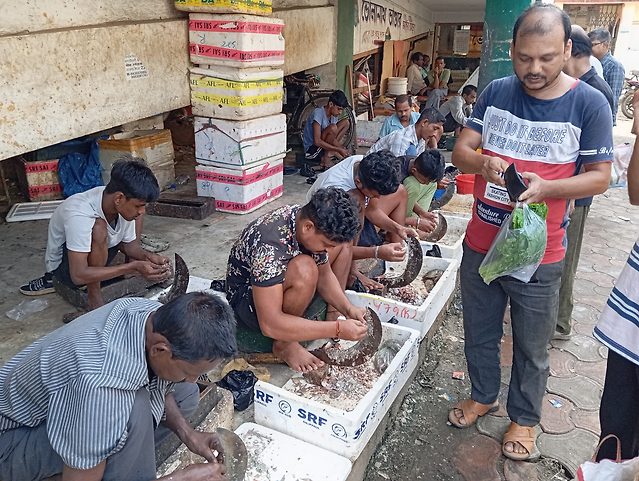
Field research conducted in 2024 across retail fish markets in West and South Tripura revealed that over 95% of retailers offer fish dressing services for large carps, operating with minimal infrastructure using traditional hand tools. However, fewer than 10% dress small indigenous fishes, which consumers prefer most, because the work is time-consuming and intricate. This service gap created an unexpected entrepreneurial opportunity.
At Durga Chowmuhani fish market in Agartala, approximately 22 young people, mostly previously unemployed urban and semi-urban youth, have established viable businesses as independent fish dressers. Working four-hour shifts during morning market hours, these dressers earn between Rs. 530-680 daily (Rs. 15,900-20,400 monthly), exceeding Tripura's per capita income of Rs. 1,59,419. Their startup costs were minimal - a specialised curved knife costing Rs. 500 and daily market space rental of Rs. 50.
The informal fish dressing sector demonstrates strong market demand and employment generation potential. However, significant challenges persist. Most processing occurs without proper hygiene and sanitation facilities. Infrastructure deficits include inadequate cold storage, mechanical processing units, and reliable water and electricity supply. Traditional dressing methods often fail to meet food safety standards, leading to contamination, faster spoilage, and health risks.
The article proposes building on existing informal businesses rather than replacing them. Recommended interventions include basic food safety training, cooperative-based processing centres, government support through Pradhan Mantri Matsya Sampada Yojana programmes, low-cost eco-friendly technologies such as solar-powered ice plants, and practical skills training from institutions like the Central Institute of Fisheries Technology. The Tripura case demonstrates that fish dressing represents not just a post-harvest processing challenge but an emerging livelihood opportunity for unemployed youth in inland fishing regions.
1769084419_fish-dressing-services-tripura.pdf
Creative Commons Attribution.
Related
Aquaculture Asia Magazine, January-March 2026
24 January 2026 | 11505 views | .pdf | 21.85 MB