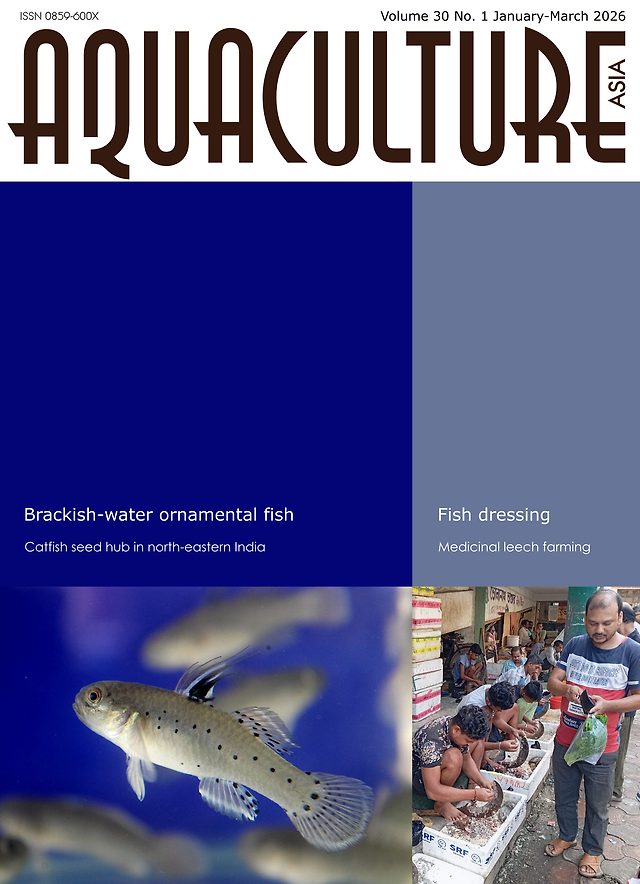
Improved larval rearing of Heteropneustes fossilis with live fish food organism - a method practised in the farmer’s field R.N. Mandal, Kabyashree Bala, B.N. Paul, A. Das, S. Adhikari, F. Hoque, A. Hussan, S. Sarkar, and P.K. Sahoo
From scarcity to supply: The Nalbari magur (Clarias batrachus) seed hub in north-eastern India S.K. Sahoo, A.K. Sahu, A. Das, B.C. Mohapatra, P.P. Chakraborty, N.K. Barik, A.K. Chaudhari, S.N. Sahoo, S.S. Giri, and P. K. Sahoo
Fish dressing facilities in inland areas of India: Challenges and opportunities Biswajit Debnath, Anup Das, Ujjwal Kumar, Anirban Mukharjee, and Tarkeshwar Kumar
Entrepreneurship development through brackish water ornamental fish farming in Indian Sundarbans Babita Mandal, Dani Thomas, Raymond J. Angel, Sandeep K.P., Sagar Bag, M. Kailasam, Debasis De, and Kuldeep K. Lal
Farm brief: Medicinal leech farming, China Simon Wilkinson
Aquaculture Asia Magazine is an autonomous publication that gives farmers and scientists in developing countries a voice. Stories concern the small-scale aquaculture prevalent in the region and the circumstances of farmers trying to make ends meet in an increasingly globalised world. We accept articles on any aspect of aquaculture and the related processing, marketing, economic, environmental and social issues. An RSS feed is available if you wish to stay informed of new issues.
23 January 2026 | Simon Wilkinson | 908 Downloads | .pdf | 2.59 MB
Medicinal leeches represent a niche but valuable aquaculture opportunity in China. A commercial farm in Anhui Province produces 36 tonnes annually of Whitmania pigra, a predatory leech species used in traditional medicine and pharmaceutical products. The dried leeches command prices around US$100 per kilogram. Unlike blood-feeding leeches, this species feeds naturally on aquatic snails throughout its life cycle, simplifying feed management. The farm rears leeches in large above-ground tanks holding up to 10,000 individuals each, with adults reaching 50 g in weight. The operation produces its own seed, with each adult producing around 90 eggs across three cocoons. This brief farm report provides insight into the production system for this unusual but commercially viable aquaculture species.
22 January 2026 | Babita Mandal, Dani Thomas, Raymond J. Angel, Sandeep K.P., Sagar Bag, M. Kailasam, Debasis De, Kuldeep K. Lal | 818 Downloads | .pdf | 5.56 MB
Small-scale farmers in the Indian Sundarbans are transforming their livelihoods through brackishwater ornamental fish farming. The region's estuaries and mangrove forests provide natural habitat for commercially valuable species like spotted scat, green puffer, pearlspot, and orange chromide. With training from ICAR-Central Institute of Brackishwater Aquaculture's Kakdwip Research Centre, local entrepreneurs have developed successful hatchery and grow-out operations.
Three farmers from Kakdwip Block demonstrate the sector's potential. Mr Tapan Maity produces 1,000-3,000 fingerlings monthly from his integrated facility. Mr Mahendra Dului operates a 32-tank hatchery using cost-effective farm-made feeds. Mr Aurobindo Haldar cleared his debts within three years of starting pearlspot production. These farmers combine scientific broodstock management with local knowledge to rear juveniles for urban pet markets in Kolkata and Howrah. The expanding domestic and export demand for brackishwater ornamental species offers sustainable income opportunities for coastal communities facing challenges from climate vulnerability and limited livelihood options.
India's inland waters produce 70% of the nation's fish, yet up to 20% spoils before reaching consumers due to poor post-harvest handling. In Tripura, where people consume fish at four times the national average, a surprising entrepreneurial story is emerging from this challenge.
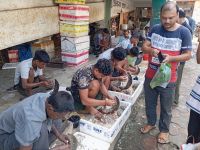
At Agartala's Durga Chowmuhani market, 22 young people have turned fish dressing into profitable businesses. Working four-hour morning shifts, these mostly unemployed youth earn Rs. 530-680 daily, incomes exceeding the state average, by cleaning small indigenous fish that retailers refuse to process. Their startup cost was just Rs. 500 for a specialised knife and Rs. 50 daily for market space.
This informal sector reveals strong market demand and employment potential. However, challenges remain: inadequate hygiene facilities, limited cold storage, and variable food safety standards. The path forward involves supporting what works - strengthening informal businesses with training, better tools, and gradual infrastructure improvements rather than waiting for large-scale formal facilities.
21 January 2026 | S.K. Sahoo, A.K. Sahu, A. Das, B.C. Mohapatra, P.P. Chakraborty, N.K. Barik, A.K. Chaudhari, S.N. Sahoo, S.S. Giri, and P.K. Sahoo | 728 Downloads | .pdf | 1.67 MB
Access to quality seed has long constrained aquaculture of magur, a high-value indigenous catfish prized across north-eastern India. Wild stocks have declined, yet demand continues to rise. In Nalbari district of Assam, scientists and farmers have created a solution. ICAR-Central Institute of Freshwater Aquaculture worked with local farmers to establish more than 25 magur hatcheries using innovative fibreglass-reinforced plastic designs suited to flood-prone conditions. Farmers received training in captive breeding, hormone-induced spawning, and larval rearing using specialised feeds. Individual farmers now produce 300,000-500,000 fry per season, earning substantial income while supplying seed across multiple districts. The model shows how targeted capacity building, appropriate technology, and farmer-centred interventions can transform indigenous fish seed production from a critical bottleneck into a thriving regional enterprise. Approximately 70 farmers now actively supply magur seed where scarcity once limited aquaculture expansion.
21 January 2026 | R.N. Mandal, Kabyashree Bala, B.N. Paul, A Das, S. Adhikari, H. Houque, A. Hussan, S. Sarkar, and P.K. Sahoo | 621 Downloads | .pdf | 8.54 MB
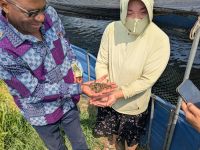
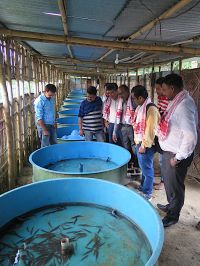
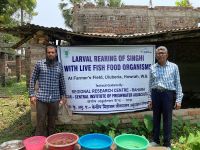
Rearing stinging catfish larvae has long challenged Asian fish farmers, as young catfish naturally prefer live prey over manufactured feeds. A West Bengal farmer has developed a method that produces one million catfish fry monthly using Moina zooplankton, as the sole food source. After training at ICAR-CIFA research station, Mr Imran Molla established 25 large tanks to mass-produce Moina using simple ingredients like waste bread and mustard oil cake. He segregates catfish larvae by age into separate compartments and feeds each group appropriately sized Moina. The larvae thrive on this natural diet, reaching sale size in 30 days with high survival rates. This method requires less water management than manufactured feeds, reduces disease risk, and generates substantial income. The farmer's success demonstrates how combining scientific training with local innovation can solve critical bottlenecks in small-scale aquaculture.