ICAR-CIFA promoting Kalong-Kapili for opening new avenues to strengthen aquaculture in Northeast region of India
27 June 2026 | R.N. Mandal, S. Adhikari, A. Das, F. Hoque, A. Hussan, S. Sarkar, H.K. De and P.K. Sahoo | 301 Downloads | .pdf | 9.88 MB
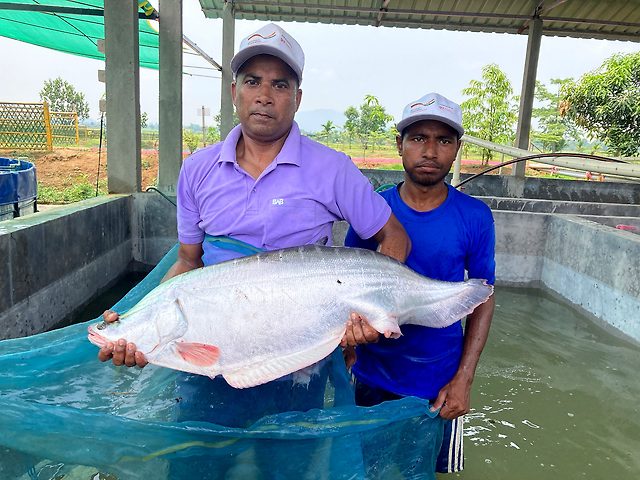
Kalong-Kapili, a non-governmental organisation in Assam, is strengthening aquaculture across the north-eastern region of India. With technical support from ICAR-CIFA (the Indian Council of Agricultural Research-Central Institute of Freshwater Aquaculture), the organisation has worked since 2007 to turn the region's abundant water bodies into a tool for reducing poverty and malnutrition among rural communities.
Kalong-Kapili began operations at Bagibari village in Kamrup Metropolitan district, where its founder recognised that Assam's wetlands, beels, rivers, ponds and lakes were largely untapped resources. The organisation established a Field Laboratory as a one-stop knowledge centre, equipped with breeding and rearing units, a feed mill, recirculatory aquaculture systems, biofloc and aquaponics setups, laboratories and residential training facilities.
Central to this work is the Aquaculture Field School at Bagibari, the first such school in the North East Region, established with CIFA. Described as a school without walls, it follows a farmer-centred extension approach that emphasises technology transfer, farmer-to-farmer learning and good practice in site selection, breeding, feeding, pond management and fish health. It also outlines the school's facilities, the benefits it brings to farmers, and the broader extension and support services Kalong-Kapili provides through meetings, farmers' groups, market linkages and networking.
The model has been replicated in tribal clusters at Borbeel in Assam and at Lohit and Lower Siang in Arunachal Pradesh, where integrated aquaculture combined with horticulture, piggery and kitchen gardens has benefited hundreds of families. Kalong-Kapili has also empowered women through self-help groups and climate-smart fisheries programmes, expanded fish seed production, and promoted improved species and stocking practices.
A CIFA outreach scheme has extended these methods to forest-dependent communities in West Karbi Anglong, supplying fingerlings, feed and training. Kalong-Kapili stands as an example of how community-driven aquaculture extension can deliver nutritional security, sustainable livelihoods and economic benefits to small-scale farmers in remote parts of north-eastern India.
1782536057_icar-cifa-promoting-new-avenues-for-aquaculture-in-nw-india.pdf
Creative Commons Attribution.