4 July 2023 | Laxmappa Boini and Ravinder Rao Bakhs | 1241 Downloads | .pdf | 4.16 MB
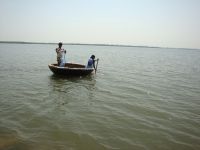
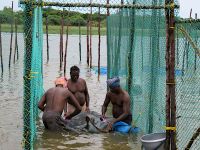
About 200 families that were displaced by construction of the Jurala reservoir have found new employment in fishing and value-added industry. Local people who up fishing add value to their catch by keeping it for live sale in locally-manufactured cages. Local people also use the live fish to prepare a variety of fresh fish dishes, servicing the tourist trade attracted to the reservoir. Over 400 people are now directly or indirectly self-employed through these practices. This article describes the new practices and the improved income that is being generated by fishers and local entrepreneurs.
4 July 2023 | Stanzin Gawa, A.K Singh and Jag Pal | 2534 Downloads | .pdf | 1.39 MB
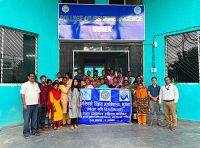
Management of waste products produced by fish processing can be an environmental and public health issue. But fish waste can be converted into agricultural fertilisers using simple backyard technology. This article describes techniques for producing fertilisers from fish waste, and a successful demonstration of the technology by the College of Fisheries, Gumla, to tribal communities in the state of Jharkand, India.
Augmenting entrepreneurial attitude among tribal women of Jharkhand through a skill development programme in fish value added products; Culture of hilsa, Tenualosa ilisha in freshwater ponds: Progress and prospects in farming practice; Present status of medium-saline ‘bheri’ fishery and integrated mangrove aquaculture in West Bengal, India: A short study, Part I; Information for farmers on yellow tail catfish, Pangasius pangasius, for easier captive production; Captive breeding and larval rearing of Cirrhinus reba, a small indigenous fish of aquaculture importance; NACA Newsletter.
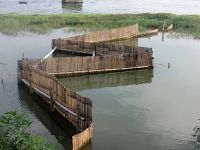
Since the late 1960s, brackishwater rural aquaculture in West Bengal grew and improved at a fast rate, from an extensive method of farming to a modified-extensive method. The indigenous bheri fishery is a well-known extensive aquaculture system throughout all coastal states of India. Bheri fishery isn’t a capital-intensive practice. This article describes farming practices in bheri systems in West Bengal, India, including their integration with mangrove aquaculture. A second part of this article will be published in the next issue.
3 February 2023 | Stanzin Gawa and A.K. Singh | 1866 Downloads | .pdf | 5.21 MB
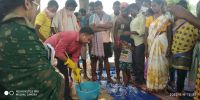
Today, tribal people comprise 8.6 percent of the Indian population and are one of the most disadvantaged sections of society. Many tribal groups in different parts of the country depend on natural resources for their livelihoods, to which their access has been progressively eroded. With financial support from ICAR-CIFT the College of Fisheries, Gumla, undertook seven training programmes for tribal women from economically marginalised tribal communities in the preparation and marketing of value-added fisheries products. The training encouraged women to develop small businesses building on their micro-entrepreneurship.
Update: The forum will now be held on 13 December and and updated conference agenda is available below. Please register your attendance using the form linked below. A Zoom link will be sent to all registered participants before the meeting, thank you.
A free online forum will be organised by the Agriculture Trade Promotion Center, Ministry of Agriculture and Rural Affairs of the People’s Republic of China, and Yellow Sea Fisheries Research Institute, Chinese Academy of Fishery Sciences, and NACA. The forum aims to strengthen international exchange and cooperation in aquatic trade, promote high-quality development of fisheries, disseminate advanced concepts, technologies, and models of aquaculture in the Asia-Pacific region and Silk Road countries, and promote the health and sustainable development of global fisheries. Participation is free but registration is required.
As a follow on from the September FAO/NACA workshop on aquaculture transformation, FAO and NACA convened a high-level meeting to discuss the issue and the outcome of the previous consultation with policy makers. The meeting was held virtually from 22-23 November and was attended by 79 senior officials from 25 countries and international organisations, with observers from industry and international NGOs. Specific objectives of the high-level meeting were to: Engage senior policy makers and business leaders in the process of defining regional targets, action areas and initiatives for aquaculture transformation in the region by 2030, identify strategies and mechanisms to stimulate innovation and investment, and to recommend follow up actions and commitments.
Sustainable livelihood model for coastal families through seabass fingerling production: A success story; A pilot of integrated mangrove-aquaculture as a nature-based solution to mitigate climate change in West Bengal, India; Recreational fisheries in Uttarakhand; Soft-shell mud crab production for export in Purba Medinipur, West Bengal, India; Conducting artificial fertilisation, hatching and spawn development of Indian shad, Tenualosa ilisha: Pathfinding hilsa domestication; NACA Newsletter.
2 November 2022 | Deepjyoti Baruah, D. Sarma, R.S. Patiyal, Neetu Shahi, M.S. Akhtar, R.S. Haldar, P.K. Pandey, R. Posti, Bhupendra Singh and Abhishek Mishra | 1211 Downloads | .pdf | 4.98 MB
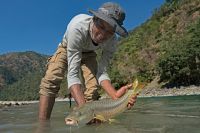
Establishing recreational fisheries in Uttarakhand's highland lakes and river systems offers new opportunities to generate livelihoods and income for hill people. The development of catch-and-release sport fisheries can also contribute to conservation of aquatic biodiversity through development of captive breeding technologies, supportive breeding based stock enhancement, and community participation in management of both fishery and habitat. This article describes established and emerging sport fisheries in the highlands of Uttarakhand including for mahseer, goonch and brown trout. It also addresses as yet unrealised opportunities for establishment of recreational fisheries identified through geoinformatic approaches, and partnerships between local communities and government in natural resource management.
12 October 2022 | D. Deboral Vimala, C.V. Sairam, M. Kailasam, K. Ambasankar, K.K. Vijayan, P. Mahalakshmi, S. Sivananam, R. Subburaj, and G. Thiagarajan | 1046 Downloads | .pdf | 1.14 MB
Brackish waters offer good prospects for future aquaculture development, as there are fewer competing uses for these resources. Kilarkollai Village (Tamil Nadu, India) has brackish waters on the village periphery, which are under utilised. The majority of the population are landless poor, economically and socially marginalised, and live below the poverty line. A team from the ICAR-Central Institute of Brackishwater Aquaculture demonstrated nursery rearing technologies in partnership with four Scheduled Caste families from the village, with a view to providing supplementary livelihoods and income. The team provided training, initial inputs and technical support.
Training Course on Mariculture Technologies in Asia-Pacific; FAO/NACA Virtual Workshop on Aquaculture Transformation in Asia and the Pacific Region; Belt & Road Forum for International Freshwater Fishery Industry Innovation; 8th Global Conference on Gender in Aquaculture and Fisheries, 21-23 November; Reported Aquatic Animal Diseases in the Asia-Pacific Region during the First Quarter of 2022; International Training Course on Biology and Pathology of the Penaeid Shrimp 2022; Angkasa Putra inaugurated as first President of the South-East Asian Fisheries and Aquaculture Student Association; Artemia webinars: Video recordings of technical presentations available.
Dynamics of small-scale aquaculture development in India: A review; Green water technology as an essential support to larval rearing of hilsa shad; Collection of freshwater molluscs and sale of meat by women in Purba Medinipur, West Bengal, India; A success story of ornamental fish farming as a tool for alternative livelihood of tribal women in Keonjhar District, Odisha, India; Recent trends in seed production of stinging catfish, Heteropneustes fossilis, in India; NACA Newsletter.
In Odisha, India, ornamental fish farming, culture and seed production are being utilised by self help groups to provide livelihoods for poor people in rural communities. The objective of self help groups is to sustainably increase the income of poor families to bring them above the poverty line. This is being achieved through a process of social mobilisation, training and capacity building, and provision of some necessary facilities. This article documents the evolution of ornamental fish farming by the Pragati Self Help Group in Bhatunia Village.
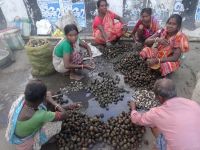
The common freshwater snail Bellamya bengalensis, golden apple snail Pila globosa and freshwater pearl mussel Lamellidens marginalis are naturally found in West Bengal. These molluscs are also an important source of protein for poor rural communities, and are also gaining popularity in middle and high income suburban areas for their nutritional and traditional medicinal values. They also represent a significant source of employment and income generation for women from Scheduled Tribes and Scheduled Castes. This article documents the collection, preparation, trade and use of freshwater molluscs in Paschim Medinipur and Purba Medinipur districts of West Bengal.
19 August 2022 | Himansu K. De, Gour S. Saha, Abhijit S. Mahapatra and Simantini Shasani | 1450 Downloads | .pdf | 2.59 MB
Development of small-scale aquaculture has dominated development discourse because of its potential to fight malnutrition and poverty, to ensure food security and enhance the socio-economic condition of people living at the bottom of the pyramid. Aquaculture has contributed to strengthening livelihoods and food security in southeast Asian countries, contributing to the livelihood of the poor farmers through improved food supply, income and employment.
An online forum will be held on 16 August to enable technical exchange between policymakers, fishery extension officers, researchers and entrepreneurs in development of the freshwater fisheries industry through technology innovation.
The forum will focus on innovations and developments in freshwater fishery biotech, breeding, culture models, digitisation, and industrialisation, featuring presentations and discussions from experts of international organisations, the Chinese Academy of Sciences, Chinese Academy of Engineering, universities and entrepreneurs in virtual exchanges and discussions. Participation is free but registration is required.
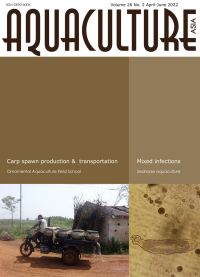
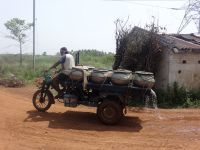
For the last five decades or so, West Bengal has been the leading state in India for the production of production and supply of major carp fry, underpinning the success of freshwater fish culture. This article describes the structure of the hatchery industry in Ramsagar, West Bengal, production practices and systems, packing, transport and links to major seed markets both within the state and elsewhere in India. Market price, broodstock management and natural breeding methods are also discussed.
23 June 2022 | S.K. Swain, H.K. De, G.S. Saha, B.N. Paul, S.N. Sethi and S.S. Giri | 1563 Downloads | .pdf | 1.01 MB
The Farmer Field School approach is promoted by FAO as an alternative technology dissemination mechanism to the top-down extension methods in south-east Asian countries. In order to utilise the potential of the farmer field school approach for aquaculture, ICAR-CIFA has piloted Aquaculture Field Schools (AFS) in several states in India. AFS are schools without walls to improve the decision-making capacity of the farmers and facilitate cross-learning opportunities. It is a participatory extension methodology whereby fish farmers are allowed to choose the methods of aquaculture production through discovery-based approaches.
New reviews of aquaculture now available online; Post-doctoral scholarships for women in STEM at the University of Stirling; Research breakthrough seen to curb shortage of "poor man's fish"; Free online aquaculture courses; Fishing for life 2022: South and South-East Asian Conference on Small Scale Fisheries and Aquaculture; Reported Aquatic Animal Diseases in the Asia-Pacific Region during the Third Quarter of 2021; Shrimp 2022: INFOFISH World Shrimp Trade Conference and Exhibition; Tuskfish CMS v2.0.3 available.