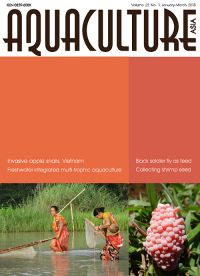
Invasive apple snails (Pomacea spp.) in Vietnam: Short review; A review of fresh water integrated multi-trophic aquaculture: Catching up on the dream of a blue revolution in India; Pre-pupae (larvae) of black soldier fly - a potential alternate protein source for aquaculture feeds; Penaeid shrimp and giant prawn seed collection from Rupnarayan River in Purba Medinipur, West Bengal, India; NACA Newsletter; First training course on culture-based fisheries held in Nha Trang, Vietnam.
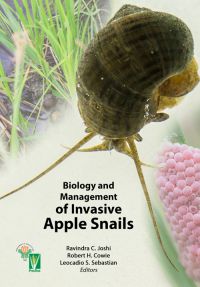
20 October 2017 | Ravindra C. Joshi, Robert H. Cowie, Leocadio S. Sebastian (eds.) | 4454 Downloads | .pdf | 28.25 MB
Apple snails have become a major pest of wetland rice in much of Southeast Asia. Two species are involved, Pomacea canaliculata and P. maculata. One or both of these species have become widely established not only in many parts of Southeast Asia but also in other parts of the world. This book provides an update on research into the biology, management and use of apple snails and highlights the need to prevent further spread of these species.
The Quarterly Aquatic Animal Disease report provides information about the status of aquatic animal disease in 21 participating states in the Asia-Pacific region. The diseases covered in the report are reviewed annually by the Asia Regional Advisory Group on Aquatic Animal Health. The report was first published in the second quarter of 1998. It is a joint activity between NACA, FAO and the OIE Regional Representation (Tokyo).
The Asia Regional Advisory Group on Aquatic Animal Health meets annually to discuss regional health issues including emerging disease threats. This report includes a review of regional disease status circa 2016, global and regional disease reporting arrangements, global issues and standards, progress in implementation of the the Regional Technical Guidelines on Health management for the Responsible Movement of Live Aquatic Animals, identification and designation of regional aquatic animal health resources and regional and international cooperation.
The 15th meeting was held from 21-23 November 2016, in Bangkok, Thailand. A special session was held on addressing the use of anti-microbial substances in aquaculture and the development of anti-microbial resistance. This is an issue of global concern for both human and animal health, and it had been addressed by a resolution at FAO’s Thirty-ninth Conference in June 2015. The meeting reviewed in detail the status of aquatic animal disease in the region.
The Asia Regional Advisory Group on Aquatic Animal Health meets annually to discuss regional health issues including emerging disease threats. This report includes a review of regional disease status circa 2015, global and regional disease reporting arrangements, global issues and standards, progress in implementation of the the Regional Technical Guidelines on Health management for the Responsible Movement of Live Aquatic Animals, identification and designation of regional aquatic animal health resources and regional and international cooperation.
1 January 2016 | Miao, W. and Lal, K.K. (Eds.) | 7303 Downloads | .pdf | 1.5 MB
This publication is the major output of a regional programme jointly implemented by FAO and NACA in 2015 to document and disseminate successful practices that contribute to the sustainable intensification of aquaculture in the Asia-Pacific region. Twelve practices are described that contribute to at least one of the following: Improved production and resource use efficiency (land, water, feed, energy); improved environmental benefits; strengthened economic viability and farmers' resilience; and improved social acceptance and equity.
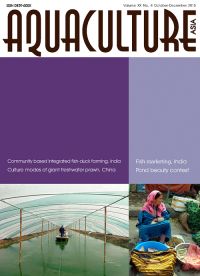
Aquaculture feed supply chain attracting scrutiny. Pond beauty contest, Ram Kumar and social development. Culture modes of giant freshwater prawn in Yangtze River Delta for early harvest. Fish marketing in Kashmir, India - a case study of Srinagar. Community-based integrated fish-duck farming: A boon for rural development in agro-climatic conditions of Assam, India. Gastropod and bivalve fishery of Kakinada Bay, Andhra Pradesh, India: Management and conservation issues.
The Asia Regional Advisory Group on Aquatic Animal Health meets annually to discuss regional health issues including emerging disease threats. This report includes a review of regional disease status circa 2014, global and regional disease reporting arrangements, global issues and standards, progress in implementation of the the Regional Technical Guidelines on Health management for the Responsible Movement of Live Aquatic Animals, identification and designation of regional aquatic animal health resources and regional and international cooperation.
The workshop was held in Bali, Indonesia from 6 to 8 November 2013. The programme included reports on current aquatic animal disease situations in selected countries and presentations on the national aquatic animal health programmes of China, Japan and Korea. In addition, case studies on the molluscan diseases, shrimp diseases and finfish diseases were presented to facilitate the subsequent discussion on emergency response of those diseases in the national and regional level.
Health issues are not going away. Sustainable and Ethical Aquaculture Trade project in China. Oyster aquaculture for coastal defense and food production in Bangladesh. Importance of mycotoxins in aquaculture feeds. A model modular farm for size grading and monosex culture of freshwater prawn. Angelwing clam (Pholas orientalis) future assured after Thai DOF's breeding success. Ompok bimaculatus, an emerging species for diversification of aquaculture in Tripura, North-eastern India.
27 May 2012 | Rohana P. Subasinghe, J. Richard Arthur, Devin M. Bartley, Sena S. De Silva, Matthias Halwart, Nathanael Hishamunda, C.V. Mohan and Patrick Sorgeloos (Eds.) | 3811 Downloads | .pdf | 12 MB
The Global Conference on Aquaculture 2010 reviewed the present status and trends in aquaculture development, addressed emerging issues relevant to aquaculture development, assessed opportunities and challenges for future aquaculture development and built consensus on advancing aquaculture as a global, sustainable and competitive food production sector. This volume provides information on how aquaculture could be mobilized to alleviate global poverty and improve food and nutrition security in the coming decades.
Reflections on small-scale aquaculture. Azolla - an aquatic fern of significance to small-scale aquaculture. Monitoring quantity and quality of striped catfish pond effluent. Feeding strategies adopted by fish farmers in Andhra Pradesh, India. Hatchery techniques applied for the artificiant production of snout otter clam (Lutraria rhynchaeria) in small scale farms in Nha Trang City, Vietnam. Crude palm oil is a sustainable alternative to the growing fish oil scarcity, particularly for the aquaculture of warm freshwater fish species.
The Asia Regional Advisory Group on Aquatic Animal Health meets annually to discuss regional health issues including emerging disease threats. This report includes a review of regional disease status circa 2010, global and regional disease reporting arrangements, global issues and standards, progress in implementation of the the Regional Technical Guidelines on Health management for the Responsible Movement of Live Aquatic Animals, identification and designation of regional aquatic animal health resources and regional and international cooperation.
4 February 2011 | Miao Weimin, Sena De Silva and Brian Davy (eds.) | 6394 Downloads | .pdf | 1.16 MB
This regional review study is an effort to promote improved inland fisheries management under the Code of Conduct for Responsible Fisheries. It covers ten Asian countries with significant inland capture fisheries, namely Bangladesh, China, India, Indonesia, the Republic of Korea, Myanmar, Nepal, Sri Lanka, Thailand and Viet Nam. The papers were presented and discussed at a regional workshop held from 8-11 February 2010 in Pattaya, Thailand. Audio recordings of the presentations are also available for download.
The Phuket Consensus is a declaration on aquaculture development endorsed by participants of the Global Conference on Aquaculture 2010, held in Phuket, Thailand, 22-25 September. The consensus builds on the Bangkok Declaration, which was formulated at the International Conference on Aquaculture in the Third Millennium, held in Bangkok, 20-25 February 2000. The consensus and declaration provide strategic guidance on sustainable development of aquaculture considering social, environmental, technical and economic issues.
The Asia Regional Advisory Group on Aquatic Animal Health meets annually to discuss regional health issues including emerging disease threats. This report includes a review of regional disease status circa 2009, global and regional disease reporting arrangements, global issues and standards, progress in implementation of the the Regional Technical Guidelines on Health management for the Responsible Movement of Live Aquatic Animals, identification and designation of regional aquatic animal health resources and regional and international cooperation.
Mussel farming initiatives in North Kerala, India. Selective study on availability of indigenous fish with ornamental value in West Bengal. Aquaculture livelihoods centre in Aceh, Indonesia. e-Sagu Aqua - an innovative information and communication technology model for transfer of technology for aquaculture. Freshwater pearl crop: An emerging enterprise in the Indian subcontinent. Preliminary risk assessment of Pacific white shrimp (P. vannamei) introduced to Thailand for aquaculture. Black gill disease of lobster and more.
Community management and revenue sharing practices of culture-based fisheries in Lao PDR. Floodplain aquaculture in Bangladesh. Promoting small-scale inland aquaculture in Papua New Guinea. Group approaches to shrimp farming: The key to sustainability. Native catfish culture - a technology package for farmers. Influence of salinity in the growth of the black clam Villorita cyprinoides. EUS in Asia and Africa. Offshore opportunities for artisinal aquaculture. Grouper aquaculture in Brazil. NACA Newsletter.
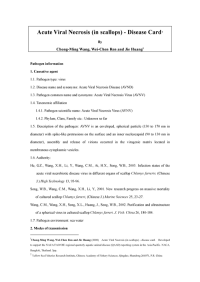
Acute viral necrosis in scallops was included in the list of Qquarterly Aquatic Animal Disease (QAAD) reporting list for the year 2008. The disease card developed by regional resource experts from China in support of QAAD reporting system in Asia-Pacific provides information on pathogen, hosts, and confirmatory diagnostic methods. This is an emerging disease in the region and has caused significant losses to scallop culture industry in China.