Freshwater prawns

Content related to freshwater prawns.

Creative Commons Attribution.

Related

Species / commodity tags

Major farmed commodity or species groups.

In this collection

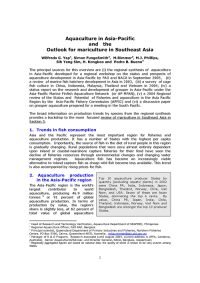
Aquaculture in the Asia-Pacific and the outlook for mariculture in southeast Asia

This paper provides an overview of seafood consumption production in southeast Asia circa 2006. It forecasts a need for aquaculture to expand area under culture and intensity; highlights the potential for fishmeal to constrain growth, and identifies a trend towards cultivation of high-value species. Sources for the review included a regional synthesis of aquaculture developed for a regional workshop in 2005, a review of marine finfish hatchery development and a regional survey of cage fish culture.

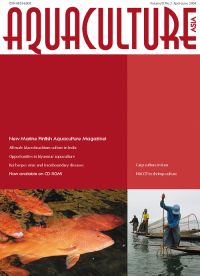
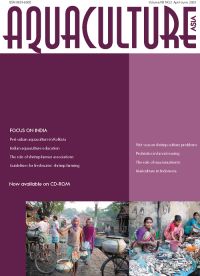
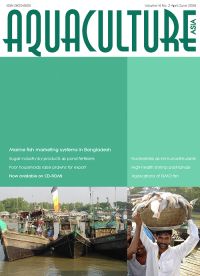
Aquaculture Asia Magazine, April-June 2006

In this issue:

High-health postlarvae a prerequisite for sustainability of the Indian shrimp industry. Broodstock and all-female scampi grow out ponds in south India. Genetically modified fish and potential applications. Rainbow trout farming in hill terraces of Nepal. Sugar industry by-products as plankton boosters and yield enhancers in carp culture. Growth and production of Penaeus monodon in low saline culture systems. Poor households raise prawns for export. Marine fish marketing in Bangladesh.

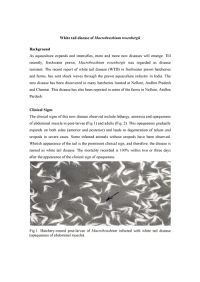
White tail disease of Macrobrachium rosenbergii

White tail disease in Macrobrachium rosenbergii is emerging as a serious problem in the region. Two viruses, M. rosenbergii nodavirus (MrNA) and extra small virus (XSV) have been found to be associated. The role of MrNV and XSV is not yet clear. Considering the economic impact and potential for the disease to spread, white tail disease (MrNV and XSV) has been listed under non-OIE listed crustacean diseases relevant to the region and NACA/FAO/OIE Regional QAAD list.

Report of the fourth meeting of the Asia Regional Advisory Group on Aquatic Animal Health, 22-24 October 2005

The Asia Regional Advisory Group on Aquatic Animal Health meets annually to discuss regional health issues including emerging disease threats. This report includes a review of regional disease status circa 2005, global and regional disease reporting arrangements, global issues and standards, progress in implementation of the the Regional Technical Guidelines on Health management for the Responsible Movement of Live Aquatic Animals, identification and designation of regional aquatic animal health resources and regional and international cooperation.

Policy brief: Self-recruiting species from farmer-managed aquatic systems - are they important to the livelihoods of rural communities?

Self-recruiting species are defined as aquatic animals that can be harvested from farmer managed aquatic systems without regular stocking. This may include indigenous or introduced, small or larger species. Identified self-recruiting species in the Red River Delta includes exotic species (tilapia), large (snakehead, walking catfish and river catfish) and small (Anabas and Carassius auratus) indigenous fish species and non-fish species (freshwater shrimp and crabs).

Aquaculture Asia Magazine, October-December 2005

In this issue:

Small-scale pond culture in Bangladesh. Issues and challenges in community-based aquaculture. Aquaculture as an action programme building confidence and self-worth. Transforming policy recommendations into pro-poor service provision. Grow out of spotted Babylon to marketable size in polyculture with seabass. Influence of economic conditions and global shocks on grouper markets. Status of cobia hatchery technology in Vietnam. Organic shrimp raceway system. Macrobrachium rosenbergii in Vembanad Lake. Management of monogenean parasites.

Primary aquatic animal health care in rural, small-scale aquaculture development

This document is the technical proceedings of the Asia Regional Scoping Workshop on “Primary Aquatic Animal Health Care in Rural, Small-scale, Aquaculture Development,” held in Dhaka, Bangladesh from 27 - 30 September 1999. The objectives of the workshop were  to review information on socio-economic impacts, risks of disease incursions and health management strategies in rural, small-scale aquaculture and enhanced fisheries programmes; and to identify potential interventions for their better health management and appropriate followup actions.
Asia diagnostic guide to aquatic animal diseases

The Asia Diagnostic Guide to Aquatic Animal Diseases or ‘Asia Diagnostic Guide’ is a comprehensive diagnostic guide in support of the implementation of the Asia Regional Technical Guidelines on Health Management for the Responsible Movement of Live Aquatic Animals. It was developed from technical contributions of members of the Regional Working Group and Technical Support Services and other aquatic animal health scientists in the region and outside who supported the Asia-Pacific Regional Aquatic Animal Health Management Programme.

Report of the third meeting of the Asia Regional Advisory Group on Aquatic Animal Health, 23-25 November 2004

The Asia Regional Advisory Group on Aquatic Animal Health meets annually to discuss regional health issues including emerging disease threats. This report includes a review of regional disease status circa 2004, global and regional disease reporting arrangements, global issues and standards, progress in implementation of the the Regional Technical Guidelines on Health management for the Responsible Movement of Live Aquatic Animals, identification and designation of regional aquatic animal health resources and regional and international cooperation.

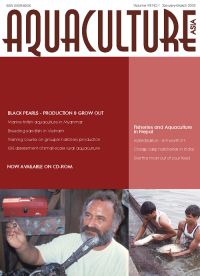
Aquaculture Asia Magazine, January-March 2005

In this issue:

Freshwater prawn culture in China and its market prospects. Demise of wastewater-fed duckweed-based aquaculture in Bangladesh. Freshwater finfish biodiversity - an Asian perspective. Her farm is destroyed, how can we help? Women oyster vendors in Eastern Thailand. Farm-level feeds and feeding practices for marine finfish. ACIAR grouper grow-out feeds and CSIRO research. Feed development and application for juvenile grouper. Grouper growout feeds. Silver pomfret culture technology.

Report on indigenous participation in aquaculture - the Pacific experience, Sydney, Australia, 27-28 September 2004

The workshop Indigenous Participation in Aquaculture – the Pacific Experience was held as a day-and-a-half session in the Australasian Aquaculture 2004, Sydney, 27–28 September 2004. The workshop promoted exchange of information and experiences between researchers, government representatives and industry involved in aquaculture development in the Pacific. The workshop recognised the increasing interest in aquaculture as an industry that can provide benefits for indigenous communities in Australia as well as the Pacific Islands.

Aquaculture Asia Magazine, April-June 2004

In this issue:

Genetic impacts of translocation on aquatic biodiversity in Asia. Carp culture in Iran. Opportunities and challenges in Myanmar aquaculture. Impacts of monosex Macrobrachium culture on seed availability in India. Use of new technology and skills for eco-friendly production of tiger shrimp Penaeus monodon. Larval rearing and spat production of the windowpane shell Placuna placenta. HACCP in shrimp farming. First breeding success of Napoleon wrasse Cheilinus undulatus and coral trout Plectropomus leopardus.

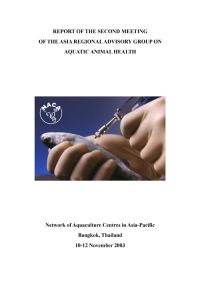
Report of the second meeting of the Asia Regional Advisory Group on Aquatic Animal Health, 10-12 November 2003

The Asia Regional Advisory Group on Aquatic Animal Health meets annually to discuss regional health issues including emerging disease threats. This report includes a review of regional disease status circa 2003, global and regional disease reporting arrangements, global issues and standards, progress in implementation of the the Regional Technical Guidelines on Health management for the Responsible Movement of Live Aquatic Animals, identification and designation of regional aquatic animal health resources and regional and international cooperation.

Manual of procedures for the implementation of the Asia Regional Technical Guidelines on Health Management for the Responsible Movement of Live Aquatic Animals

The Manual of Procedures for the Implementation of the Asia Regional Technical Guidelines on Health Management for the Responsible Movement of Live Aquatic Animals provides background material and detailed technical procedures to assist countries and territories in the Asia Region in implementing the Asia Regional Technical Guidelines on Health Management for the Responsible Movement of Live Aquatic Animals. The Technical Guidelines were initiated due to increased recognition that disease emergence is often linked to live aquatic animal movements.

Asia Regional Technical Guidelines on Health Management for the Responsible Movement of Live Aquatic Animals

The Asia Regional Technical Guidelines on Health Management for the Responsible Movement of Live Aquatic Animals and their associated implementation plan, the Beijing Consensus and Implementation Strategy provide expert guidance for national and regional efforts in reducing the risks of disease due to trans-boundary movement of live aquatic animals. The Technical Guidelines were initiated due to increased recognition that disease emergence is often linked to live aquatic animal movements and causes significant socio-economic losses.

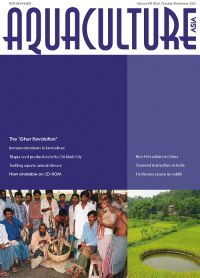
Aquaculture Asia Magazine, October-December 2003

In this issue:

Freshwater prawn Macrobrachium nobilii for rural nutrition. Snapshots of a socially responsible farm in Sri Lanka. Introduction of rainbow trout in Nepal. Tilapia seed production in Ho Chi Minh City, Vietnam. Seaweed mariculture - scope and potential in India. Growth enhancement of carp and prawn through dietary suppliementation with salt. Fertilisation and water quality management in small ponds. The "Gher Revolution". Exercising responsibilities to tackle aquatic animal disease. Immunostimulants in aquaculture.

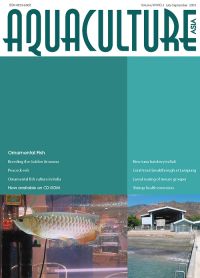
Aquaculture Asia Magazine, July-September 2003

In this issue:

Ornamental fish farming in India. Tilapia for Indian aquaculture? Peri-urban food production in southeast Asia. Socio-economic consequences of shrimp farming in Andhra Pradesh. Breeding techniques for golden arowana Scleropages formosus. Captive breeding of peacock eel Macrognathus aculeatus. Substrate-based aquaculture systems. Extension in shrimp health management - experiences from India. Treatment of disease in freshwater shrimps and crabs in China. Larval rearing techniques for humpback grouper Cromileptes altivelis.

Aquaculture Asia Magazine, April-June 2003

In this issue:

Peri-urban aquaculture in Kolkata. Diffusion and adoption of shrimp farming technologies. Aquaculture education in India. Information system on fish germplasm resources in China. Freshwater crustacean aquaculture in China. The role of macronutrients. Innovations by Bengal farmers. Scientific guidelines for freshwater prawn farmers in India. Status of mariculture in Indonesia. Use of probiotics in larval rearing. Problems in shrimp culture during the wet season.

Aquaculture Asia Magazine, January-March 2003

In this issue:

Fertilisation, soil and water quality management. Commercialisation of giant freshwater prawn culture in India. Aquaculture in reservoir-fed canal systems. Production of black-lip pearl oyster Pinctada margaritifera. Hybridisation hassles. Breeding sea cucumber Holothuria scabra in Vietnam. Use of palm kernel meal in feeds. Getting the most out of your feed. Marine finfish aquaculture in Myanmar. Penaeus monodon culture in low-salinity areas. Fisheries and aquaculture in Nepal.

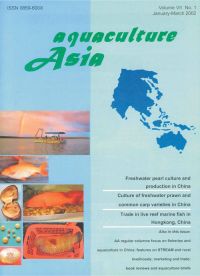
Aquaculture Asia Magazine, January-March 2002

In this issue:

Chemical residues. Live reef fish trade in Hong Kong. Barramundi farming in Australia. Freshwater pearl and prawn production in China. Status of common carp varieties under culture in China. Induced spawning of Pangasius sutchi. Cambodian farmers innovate cost-effective variations on Chinese hatcheries. Genes and fish. Improving rural livelihoods in Cambodia, Vietnam, Nepal and the Philippines through the STREAM Initiative. Marine finfish news, book reviews and more.