NACA member governments are: Australia, Bangladesh, Cambodia, China, Hong Kong SAR, India, Indonesia, I.R. Iran, Kingdom of Saudi Arabia, Korea (DPR), Lao PDR, Malaysia, Maldives, Myanmar, Nepal, Pakistan, Philippines, Sri Lanka, Thailand and Vietnam.
In 2023, FAO and NACA initiated a consultation process on aquaculture effluent management in Asia and the Pacific in collaboration with NACA member governments. Experts across the region gathered information to assess the state of governance, advancements in technology and innovation in aquaculture effluent management. The consultative process culminated in an expert workshop, convened from 14 to 15 November, funded by FAO, to share views and national experiences on aquaculture effluent management.
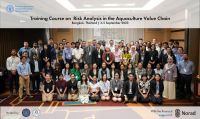
Risk analysis is an essential component of a national aquatic organism health strategy. Now widely applied in many fields, risk analysis provides a science-based framework for evaluating hazards, determining the likelihood and extent of potential harms, mitigating risks and guiding policy decisions. Combining risk and value chain analysis provides a risk-based and people-centred approach to managing disease risks and planning control measures for aquaculture systems. FAO organised a training course on Risk Analysis in the Value Chain from 3-5 September in Bangkok, Thailand, in partnership with NACA, INFOFISH, Thailand Department of Fisheries and the ASEAN Network of Aquatic Animal Health Centres. Financial support was provided by the Norwegian Agency for Development Cooperation and Thailand Department of Fisheries.
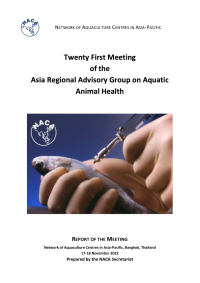
This report summaries the proceedings of the 21st meeting of the Regional Advisory Group on Aquatic Animal Health, held 17-18 November 2022. The role of the group is to review trends in disease and emerging threats in the region, identify developments in global disease issues and standards, to evaluate the Quarterly Aquatic Animal Disease Reporting Program and to provide guidance on regional strategies to improve aquatic animal health management.
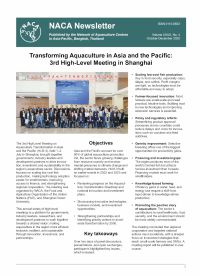
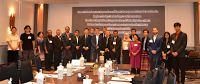
Ocean University of China and partners will convene the forum from 20 to 22 November 2022. The forum will cover the following: Topic 1: International talent cultivation and training;Topic 2: Science and technology innovation; Topic 3: Industrial synergy. The forum will host discussions about the implementation of the “Blue Transformation” strategy, further expansion of the space for fisheries and aquaculture, and ways of improving the production capacity of aquatic products, with the purpose of facilitating the achievement of the UN Sustainable Development Goals. Participation is free but registration is required. Registration closes on 22 October.
This report summaries the proceedings of the 20th meeting of the Regional Advisory Group on Aquatic Animal Health, held 4-5 November 2021. The meeting discussed: Progress on NACA’s Asia Regional Aquatic Animal Health Program; updates from the OIE Aquatic Animal Health Standards Commission; aquaculture biosecurity; Progressive Management Pathway for Improving Aquaculture Biosecurity activities relevant to Asia; a systematic approach for quantifying biosecurity measures in aquaculture; aquatic animal health strategy; updates on the OIE Regional Collaboration Framework on Aquatic Animal Health; and updates on the QAAD Reporting and Disease List.
A free virtual seminar series will be held from 13-17 December, hosted by the Freshwater Fisheries Research Center, Chinese Academy of Fisheries Sciences, in partnership with NACA and the Chinese Ministry of Agriculture and Rural Affairs. The seminar will be held via Zoom. It will give participants a background in aquatic resource conservation practices, recommend options for sustainable aquaculture farming systems with potential for intensification with intervention strategies, and build a communication and experience exchange platform for information dissemination and future collaboration. Participation is free. Registration closes 10 December.
This report summarises the proceedings of the 19th meeting of the Advisory Group, held 26-27 November 2020 via video conference. The group's role includes reviewing disease trends and emerging threats in the region, identifying developments in global aquatic disease issues and standards, evaluating the Quarterly Aquatic Animal Disease Reporting Programme and providing guidance on regional strategies to improve aquatic animal health management.
The 35th Session of Asia-Pacific Fishery Commission has identified the lack of effective governance as a major threat to sustainable aquaculture growth for greater contribution to achievement of the Sustainable Development Goals. The objectives of the consultation were to: Share the results of country studies on aquaculture governance in respective countries; identify gaps, issues and challenges in aquaculture governance; and recommend strategies and actions to improve and strengthen aquaculture governance.
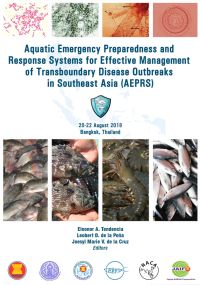
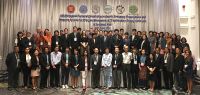
The ASEAN Regional Technical Consultation on Aquatic Emergency Preparedness and Response Systems for Effective Management of Transboundary Disease Outbreaks in Southeast Asia was held from 20-22 August 2018 in Bangkok, Thailand. The consultation discussed the status of and/or need for aquatic emergency preparedness and response systems for effective management of transboundary disease outbreaks in Southeast Asia. Issues were addressed through country reports, technical presentations and a workshop.
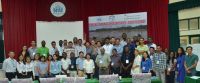
Two consultations were held back to back in Thailand from 5-7 November, namely the Consultation on Strengthening Governance of Aquaculture for Sustainable Development in Asia-Pacific and the Consultation on Demographic Changes in Fishing Communities in Asia. The consultations were held at the Centara Grand Hotel at Ladprao, Bangkok. The consultations were attended by 29 participants from 15 countries in the Asia-Pacific region. The consultations were jointly organised by FAO and NACA. Audio recordings are available of some presentations.
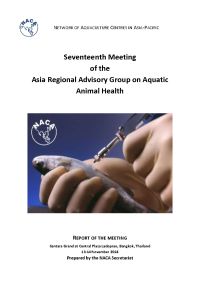
This report summarises the proceedings of the 17th meeting of the Advisory Group, held 13-14 November 2018 in Bangkok, Thailand. The group's role includes reviewing disease trends and emerging threats in the region, identifying developments in global aquatic disease issues and standards, evaluating the Quarterly Aquatic Animal Disease Reporting Programme and providing guidance on regional strategies to improve aquatic animal health management.
Fifty fellowships are available for young scientists and researchers under the ASEAN-India Research Training Fellowship Scheme (AIRTF), to study at Indian academic and R&D institutions. The fellowships are for a period of up to six months and include travel and financial support. The fellowships are intended to build capacity among young ASEAN researchers in science and technology and to further strengthen the bond between India and ASEAN member states.
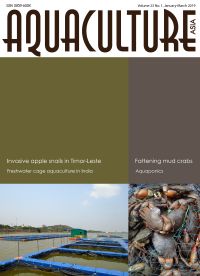
Current status of freshwater cage aquaculture in India; Fattening of mud crab Scylla serrata in estuarine region of south-eastern West Bengal; Aquaponics - sustainable farming method in the fight against hunger; aquatic invasive apple snails (Pomacea spp.) in Timore-Leste - current status, spread and management in rice fields; NACA Newsletter.
Joint FAO-NACA workshop reviews aquaculture farming system classification scheme; Join us for the Global Conference on Aquaculture 2020; Expert Consultation on Genetically Responsible Aquaculture; Strengthening governance in aquaculture; Pike perch and in-pond raceways; Quarterly Aquatic Animal Disease Report, April-June 2018.
Asia has experienced rapid development of aquaculture in the past four decades. This has improved food security, livelihoods and economic development in many Asian countries. It has also become the main source of fish products in the region. Yet aquaculture as a new industry is poorly regulated in many countries. Its development has come with environmental problems, animal disease and food safety issues. These have resulted from both inadequate laws and poor enforcement.
The ASEAN Regional Consultation on Aquatic Emergency Preparedness and Response Systems for Effective Management of Transboundary Disease Outbreaks in Southeast Asia was held in Bangkok, 20-22 August. The objective of the consultation was to bring together ASEAN member states and technical experts to discuss the current status of emergency animal disease preparedness and response systems, and to identify gaps and opportunities for regional cooperation in management of transboundary disease.
The EURASTiP Exchange Programme provides opportunities for industry, researchers and educators from Europe and south-east Asia to connect and gain new perspectives while sharing innvovative ideas to help develop long term partnerships. Bursaries of up to €3,000 per exchange are available (subject to eligibility criteria) to support international innovation and collaboration. The deadline for applications is 20 September 2018. For more information on how to apply please see the EURASTiP website.
22 March 2018 | Network of Aquaculture Centres in Asia-Pacific | 3289 Downloads | .pdf | 3.45 MB
This report summarises the proceedings of the 16th meeting of the Advisory Group, held 26-27 August 2017 in Bali, Indonesia. The group's role includes reviewing disease trends and emerging threats in the region, identifying developments in global aquatic disease issues and standards, evaluating the Quarterly Aquatic Animal Disease Reporting Programme and providing guidance on regional strategies to improve aquatic animal health management. The meeting included discussion on Tilapia Lake Virus (TiLV) and developments in antimicrobial resistance.
This collection contains video recordings of the lectures from the Regional Training Course on Culture-based Fisheries in Inland Waters, held at Nha Trang University, Vietnam. The objective of the course was to provide participants with the skills to assist local communities to plan and manage culture-based fisheries; a relatively simple and low cost technology that can deliver nutritional and economic benefits to rural communities with few livelihood options. The course was sponsored by the United Nations University Fisheries Training Programme.