NACA member governments are: Australia, Bangladesh, Cambodia, China, Hong Kong SAR, India, Indonesia, I.R. Iran, Kingdom of Saudi Arabia, Korea (DPR), Lao PDR, Malaysia, Maldives, Myanmar, Nepal, Pakistan, Philippines, Sri Lanka, Thailand and Vietnam.
Audio recording of presentation delivered at the Consultation on Strengthening Governance of Aquaculture for Sustainable Development in Asia-Pacific, 5-6 November 2019, Bangkok, Thailand.
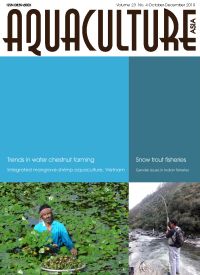
Trends in water chestnut Trapa bispinosa farming in West Bengal, India; Improving livelihoods and increasing coastal resilience: A look at integrated mangrove-shrimp aquaculture in Vietnam; Snow trout fisheries in Arunachal Pradesh of the Eastern Himalayas; Gender issues in the fisheries sector of India; NACA Newsletter.
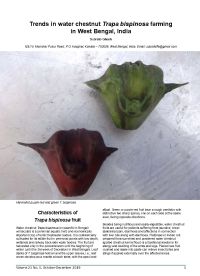
Water chestnut Trapa bispinosa (or paanifol in Bengali vernacular) is a perennial aquatic herb and economically important crop of lentic freshwater bodies. It is commercially cultivated for its edible fruit in shallow perennial ponds, wetlands and railway track-side water bodies. The fruit are harvested only in the post-monsoon until the beginning of winter. This article describes the farming and management of water chestnut, market chains, economic returns and role of this crop in the livelihoods of farmers in West Bengal, India.
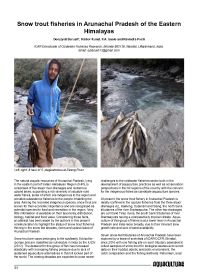
Snow trout are known for their economic importance and are recognised as potential species for food and recreation. However, very little information is available on their taxonomy, distribution, biology, habitat and food value. The demand for this group of fish has increased drastically with increasing fishing pressure due to the lack of sustained aquaculture alternatives in this hill locked part of the world. This article describes the status of snow trout fisheries in the snow fed streams, rivers and upland lakes of Arunachal Pradesh, India.
Women play an essential role in the fisheries sector of India. They make an immense contribution by engaging in varied activities. They may engage as paid or unpaid workers both in pre and post-harvest activities, in seafood processing plants, as caregivers of the fisher family - maintaining social networks and culture of the community and as members of fish worker movements and fisher’s organisations. However, their contribution often remains invisible or understated. This article examines the contribution of women to the fisheries sector in India, identifies constraints and suggests ways to address these issues.
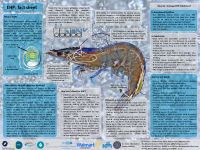
EHP or Enterocytozoon hepatopenaei is a fungal microsporidian parasite that infects the hepatopancreas (hp) of tiger shrimp (Penaeus monodon) and whiteleg shrimp (P. vannamei) in Thailand and results in slow growth and, in chronic infections, mortalities. EHP is also known from Brunei, China, India, Indonesia, Malaysia, Philippines, Venezuela and Vietnam. This fact sheet provides information on the EHP life cycle, signs of infection, diagnosis and management in both hatcheries and growout, as well technical contacts for further information.
The 82nd edition of the Quarterly Aquatic Animal Disease report contains information from eleven governments. The foreword welcomes Dr Huang Jie, NACA's new Director General, a health specialist that has previously participated in the Asia-Pacific Regional Advisory Group on Aquatic Animal Health.
Two consultations were held back to back in Thailand from 5-7 November, namely the Consultation on Strengthening Governance of Aquaculture for Sustainable Development in Asia-Pacific and the Consultation on Demographic Changes in Fishing Communities in Asia. The consultations were held at the Centara Grand Hotel at Ladprao, Bangkok. The consultations were attended by 29 participants from 15 countries in the Asia-Pacific region. The consultations were jointly organised by FAO and NACA. Audio recordings are available of some presentations.
The 81st edition of the Quarterly Aquatic Animal Disease report contains information from twelve governments. The foreword discusses the proposed Regional Collaboration Framework on Aquatic Animal Diseases in Asia and the Pacific. This will initially focus on building a framework of actors with the aim of strengthening laboratory capacity for aquatic animal disease activities in Asia and the Pacific, for example to support emergency response.
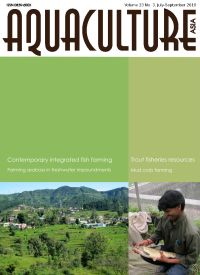
Farming of Asian seabass Lates calcarifer in freshwater impoundments in West Bengal, India; An integrated approach to contemporary fish farming practice incorporating traditional knowledge in mid hills in India: A success story; Mud crab farming: An alternative livelihood in the Indian Sundarban; Trout fisheries resources and potentialities in the Menchukha region of Arunachal Pradesh; NACA Newsletter.
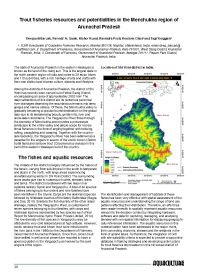
The success of any aquaculture project or fish farm depends to a large extent on selection of a suitable site. Site selection using the conventional method, based on very limited data, can result in inaccurate information and cause discrepancies among the implementing agencies. The utilisation of remote sensing and geographic information systems can provide a useful source of additional information. This article provides a GIS-based analysis of the suitability of sites for trout farming and the establishment of sport fisheries in the Menchukha valley, Arunachal Pradesh.
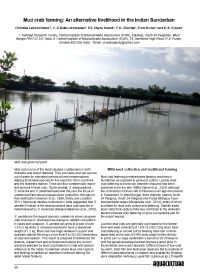
Mud crab is one of the most valuable crustaeceans in both domestic and export markets. They are hardy and can survive out of water for extended periods at lower temperatures, making them idea for live export. Mud crab fattening predominates farming practices in Sundarban as opposed to grow-out culture. This report describes current practces adopted by mud crab farmers in India with special reference to the Indian Sundarban, where mud crab capture and farming are an important livelihood for small holder farmers.
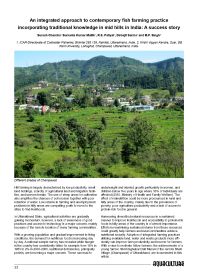
Farming in the mid hills is largely characterised by small land holdings, low productivity, scarcity of agricultural land and irrigation facilities, and uneven terrain. Low returns in farming and unemployment problems in the mid-hills are compelling youth to move to the cities to find livelihoods. Adoption of integrated farming practices utilising available land, water and waste products more efficiently can improve farm productivity and income. The achievements of a young farmer from a remote village working to motivate others are documented in this article.
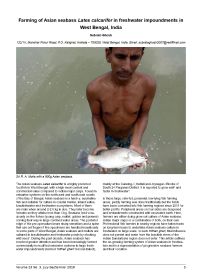
The Asian seabass Lates calcarifer is a highly preferred foodfish in West Bengal, with a high meat content and commercial value compared to Indian major carps. Found in estuarine systems on the north-east and south-east coasts of the Bay of Bengal, Asian seabass is a hardy, euryhaline fish and suitable for culture in coastal marine, inland saline, brackishwater and freshwater ecosystems. During the past decade, Asian seabass has received greater attention and has been increasingly farmed commercially in modified-extensive systems in large freshwater impoundments (termed ‘mithen gheri’ in local dialect).
This report summarises the proceedings of the 17th meeting of the Advisory Group, held 13-14 November 2018 in Bangkok, Thailand. The group's role includes reviewing disease trends and emerging threats in the region, identifying developments in global aquatic disease issues and standards, evaluating the Quarterly Aquatic Animal Disease Reporting Programme and providing guidance on regional strategies to improve aquatic animal health management.
The 80th edition of the Quarterly Aquatic Animal Disease report contains information from twelve governments. The foreword discusses revisions to the regional reporting system for 2019.
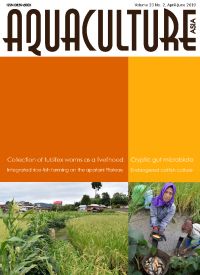
Collection of tubifex worms from the Adi Ganga canal, West Bengal as means of livelihood; Some facts for the grow-out culture of an endangered catfish, Clarias magur; The cryptic domain of gut microbiota in composite culture of Indian major carps; Integrated rice-fish farming in hilly terraces of the Apatani Plateau, Arunachal Pradesh.
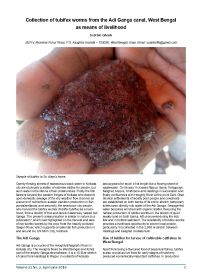
Nutrient-laden canal water from Kolkata is the lifeline of two communities: Firstly the fish farmers beyond the eastern fringes of Kolkata who depend upon domestic sewage of the dry weather flow channel as a source of nutrients to sustain plankton production in fish ponds/wetlands; and secondly, the semi-poor city people, who harvest the tubifex worms (Tubifex tubifex) as a livelihood, from a stretch of derelict waterway named Adi Ganga. This article describes the practices of tubifex collectors and the market chain for the worms.
Although relatively slow growing, market demand for Clarias magur is sufficient to make it economically attractive for aquaculture. Supply of this species is through a combination of wild caught and cultured fish. However, a drastic reduction in wild populations has led to C. magur being listed as endangered by the International Union for Conservation of Nature. Only limited quantities of cultured fish are available. The article communicates the aquaculture practices of C. magur including hatchery, nursery and grow out.
The digestive tract of all vertebrates including fish is known to harbour a complex microbial ecosystem with a large, diverse and dynamic collection of microorganisms. These microbes become an integral component of the host animal with intimate host-microbe associations. In the following study, we employed both bacterial enumeration and culture independent DNA fingerprinting approach to examine the presence of host-specific gut microbiota in Indian major carps related to their occupancy of distinct ecological niches.