NACA member governments are: Australia, Bangladesh, Cambodia, China, Hong Kong SAR, India, Indonesia, I.R. Iran, Kingdom of Saudi Arabia, Korea (DPR), Lao PDR, Malaysia, Maldives, Myanmar, Nepal, Pakistan, Philippines, Sri Lanka, Thailand and Vietnam.
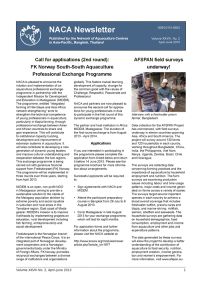
Call for applications (2nd round): FK Norway South-South Aquaculture Professional Exchange Programme. AFSPAN field surveys underway! 4th Global Symposium on Gender in Aquaculture and Fisheries. An anti-viral treatment for healthier black tiger prawns. Jungle perch on the comeback trail. Nursery management of grouper: A best-practice manual (Indonesian translation). Hatchery management of tiger grouper (Epinephelus fuscoguttatus): A best-practice manual (Indonesian translation). Priority adaptations to climate change for Pacific fisheries and aquaculture: Reducing risks and capitalising on opportunities. Improving biosecurity through prudent and responsible use of veterinary medicines in aquatic food production.
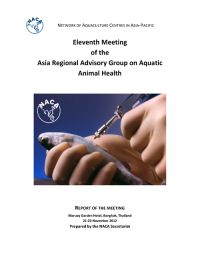
The Asia Regional Advisory Group on Aquatic Animal Health meets annually to discuss regional health issues including emerging disease threats. This report includes a review of regional disease status circa 2012, global and regional disease reporting arrangements, global issues and standards, progress in implementation of the the Regional Technical Guidelines on Health management for the Responsible Movement of Live Aquatic Animals, identification and designation of regional aquatic animal health resources and regional and international cooperation.
This report, the 59th in the series, contains information about the aquatic animal health status of sixteen states in the Asia-Pacific region. The foreword contains an update on acute hepatopancreatic necrosis syndrome (AHPNS) of cultured shrimp.
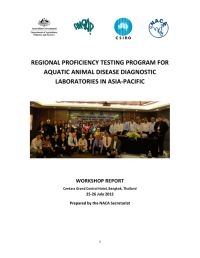
This is the report of the first workshop of the Regional proficiency testing program for aquatic animal disease diagnostic laboratories in Asia-Pacific, held from 25-26 July 2012 in Bangkok, Thailand. The objectives of the programme were to strengthen Asia’s regional capability to diagnose important aquatic animal diseases that impact on trade, train participating laboratory personnel in diagnostic standards and proficiency testing procedures, and to provide technical assistance to improve laboratory performance.
This report, the 58th in the series, contains information about the aquatic animal health status of fifteen states in the Asia-Pacific region. The foreword contains a disease advisory notice on acute hepatopancreatic necrosis syndrome (AHPNS) of cultured shrimp.
Outcomes of emergency consultation on shrimp early mortality syndrome / AHPNS. Workshop on Aquaculture Planning and Management Tools. Workshop on Proficiency Testing Programme for Aquatic Animal Disease Diagnostic Laboratories in Asia-Pacific. AFSPAN Project gets underway.
This report, the 57th in the series, contains information about the aquatic animal health status of thirteen states in the Asia-Pacific region. The foreword discusses the outcomes of the 11th meeting of the Asia Regional Advisory Group on Aquatic Animal Health.
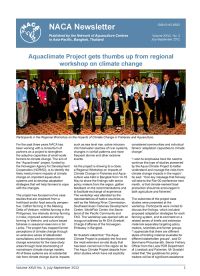
Aquaclimate Project gets thumbs up from regional workshop on climate change. Developing climate resilient aquaculture: The Aquaclimate Project. Regional framework for cooperation on climate change. Emergency regional consultation on shrimp early mortality syndrome, 9-10 August, Bangkok. Regional study/workshop on adoption of aquaculture assessment tools for sustainability. Regional proficiency testing for aquatic animal disease diagnostic laboratories.
This report, the 56th in the series, contains information about the aquatic animal health status of fifteen states in the Asia-Pacific region. The foreword discusses a case definition for acute hepatopancreatic necrosis syndrome ("early mortality syndrome") in cultured shrimp in Asia.
This report, the 55th in the series, contains information about the aquatic animal health status of fourteen states in the Asia-Pacific region. The foreword discusses acute hepatopancreatic necrosis syndrome ("early mortality syndrome") in cultured shrimp in Asia.
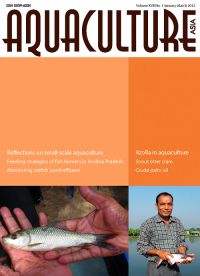
Reflections on small-scale aquaculture. Azolla - an aquatic fern of significance to small-scale aquaculture. Monitoring quantity and quality of striped catfish pond effluent. Feeding strategies adopted by fish farmers in Andhra Pradesh, India. Hatchery techniques applied for the artificiant production of snout otter clam (Lutraria rhynchaeria) in small scale farms in Nha Trang City, Vietnam. Crude palm oil is a sustainable alternative to the growing fish oil scarcity, particularly for the aquaculture of warm freshwater fish species.
This report, the 54th in the series, contains information about the aquatic animal health status of fourteen states in the Asia-Pacific region. The foreword discusses emerging aquatic animal diseases in the region, including acute hepatopancreatic necrosis disease and scale-drop syndrome.
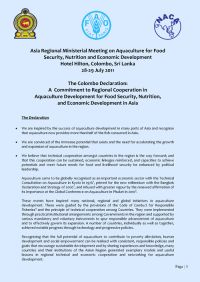
The Colombo Declaration is a commitment to regional cooperation in aquaculture development for food security, nutrition and economic development in Asia. It was developed and agreed on by delegations from 18 states at a ministerial-level meeting held in Colombo, Sri Lanka, 28-29 July 2011.
This report, the 5rnd in the series, contains information about the aquatic animal health status of thirteen states in the Asia-Pacific region. The foreword discusses the 8th Symposium on Diseases in Asian Aquaculture.
This report, the 52nd in the series, contains information about the aquatic animal health status of thirteen states in the Asia-Pacific region. The foreword discusses transboundary disease issues and contingency planning.
This report, the 51st in the series, contains information about the aquatic animal health status of twelve states in the Asia-Pacific region. The foreword discusses animal welfare in aquaculture.
This report, the 50th in the series, contains information about the aquatic animal health status of thirteen states in the Asia-Pacific region. The foreword discusses food safety and biosecurity.
This report, the 49th in the series, contains information about the aquatic animal health status of fifteen states in the Asia-Pacific region. The foreword discusses the outcomes of the ninth meeting of the Asia Regional Advisory Group on Aquatic Animal Health.