NACA member governments are: Australia, Bangladesh, Cambodia, China, Hong Kong SAR, India, Indonesia, I.R. Iran, Kingdom of Saudi Arabia, Korea (DPR), Lao PDR, Malaysia, Maldives, Myanmar, Nepal, Pakistan, Philippines, Sri Lanka, Thailand and Vietnam.
24 April 2013 | Ketut Sugama, Michael A. Rimmer, Suko Ismi, Isti Koesharyani, Ketut Suwirya, N.A. Giri and Veronica R. Alava | 7467 Downloads | .pdf | 2.5 MB
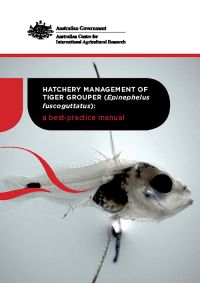
This manual provides guidelines for the production of tiger grouper fingerlings. It outlines best-practice methods for broodstock maintenance, spawning, egg incubation and rearing of larvae through to 2–3 cm, fully metamorphosed juveniles. The guidelines have been developed from the outcomes of ACIAR-funded research, as well as from the experience of Indonesian, Philippine and Australian scientists and commercial hatchery operators, and published information. It provides an aid for improving the availability of grouper seed stock.
This report, the 60th in the series, contains information about the aquatic animal health status of fifteen states in the Asia-Pacific region. The foreword discusses response to aquatic animal disease emergencies.
Call for applications (2nd round): FK Norway South-South Aquaculture Professional Exchange Programme. AFSPAN field surveys underway! 4th Global Symposium on Gender in Aquaculture and Fisheries. An anti-viral treatment for healthier black tiger prawns. Jungle perch on the comeback trail. Nursery management of grouper: A best-practice manual (Indonesian translation). Hatchery management of tiger grouper (Epinephelus fuscoguttatus): A best-practice manual (Indonesian translation). Priority adaptations to climate change for Pacific fisheries and aquaculture: Reducing risks and capitalising on opportunities. Improving biosecurity through prudent and responsible use of veterinary medicines in aquatic food production.
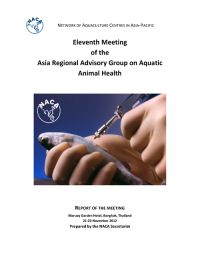
The Asia Regional Advisory Group on Aquatic Animal Health meets annually to discuss regional health issues including emerging disease threats. This report includes a review of regional disease status circa 2012, global and regional disease reporting arrangements, global issues and standards, progress in implementation of the the Regional Technical Guidelines on Health management for the Responsible Movement of Live Aquatic Animals, identification and designation of regional aquatic animal health resources and regional and international cooperation.
This report, the 59th in the series, contains information about the aquatic animal health status of sixteen states in the Asia-Pacific region. The foreword contains an update on acute hepatopancreatic necrosis syndrome (AHPNS) of cultured shrimp.
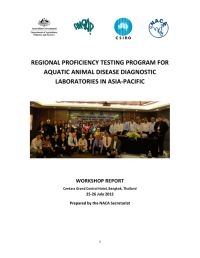
This is the report of the first workshop of the Regional proficiency testing program for aquatic animal disease diagnostic laboratories in Asia-Pacific, held from 25-26 July 2012 in Bangkok, Thailand. The objectives of the programme were to strengthen Asia’s regional capability to diagnose important aquatic animal diseases that impact on trade, train participating laboratory personnel in diagnostic standards and proficiency testing procedures, and to provide technical assistance to improve laboratory performance.
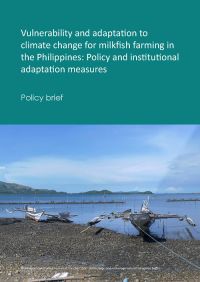
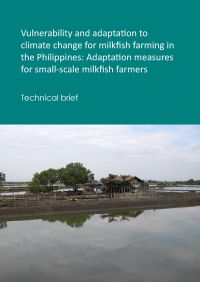
This brief summarises the results from the interdisciplinary study conducted within the Aquaclimate project in Iloilo province in the Philippines looking at the impacts of climate change on small scale milkfish farming. The brief provides guidelines for adaptation and policy development to address the climate change impacts on small scale milkfish farming in the Philippines and how adaptation measures should be implemented in the region.
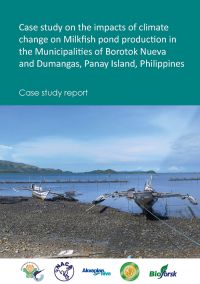
This case study examines the impacts of climate change on milkfish farmers in Iloilo. Farmer perceptions of climate change, attitudes and adaptation strategies were mapped via focus group discussion, stakeholder workshops and questionnaires. Measures that could be achieved to reduce vulnerability to climate change include sustainable aquaculture practices; diversification of farmers’ income sources; diversification of culture species; utilising natural resources to increase productivity; and building farmer capacities through access to information and knowledge.
This technical brief summarises the results from an interdisciplinary study in two municipalities in Panay Island, Philippines, looking at vulnerability to climate change, impacts and adaptation measures for milkfish farmers. The brief provides guidelines for adaptation measure that can be undertaken by the farmers together with institutional, policy, science and technology support required to improve their adaptive capacity to cope with future climate change.
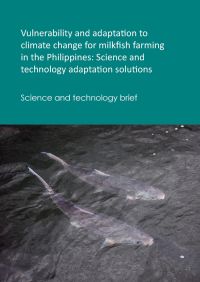
This brief summarises the results from the interdisciplinary study conducted within the AQUACLIMATE project in Iloilo province in the Philippines, looking at the impacts of climate change on small scale milkfish farming. The brief provides guidelines for academics, researchers and technologists to support farmers for adaptation measures to address the climate change impacts on small scale milkfish farming.
This report, the 58th in the series, contains information about the aquatic animal health status of fifteen states in the Asia-Pacific region. The foreword contains a disease advisory notice on acute hepatopancreatic necrosis syndrome (AHPNS) of cultured shrimp.
Outcomes of emergency consultation on shrimp early mortality syndrome / AHPNS. Workshop on Aquaculture Planning and Management Tools. Workshop on Proficiency Testing Programme for Aquatic Animal Disease Diagnostic Laboratories in Asia-Pacific. AFSPAN Project gets underway.
This report, the 57th in the series, contains information about the aquatic animal health status of thirteen states in the Asia-Pacific region. The foreword discusses the outcomes of the 11th meeting of the Asia Regional Advisory Group on Aquatic Animal Health.
Aquaclimate Project gets thumbs up from regional workshop on climate change. Developing climate resilient aquaculture: The Aquaclimate Project. Regional framework for cooperation on climate change. Emergency regional consultation on shrimp early mortality syndrome, 9-10 August, Bangkok. Regional study/workshop on adoption of aquaculture assessment tools for sustainability. Regional proficiency testing for aquatic animal disease diagnostic laboratories.
The recordings in this collection are the annual progress reports of NACA's regional lead centres in Thailand, China and the Philippines. The presentations were made at the 23rd NACA Governing Council Meeting, which was held in Siem Reap, 27-29 May 2011, hosted by the Government of Cambodia. The Governing Council is NACA's peak policy body, which meets annually to review the organisation's activities and set priorities for the year ahead.
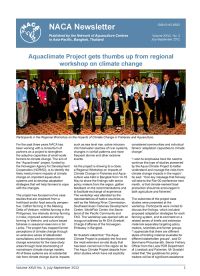
For three years NACA worked with a consortium of partners on a project to strengthen the adaptive capacities of small-scale farmers to climate change. The aim of the “Aquaclimate” project, funded by the Norwegian Agency for Development Cooperation (NORAD), was to identify the likely medium-term impacts of climate change on important aquaculture systems and to develop adaptation strategies that will help farmers to cope with the changes.
This report, the 56th in the series, contains information about the aquatic animal health status of fifteen states in the Asia-Pacific region. The foreword discusses a case definition for acute hepatopancreatic necrosis syndrome ("early mortality syndrome") in cultured shrimp in Asia.
9 January 2012 | Nemencio B. Arevalo, Tiburcio C. Donaire, Maximo A. Ricohermoso and Ronald Simbajon | 3293 Downloads | .pdf | 8.53 MB
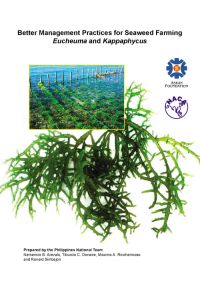
This practical manual "Better management practices for seaweed farming" is produced by the Philippines national team under the ASEAN Foundation supported project "Strengthening capacity of small holder ASEAN aquaculture farmers for competitive and sustainable aquaculture" implemented by NACA in five ASEAN countries. The long-term objective of the project was to assist ASEAN small- scale aquaculture farmers improve their livelihoods by being competitive in markets and improving farm management practices to deliver quality and sustainably produced aquaculture products.