NACA member governments are: Australia, Bangladesh, Cambodia, China, Hong Kong SAR, India, Indonesia, I.R. Iran, Kingdom of Saudi Arabia, Korea (DPR), Lao PDR, Malaysia, Maldives, Myanmar, Nepal, Pakistan, Philippines, Sri Lanka, Thailand and Vietnam.
A successful hatchery usually depends on a number of conditions; among the more important ones are right choice of site, effectiveness and efficiency of operational management. The present technology series attempts to describe the prototype warm water shrimp hatchery established and operated by SEAFDEC Aquaculture Department in collaboration with FAO since 1982. The techniques used in the operation of the hatchery have been refined, repeatedly tested and are now packaged for further testing in different environmental conditions elsewhere in the Philippines and other tropical countries.
In this issue: Pasoso Project - local livelihoods and turtle conservation in a small island MPA in central Sulawesi, Indonesia. Fisheries development in Lao PDR. The jankar system for sustainable livelihoods: Lessons from the BRFP. Alternative livelihoods for landlocked areas in BFAR Region 6. Lessons learned and future replication from Trao Reef locally managed marine reserve. About the STREAM Journal. About STREAM. This edition is also available in Ilonggo.
This report, the 26th in the series, contains information about the aquatic animal health status of fifteen states in the Asia-Pacific region. The foreword discusses responsible movement of live aquatic animals in the context of health and quarantine issues.
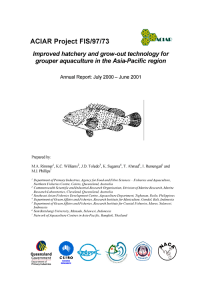
This is the annual report 2000-2001 of the ACIAR Project FIS/97/73 Improved hatchery and grow-out technolgy for grouper aquaculture in the Asia-Pacific region. The report describes progress by research partners in development of larval rearing, grow-out diet development, and collaboration via the Asia-Pacific Marine Finfish Aquaculture Network. It also provides an indicative research workplan for the year ahead and future plans for the network.
In this issue: What do we need to learn about to understand how people live? Taking steps to making livelihoods work. Reflections on the India-Nepal workshop. Reflections on the role of livelihoods approaches and analysis in Lao PDR. After the workshop on livelihood approaches and analysis. The relevance of livelihoods approaches in Yunnan, China. About the STREAM Journal. About STREAM. This edition is also available in Ilonggo, Khmer and Urdu.
This report, the 25th in the series, contains information about the aquatic animal health status of fifteen states in the Asia-Pacific region. The foreword discusses the outcomes of the third meeting of the Asia Regional Advisory Group on Aquatic Animal Health.
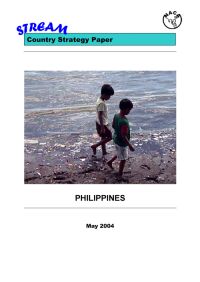
In 2002, the Philippines Government signed a Partnership Agreement with the NACA-STREAM Initiative. The initial focal point for STREAM work is Western Visayas, including the Sapian Bay and Banate Bay areas where BFAR Region 6, the STREAM country host, has on-going engagements, and also areas within Regions 6 and 7 where marine ornamentals collection and trading occur. The key disadvantaged groups for whom aquatic resources are a source of livelihood are the primary stakeholders for the initiative.
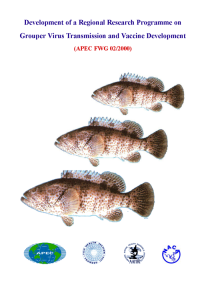
These are the proceedings of a workshop, funded by the APEC Fisheries Working Group Project 02/2000. The project developed a framework with nine major research components: Health and production at hatcheries, regional collaborative disease resource centers, regional disease monitoring and surveillance, improving regional diagnostic capabilities, responsible trans-boundary movement, farm health management, vaccines and vaccination, funding mechanisms and establishment of an ad-hoc working group.
In this issue: BFAR moves on in Region 6. Livelihood initiatives in Sapian Bay. Improving access to information through Barangay Learning Resource Centers. e Philippines Fisheries Information System. The contributions of planning activities in the participatory process. Inter-LGU alliance building: A key to sustaining the integrated fisheries and aquatic resource management council. About the STREAM Journal. About STREAM. This edition is also available in Ilonggo and Urdu.
This report, the 24th in the series, contains information about the aquatic animal health status of seventeen states in the Asia-Pacific region. The foreword discusses capacity building to prevent, prepare for an respond to aquatic animal health emergencies.
The aim of this report is to provide brief profiles of the main stakeholders within the aquatic resources and fisheries sectors in Western Visayas, to describe their access to information, and the communication between and within stakeholder groups, organisations and institutions within the sector. The report goes on to identify current needs and key action points which might maximise efficient communication.
This is the report of the “BFAR/NACA-STREAM/FAO Workshop on Livelihoods Approaches and Analysis” held in Iloilo City, Philippines from 24-28 November 2003. The main purpose of the workshop was to develop and document mechanisms for training in livelihoods approaches and analysis, and to build national capacity to conduct livelihoods analysis. The workshop in Iloilo was the first in a series which will take place in other countries in the region.
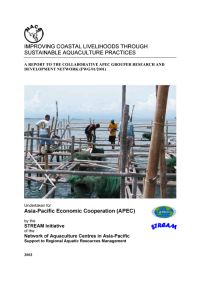
Wild-harvest fisheries for live reef fish are largely over-exploited or unsustainable. Sustainable aquaculture – such as that of groupers – is one option for meeting increasing demand for reef fish as well as potentially maintaining livelihoods of coastal communities. This report draws upon secondary literature, media sources and four diverse case studies from at-risk reef fisheries, to frame a strategy for encouraging sustainable aquaculture as an alternative to destructive fishing practices. It was commissioned by the APEC Secretariat.
The Second SPARK-STREAM Workshop on Livelihoods and Languages took place in Tagaytay City, Philippines, from 12-14 June 2003. The outputs of the workshop included drafts of a language-specific “Guide to Learning and Communicating about Livelihoods”, drafts of articles for STREAM Journal and SPARK Newsletter, identification of priorities and practical follow-up for capacity-building in carrying out participatory livelihoods analysis and the development of follow-up plans.
This study characterised the coral reef fisheries in Tubigon, Bohol, Philippines, and sought to derive lessons from the management interventions to eliminate unsustainable fishing practices and improve coastal livelihoods employed by various groups in Tubigon. The study investigated whether recent advances in aquaculture of grouper and reef fisheries had helped improve coastal community livelihoods and prevent unsustainable and destructive practices, and whether there was a role for the private sector in eliminating unsustainable fishing practices and improving coastal livelihoods.
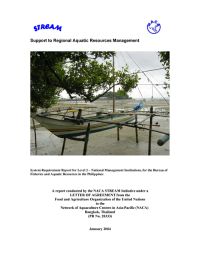
This System Requirement Report describes national level requirements for data collection and sharing mechanisms for fisheries co-management in the Philippines. It also provides a broad picture of the following for the national fisheries management level in the Philippines.
This report presents an overview of the state of aquatic resources in the Philippines, its performance and importance in the Philippine economy, and explores the situation of poverty in the "aquatic resources sector." The report describes the policy environment that guides the action of key actors in the sector. A general analysis of some trends in relation to factors that keep the poor from participating and benefiting from aquatic resource management is also provided.
This report, the 23rd in the series, contains information about the aquatic animal health status of twenty states in the Asia-Pacific region. The foreword discusses a project on Capacity and Awareness Building on Import Risk Analysis for Aquatic Animals, funded by the APEC Fisheries Working Group.
To review mud crab aquaculture in Australia and Southeast Asia, ACIAR funded a scoping study, followed by a workshop to review the study and discuss status and problems in different regions of Australia and Southeast Asia. The primary conclusion from the scoping study, verified by workshop discussion, was that the substantial crab farming operations which exist throughout Southeast Asia are still mainly based on wild caught crablets.
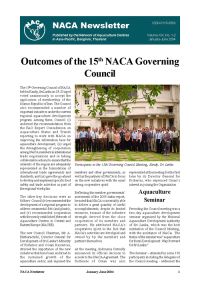
Outcomes of the 15th Governing Council. Aquaculture seminar. Council Chair for 2004-2005. Shrimp disease and coastal management - four years. New Import Risk Analysis publications. Reducing the risk of shrimp disease outbreaks in Vietnam. Network of Aquaculture Centres in Central and Eastern Europe. OASIS: The One Stop Aqua Shop Information Service. Other recent STREAM activities. New faces at NACA.