NACA publishes a wide range of aquaculture publications including technical manuals, workshop proceedings, better practice guidelines and several serials including Aquaculture Asia Magazine, the NACA Newsletter and the Quarterly Aquatic Animal Disease Report. To keep up to date with developments you could consider subscribing to our RSS feed.
Hemorrhagic disease of grass carp is a serious viral disease affecting grass carp fingerlings. The disease has the potential to spread and cause serious economic loss in countries of the region. This disease card is developed to raise awareness and support surveillance efforts of countries in the region.
1 September 2004 | Katsuhiko T. Wada | 1449 Downloads | .pdf | 126.89 KB
Akoya oyster disease is of concern to the region and was included in the Regional NACA/FAO/OIE quarterly aquatic animal disease (QAAD) reporting list, effective first quarter of 2003, to assist in the collection of occurrence data. This disease card will support the surveillance programs of countries in the Asia-Pacific region.
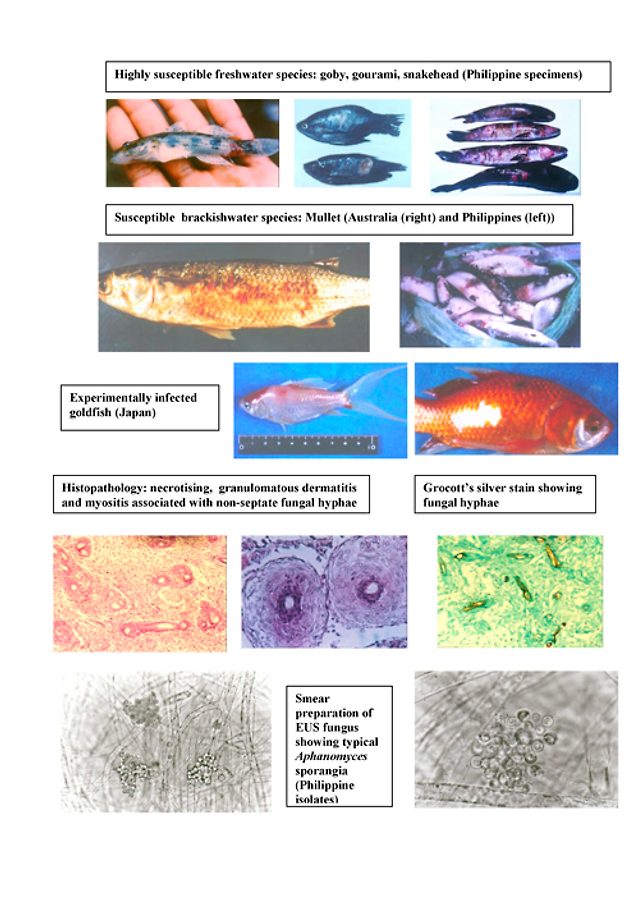
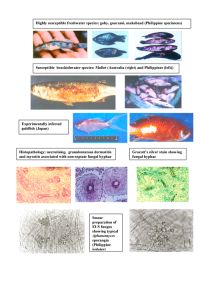
Epizootic ulcerative syndrome (EUS) is a seasonal epizootic condition of wild and farmed, fresh and brackishwater fish. Of complex infectious aetiology, it is characterised by the presence of invasive Aphanomyces infection and necrotising ulcerative lesions typically producing a granulomatous response. The disease is now endemic in South-east and south Asia, and has recently extended to West Asia. EUS is indistinguishable from red spot disease of eastern Australia and mycotic granulomatosis of Japan.
24 August 2004 | Mark Crane, Motohiko Sano and Cedric Komar | 1408 Downloads | .pdf | 393.23 KB
Koi herpes virus (KHV) outbreaks in the region have significant trade implications for the high value ornamental koi carp industry, and the important food fish common carp. Active trade in ornamental fish poses a potential risk for spread of KHV. Recognising the significance, "infection with koi herpesvirus" has been listed under "diseases prevalent in the region" in the NACA/FAO/OIE regional quarterly aquatic animal disease (QAAD) list, effective for reporting from first quarter of 2004.
This information sheet on slow growth syndrome in Penaeus monodon provides some background information on the possible aetiology and a working case definition. This will be useful for surveillance and epidemiological purposes to collate more information about this syndrome in the region.
Lymphocystis is a common, chronic and benign infection caused by an iridovirus that results in uniquely hypertrophied cells, typically in the skin and fins of only the more advanced orders of fishes.
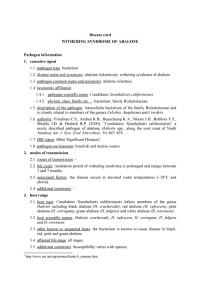
This disease card provides information on the causative agent, transmission, host range, distribution and diagnosis of abalone withering syndrome. The disease is caused by an intracellular bacterium Candidatus Xenohaliotis californiensis of the family Rickettsiaceae. Information on diagnosistic methods and references are provided.
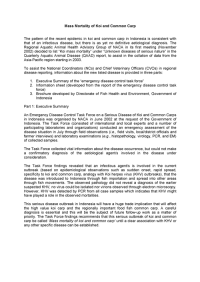
This disease card provides information on the epizootic of koi and common carp in Indonesia. The pattern of the recent epidemic in koi and common carp in Indonesia is consistent with that of an infectious disease, but there is as yet no definitive aetiological diagnosis. The Regional Aquatic Animal Health Advisory Group of NACA in its first meeting decided to list Koi mass mortality under Unknown diseases of serious nature in the Quarterly Aquatic Animal Disease report.