
The University of Stirling has been awarded funds by the British Council to provide funding for four Early Academic Fellowships for Women in STEM. These fellowships will be 6-12 months in duration. The scholarships are available to women who are passport holders and permanent residents of India, Pakistan, Bangladesh, Nepal and Sri Lanka. For further information please visit the University of Stirling website. The deadline for submissions is 31 March 2022.
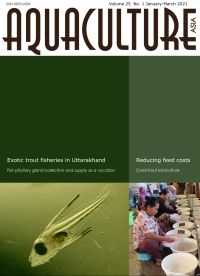
In this issue:
Exotic trout fisheries resources and potentialities in Uttarakhand; Scenario of captive production of Clarias magur in India; Strategies to reduce feed cost by improving gut health and nutrient utilisation of fish in aquaculture; Fish pituitary gland collection and supply as a vocation in West Bengal, India; Coral trout Plectropomus leopardus aquaculture research and fingerling production in Indonesia; Smartphone app improving smallholder shrimp farming practices in Bangladesh; NACA Newsletter.
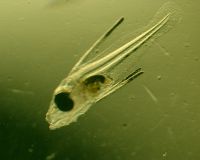
Coral trout Plectropomus leopardus is an emerging exported grouper commodity in Indonesia. The demand for coral trout fingerlings has been increasing and the value of this species is the highest among groupers. However, the rearing of coral trout larvae is notoriously more ‘difficult’ than other groupers. This article describes research on coral trout larval rearing protocols conducted by the Institute for Mariculture Research and Fisheries Extension, which has achieved a survival rate of 12%.
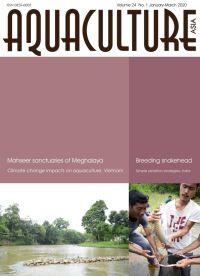
In this issue:
Mahseer sanctuaries of Meghalaya: A conservation and recreational perspective; Impacts of climate change on aquaculture in Vietnam: A review of local knowledge; Simple means of water aeration adopted by progressive fish breeders in West Bengal, India; Breeding striped snakehead (Channa striata) using the concrete tank method in the Cangkringan Area, Special Region of Yogyakarta; NACA Newsletter.
In India, West Bengal is the leading state in hatchery-based seed production (spawn, fry, advanced fry) of major carps and other economically important freshwater fishes. Dissolved oxygen is the most critical parameter of water quality and basic necessity in fish hatcheries, nursery and grow-out ponds. Hatchery fish seed production can be limited by the dissolved oxygen content of circulating water. Progressive fish breeders in villages of West Bengal have overcome and eliminated this problem by designing simple but effective means of water aeration to improve dissolved oxygen in hatchery water supplies, maximising survival of fertilised eggs, hatchlings and spawn. This article describes some of the techniques that have been adopted using low-cost and recycled materials.