The 84th edition of the Quarterly Aquatic Animal Disease Report contains information from eleven governments. The foreword discusses meetings of the ad hoc Steering Committee of the Regional Collaboration Framework on Aquatic Animal Health in Asia and the Pacific.
It was with great sadness that we learned that our dear friend Professor Sena De Silva passed away on 6 May, 2020. On behalf of the Governing Council, the Chair Dr Yingjie Liu, and the NACA Secretariat, would like to express our sincere condolences to his family. The aquaculture community, and the region, has lost one of its true champions. We, the staff of the NACA Secretariat, will miss Sena. He was not just a colleague, teacher and mentor, he was also our friend.
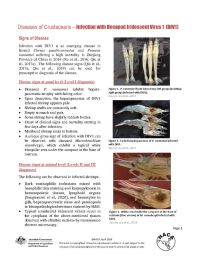
Infection with DIV1 is an emerging disease in farmed Cherax quadricarinatus and Penaeus vannamei suffering a high mortality. This disease card provides information on signs of disease at pond and animal level (levels I - III diagnoses), the disease agent, known host range and distribution in the Asia-Pacific region, molecular diagnostic methods and provides key expert contact points.
Potential new species in the Kingdom of Saudi Arabia: Sabaki tilapia (Oreochromis spilurus); Role of fish & fisheries in national nutrition of Pakistan; Success story of first fish farmer in India to be awarded ‘Padma Shri’; Insights into the fishing gear and ichthyofauna of major lentic water bodies of Kashmir Valley; NACA Newsletter.
4 May 2020Benjamin C. Young, Riyadh Hussain Alfaggeh, Ibrahim Al Moutiri | 2254 Downloads | .pdf | 1.57 MB
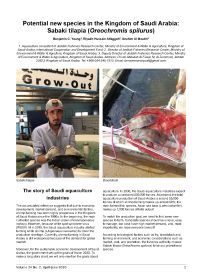
For the sustainable economic development of Saudi Arabia, the government set up the goals of Vision 2030. In 2030, the Saudi aquaculture industries expect to produce a combined 600,000 tonnes. At present, the total aquaculture production of Saudi Arabia is around 55,000 tonnes. To match the production goal, we need to find some new species to farm. Candidate species should be unique, easy to manage, low cost and have high market demand. The fisheries authority has chosen Sabaki tilapia (Oreochromis spilurus) to be our promotional species. This article describes efforts to establish Sabaki tilapia aquaculture operations in the Kingdom of Saudi Arabia.