A series of research studies were conducted to refine existing traditional culture practices for the tiger shrimp, Penaeus monodon. Natural food produced in a shrimp pond through fertilisation is not fully consumed in the first two months at a stocking rate of 5,000 postlarvae per hectare. Natural food produced by organic and inorganic fertilisation using the traditional practice can sustain an optimal growth of shrimp at a density of 20,000 postlarvae per hectare for a period of 60 days.
This article compares the use of chemical and biological amendments in shrimp farming in Asia and the Americas. The information comes mainly from the author’s experience in Thailand and Ecuador, as well as from the literature. The amendments are discussed according to three major categories: (1) water and soil quality management products, (2) biocides, and (3) feed additives. Certain agents, while necessary to successful shrimp farming, should be used only when needed and in a safe and responsible manner.
The goal of this project was to optimise the economic yield from mixed shrimp aquaculture-mangrove forestry farming systems in Ca Mau Province, Vietnam, in a sustainable manner. Specific objectives were to investigate factors controlling the yields of shrimp and wood from shrimp farming-mangrove systems, experiment with shrimp pond and mangrove forest management to evaluate different culture options, identify improved practices and assist government to transfer the results of the project to the wider coastal farming community.
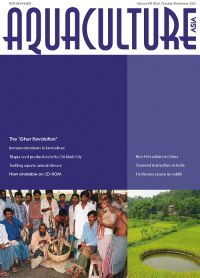
In this issue:
Freshwater prawn Macrobrachium nobilii for rural nutrition. Snapshots of a socially responsible farm in Sri Lanka. Introduction of rainbow trout in Nepal. Tilapia seed production in Ho Chi Minh City, Vietnam. Seaweed mariculture - scope and potential in India. Growth enhancement of carp and prawn through dietary suppliementation with salt. Fertilisation and water quality management in small ponds. The "Gher Revolution". Exercising responsibilities to tackle aquatic animal disease. Immunostimulants in aquaculture.
In this issue:
Fertilisation, soil and water quality management. Commercialisation of giant freshwater prawn culture in India. Aquaculture in reservoir-fed canal systems. Production of black-lip pearl oyster Pinctada margaritifera. Hybridisation hassles. Breeding sea cucumber Holothuria scabra in Vietnam. Use of palm kernel meal in feeds. Getting the most out of your feed. Marine finfish aquaculture in Myanmar. Penaeus monodon culture in low-salinity areas. Fisheries and aquaculture in Nepal.