
AquaInnovate was an immersive AquaHub networking and coaching event for aquaculture entrepreneurs and startups was held in Bangkok from 12-19 May. AQUAINNOVATE brought together promising startups to pitch their ideas, network, and participate in expert coaching circles.
Convened by NACA and FutureFish with funding support from Canada's International Development Research Centre, the programme included sessions on business fundamentals, investing for impact, nature and community based business innovations, and interactions with experts from the the National Innovation Agency, Center of Excellence for Shrimp Molecular Biology and Biotechnology, the National Center for Genetic Engineering and Biotechnology, and Mahidol University.
The programme included visits to local farms that are driving innovation and leading the industry, panel discussions on the aquaculture startup ecosystem and nature-based seafood markets and creative partnerships.
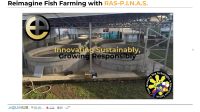
Elisa Claire Sy of E-Primate presents RAS-P.I.N.A.S, a closed-loop, water-efficient system for land-based fish farming. The technology integrates biofiltration, aeration, and mechanical treatment to support high-density production while conserving water and land and reducing disease risk. RAS-P.I.N.A.S also offers flexibility in farm siting, with trade-offs in energy use and infrastructure costs. Recirculating aquaculture systems are gaining traction as a key innovation in Asia’s sustainable aquaculture future.
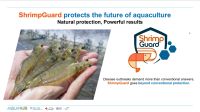
ShrimpGuard, developed by BIOTEC, NSTDA, and Kasetsart University in Thailand, is a phage-based innovation for managing shrimp health. It targets Vibrio infections using bacteriophages combined with immune-boosting agents, reducing antimicrobial use while improving farm productivity and sustainability across ASEAN. The project also engages farmers directly through training, outreach, and field trials to ensure practical application and lasting benefits for coastal communities and the wider aquaculture sector. This pitch was presented by Wanilada Rungrassamee of BIOTEC.
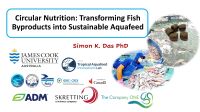
Circular nutrition in aquaculture focuses on reducing waste and closing nutrient loops by transforming fish byproducts into sustainable aquafeed. Simon Das from the Tropical Aquafeed Innovations Lab at James Cook University presents how this model can cut reliance on wild-caught forage fish while supporting cost-effective, nutritionally balanced diets. The lab’s work includes developing weaning protocols for pellet-ready fingerlings, training farmers in advanced feeding practices and economics, and promoting gender and youth inclusion. Circular nutrition highlights how rethinking resource use can make aquaculture both more efficient and more sustainable.
QS Aqua Technology, a startup from the InnoHub Program of Universiti Putra Malaysia, develops nature-based probiotic solutions for sustainable aquaculture. Their approach combines beneficial bacteria that support gut health and maintain balanced pond ecosystems with quorum sensing inhibition compounds from microalgae. These compounds block harmful bacteria from communicating, preventing disease outbreaks and reducing dependence on antibiotics. By improving pond health and resilience through microbial and algal innovations, QS Aqua Technology offers farmers safer, more sustainable tools to manage aquaculture production. This pitch was presented by Maya Liyana Hamzah of QS Aqua Technology.