A Regional Webinar on Infection with Decapod Iridescent Virus 1 and Preparedness for Emerging Shrimp Diseases will be held via Zoom video conference on 10-11 September 2020. This consultation will discuss and plan actions for the prevention and management of this disease. Specific objectives are to:
- Provide updated technological information on DIV1.
- Advocate the strengthening of diagnostic capacities as well as active surveillance of DIV1 (to detect presence or absence of the virus).
- Formulate recommendations on sanitary measures (including biosecurity) for disease prevention.
- Promote emergency preparedness for emerging diseases.
Participation is open to all interested parties but registration is required.
Chinese Customs detected nucleic acid positives of COVID-19 on packaging containing frozen white leg shrimp produced in Ecuador on 3 July. Experts believe that the positive results do not represent infectious virus. However, in order to protect the health of consumers, the General Administration of Customs decided to suspend the registration of the relevant enterprises, suspend the import and export of the products of the relevant enterprises, and take measures such as the return of goods and destruction of goods temporarily detained.

In this issue:
Vale Professor Sena De Silva; the State of World Fisheries and Aquaculture 2020; Viral covert mortality disease (VCMD): Disease card; Disease advisory: Decapod iridescent virus 1 (DIV1): An emerging threat to the shrimp industry; Infection with decapod iridescent virus 1 (DIV1): Disease card; Proceedings of the Regional Workshop on Underutilized Fish and Marine Genetic Resources and their Amelioration; Latest special issue of Gender, Technology & Development examines new learnings on women and fisheries; Development of a global information system for farmed types of aquatic genetic resources; Quarterly Aquatic Animal Disease Report, October-December 2019.
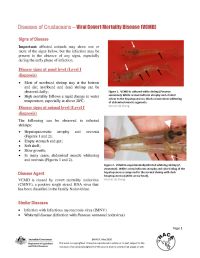
This disease advisory describes the history, known host range, clinical signs and PCR detection methods for viral covert mortality disease (VCMD). Crustaceans currently known to be susceptible to VCMD include Penaeus vannamei, P. chinensis, P. japonicus, P. monodon, Macrobrachium rosenbergii, Procambarus clarkii, Exopalaemon carinicauda, Ocypode cordimanus, Diogenes edwardsii, Corophium sinense, Parathemisto gaudichaud and Tubuca arcuate. Fish species including Mugilogobius abei, Carassius auratus, and Paralichthys olivaceus may also be susceptible to the virus.
The 84th edition of the Quarterly Aquatic Animal Disease Report contains information from eleven governments. The foreword discusses meetings of the ad hoc Steering Committee of the Regional Collaboration Framework on Aquatic Animal Health in Asia and the Pacific.