Better management practices

Improved management practices to generate better crop outcomes, environmental performance and profitability through improved resource utilisation efficiency.

Creative Commons Attribution.
Related

Subject tags

A collection of subject tags relating to technical matters.

In this collection

Opinion: Benefits of animal welfare in Indian aquaculture

Parasites and disease are amongst the greatest issues affecting Indian aquculture, incurring substantial economic losses every year. Due to disease risk, some farmers may use antibiotics as a prophylactic measure, with consequent risk of increasing anti-microbial resistance. Organic aquaculture has the potential to allow reduced chemical inputs, but must be coupled with other paradigms to alleviate disease issues. The Fish Welfare Initiative believes that measures to improve animal welfare, in particular water quality and stocking density, can contribute to improved animal health outcomes.

Webinar: Status of Artemia cyst use in fish and crustacean hatcheries

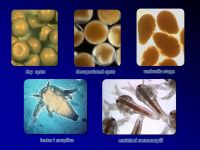
Join us on 2 September at 12 noon GMT for a free webinar on the Status of the use of Artemia cysts in fish and crustacean hatcheries around the world. The webinar is facilitated by the International Artemia Aquaculture Consortium (under formation). The webinar will document differences in practices used by fish and crustacean hatcheries in the use of Artemia cysts for the preparation of live feeds. Speakers include technical experts using Artemia in the production of shrimp, freshwater prawn, mud and mitten crabs, seabass, sabream and other marine fish from Bangladesh, Brazil, China, Ecuador, Greece, India, Spain, and Thailand. Participation is free but registration is required.

Aquaculture field schools supporting mangroves for climate change adaptation of Indonesian milkfish-shrimp farmers

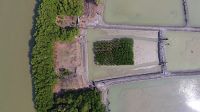
Over the last five decades, over 30 million people along Java’s north coast have experienced subsidence and subsequent soil erosion. In 2015, Building with Nature Indonesia (BwNI-Demak) started a coastal protection project in 10 communities of nine coastal villages of Demak regency. The protection measures introduced included the use of permeable structures (dams) that successfully capture sediment and support natural recovery of mangroves, and aquaculture field schools, to train small-scale farmers on good aquaculture practices such as low external inputs sustainable aquaculture, associated mangrove aquaculture and multi-trophic srhimp aquaculture.

Smartphone app improving smallholder shrimp farming practices in Bangladesh

The Shrimp Farming BD App contains information on improved technologies - from pond preparation through to harvest - and has a calculator that farmers can use to work out the quantities of chemicals, feeds and other inputs they need for their pond. Also incorporated is a Frequently Asked Questions (FAQ) page where users can find answers to common questions with a single click: and they can send specific technical questions to SAFETI specialists online and receive an answer back within hours. The app can also be used to post news messages, and a link to market prices is planned. 

NACA Newsletter, Vol. XXXIV No. 3, July-September 2019

In this issue:

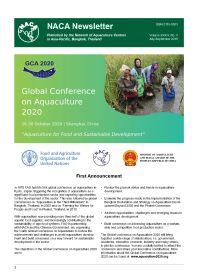
First announcement: Global Conference on Aquaculture 2020, 26-30 October, Shanghai, China; Bangladesh delegation visits Thailand to study shrimp aquaculture; Expert Consultation on Development of Sustainable Aquaculture Guidelines, Rome; Report of the Seventeenth Meeting of the Asia Regional Advisory Group on Aquatic Animal Health; Quarterly Aquatic Animal Disease Report, October-December 2018; Tuskfish 2 Alpha: Testers wanted.

Expert Consultation on Genetically Responsible Aquaculture, Lucknow, India

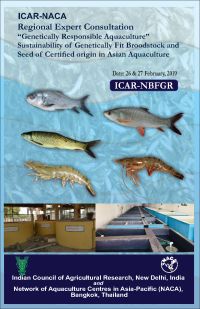
The Indian Council of Agricultural Research (ICAR) and NACA will convene the consultation from 26-27 February 2019. The consultation will be hosted by the ICAR National Bureau of Fish Genetic Resources (NBFGR) in Lucknow, India. The aim of the consultation is to find ways to assure genetic quality in seed production systems. Experts will discuss broodstock management and mechanisms to verify seed origin and quality. The goal is to empower farmers and monitoring agencies with provision of quantifiable standards.

FAO and NACA to convene Global Conference on Aquaculture 2020

FAO and NACA have signed an agreement to convene a global conference on aquaculture in 2020. This will be the fourth conference in a series that began at the dawn of the industry in Kyoto, 1976. Aquaculture 2020 will be held late in the year in China. Arrangements, programme and partner details will be announced via the NACA website in due course.

Training Course on Marine Finfish Seed Production and Grow-out, November, Thailand

The 9th Regional Training Course on Marine Finfish Seed production and Grow-out will be held from 19-30 November 2018 in Krabi, Thailand. The course will be taught by staff of the Krabi Coastal Fisheries Research and Development Centre. Drawing on expertise throughout the region, this three-week hands-on training course will provide participants with skills in marine finfish seed production and grow-out operations, with an emphasis on groupers and Asian seabass.

Expert Consultation on Invasive Alien Fish Species, 19 December, New Delhi

An Expert Consultation on Invasive Alien Fish Species: Need for a Risk Benefit Assessment and Management Framework for Healthy Freshwater Systems will be organised on 19 December 2018 in New Delhi, India. The consultation will flag the need for an equilibrium between access to non-native germplasm and the minimisation of risk to ecosystems and native fish diversity from such introductions. As a major outcome, an objective tool is expected to be developed, which can be used to evaluate prospective introductions and support decision making.

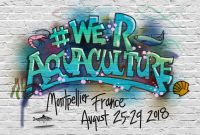
Aqua 2018 – #WeRAquaculture

Aquaculture has seen spectacular growth in recent years, and Aqua 2018 celebrated aquaculture’s role as one of the most important food industries worldwide. Held 25-29 August in Montpellier, France, Aqua 2018 brought together scientists, practitioners, students, industry and civil society to highlight the latest global developments in aquaculture research and innovation.

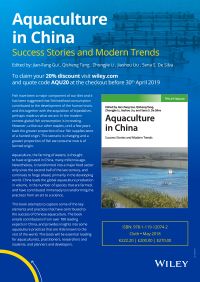
Aquaculture in China: Success Stories and Modern Trends

This book, which will be released on 15 May 2018, attempts to capture some of the key elements and practices that have contributed to the success of Chinese aquaculture. The book entails contributions from over 100 leading experts in China, and provides insights into some aquaculture practices that are little known to the rest of the world. This book will be essential reading for aquaculturists, practitioners, researchers and students, and planners and developers. To order the book please use the attached form.

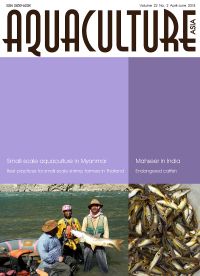
Aquaculture Asia Magazine, April-June 2018

Mahseer in recreational fisheries and ecotourism in India; Small-scale aquaculture of wild fish in Myanmar: A preliminary report from the Bago Region; Current know how and possibility for growout culture of an endangered catfish, Horabagrus brachysoma; Accelerated poverty alleviation of tribal households - cage fish farming by displaced fishers in reservoirs of Jharkhand; Adaptive learning in sustainable aquaculture: Best practices for small-scale shrimp farmers in Thailand; NACA Newsletter.

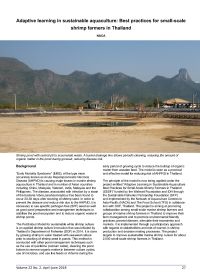
Adaptive learning in sustainable shrimp aquaculture: Best practices for small-scale shrimp farmers in Thailand

Early mortality syndrome of the type more accurately known as Acute Hepatopancreatic Necrosis Disease is causing major losses in marine shrimp in a number of Asian countries. The disease is associated with infection by a strain of the bacteria Vibrio parahaemolyticus. Here we describe a project to reduce the incidence of disease and improve crop outcomes for small-scale farmers in Thailand via an adaptive learning approach, implemented in association with farmer societies and collectives.

Video lectures: Regional Training Course on Culture-based Fisheries in Inland Waters

This collection contains video recordings of the lectures from the Regional Training Course on Culture-based Fisheries in Inland Waters, held at Nha Trang University, Vietnam. The objective of the course was to provide participants with the skills to assist local communities to plan and manage culture-based fisheries; a relatively simple and low cost technology that can deliver nutritional and economic benefits to rural communities with few livelihood options. The course was sponsored by the United Nations University Fisheries Training Programme.

Harvesting and marketing strategies in culture-based fisheries

A discussion of harvesting and marketing strategies to improve economic returns in culture-based fisheries.

Strategies to improve survival of newly stocked seed

A presentation strategies to improve the survival rate of seed in culture-based fisheries.

Stock assessment and practical procedures

A discussion of practical measures for stock assessment.

Bioenergetic modelling: Cases of mitten crab and mandarin fish stocking in culture-based fisheries

Use of bioenergetic modelling to calculate stocking densities for mitten crab and mandarin fish in culture-based fisheries.

Stocking calendar, size, density and transport of seed

Better management practices for stocking and transport of seed for culture-based fisheries.

Constraints to the sustainability of culture-based fisheries

A discussion of issues affecting the sustainability of culture-based fisheries development.