Emerging Global Issues

The Emerging Global Issues Programme provides policy guidance on key strategic and emerging issues such as climate policy, energy efficiency and alternatives to use of fish meal in aquaculture feeds.

The programme endeavours to bring to public domain the positive aspects of aquaculture as a significant contributor to food security and the livelihoods of rural communities, and actively promotes south-south cooperation.

Key activities

  • Development of projects and policy guidance on emerging issues of regional interest.
  • Contribute to the global dialogue on use of fish meal and oil in animal feeds and resource usage in the reduction industry.
  • Providing a regional platform for members to develop common policies and strategies to address emerging global issues.
  • Facilitating the development of an environmental monitoring system to strengthen fisheries and aquaculture resilience and to improve early warning in the lower Mekong Delta.
  • Evaluating the vulnerabilities of aquaculture systems to climate change.
  • Strengthening adaptive capacities of small-scale resource-poor farmers to the impacts of climate change.
  • Adaptive learning and management in community fish pond and school fish pond projects.
  • Playing a catalytic role in south-south cooperation in aquaculture development.
  • Communication of success stories in aquaculture.

Creative Commons Attribution.
Related

Subject tags

A collection of subject tags relating to technical matters.

In this collection

Staff directory

Directory of NACA's staff members and their contact details.

Governing Council

The Governing Council is NACA's peak policy body, consisting of representatives from member governments.

NACA Newsletter, Vol. XXXI, No. 3-4, July-December 2016

In this issue:

FishAdapt: A conference on climate change adaptation for fisheries and aquaculture. 11th Asian Fisheries and Aquaculture Forum convened in Bangkok. A new and improved PCR detection method for Enterocytozoon hepatopenaei (EHP) based on a gene encoding a spore wall protein. Radio interview on NACA's mission and role in regional food security. Quarterly Aquatic Animal Disease Report, Q1 2016. Guidebook on farmer-to-farmer extension approach for small-scale freshwater aquaculture. New NACA website in the works.

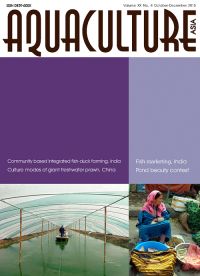
Aquaculture Asia Magazine, October-December 2015

In this issue:

Aquaculture feed supply chain attracting scrutiny. Pond beauty contest, Ram Kumar and social development. Culture modes of giant freshwater prawn in Yangtze River Delta for early harvest. Fish marketing in Kashmir, India - a case study of Srinagar. Community-based integrated fish-duck farming: A boon for rural development in agro-climatic conditions of Assam, India. Gastropod and bivalve fishery of Kakinada Bay, Andhra Pradesh, India: Management and conservation issues.

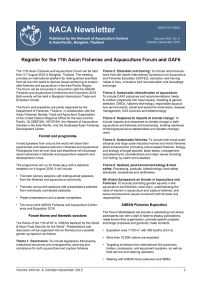
NACA Newsletter, Volume XXX, No. 4, October-December 2015

In this issue:

Register for the 11th Asian Fisheries and Aquaculture Forum and GAF6. 6th Global Symposium on Gender in Aquaculture and Fisheries. Global Conference on Climate Change Adaptation for Fisheries and Aquaculture. A Review of women's access to fish in small-scale fisheries. Aquaculture operations in floating HDPE cages: a field handbook. Aquaculture seed and feed production and management in Bangladesh: Status, issues and constraints.

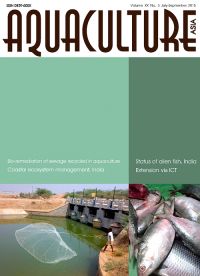
Aquaculture Asia Magazine, July-September 2015

In this issue:

Changes to the magazine and website. Status of alien fish species farming and it's implications for Andhra Pradesh, India. Bridging the research-extension-farmer-input and market linkage gap in coastal aquaculture through application of ICT. Bio-remediation of domestic sewerage recycled in aquaculture: A Central Institute of Freshwater Aquaculture model. Role of family farming in marine and coastal ecosystem management in India. Conservation of fish genetic resources: An introduction to the state fishes of India.

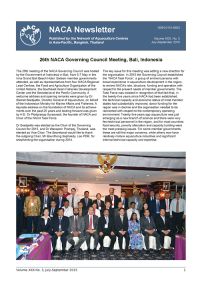
NACA Newsletter, Volume XXX, No. 3, July-September 2015

In this issue:

26th NACA Governing Council Meeting, Bali, Indonesia. Regional Workshop on the Status of Aquatic Genetic Resources. Developing an environmental monitoring system to strengthen fisheries and aquaculture in the Lower Mekong basin. Regional workshop documents sustainable intensification practices in aquaculture. Perspectives on culture-based fisheries developments in Asia. SUPERSEAS PhD opportunities.

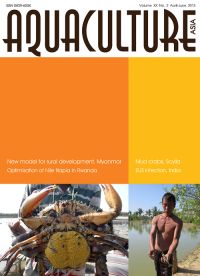
Aquaculture Asia Magazine, April-June 2015

In this issue:

Anti-microbials and alternatives. Successful demonstration of new model for rural development in Myanmar. Optimisation of Nile tilapia (Oreochromis niloticus) production in ponds based on improved farm management practices in Rwanda. EUS infection in freshwater fishes of Andhra Pradesh. Development of pond-reared broodstock / spawners of green mud crab Scylla serrata. ASEAN Gender Network launched. A two-tube nested PCR detection method for AHPND bacteria. 9th Regional Grouper Hatchery Production Training Course.

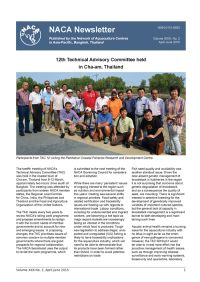
NACA Newsletter, Volume XXX, No. 2, April-June 2015

In this issue:

12th Technical Advisory Committee held in Cha-am, Thailand. Audio recordings: WAS special session on regional cooperation for improved biosecurity. AFSPAN Final Technical Report now available! Pillay Aquaculture Foundation Awards for Scientists in Least Developed Countries. Gender seminar conducted and ASEAN Gender Network launched. A two-tube, nested PCR detection method for AHPND bacteria. 9th Regional Grouper Hatchery Production Training Course. Developing an environmental monitoring system to strengthen fisheries and aquaculture in the Lower Mekong Basin. Asia-Pacific Regional Workshop on the Status of Aquatic Genetic Resources for Food and Agriculture.

12th Technical Advisory Committee held in Cha-am, Thailand

The twelfth meeting of NACA’s Technical Advisory Committee (TAC) was held in the coastal town of Cha-am, Thailand from 9-12 March. The TAC meets every two years to review NACA’s rolling work programme and propose amendments to realign it with the current needs of member governments and to account for new and emerging issues. In proposing changes, the TAC prioritises issues of common concern to member governments where there are prospects for regional collaboration.

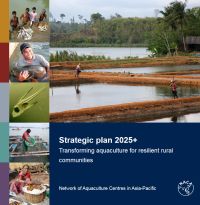
NACA Strategic Plan 2025+

The research and development mandate of NACA is addressed through five thematic work programmes and three cross-cutting work programmes that support sustainable aquaculture and aquatic resource management in the region.

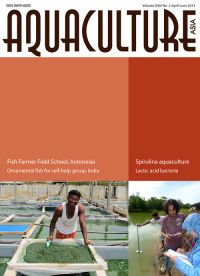
Aquaculture Asia Magazine, April-June 2013

In this issue:

Workshop on mainstreaming gender in NACA. Fish Farmer Field School: Towards healthier milkfish / shrimp polyculture and fish farmer empowerment in South Sulawesi. A success story of Maa Tarini Self Help Group Ornamental Fish Unity, India. Use of lactic acid bacteria in fish farming. AFSPAN field surveys underway. Anti-viral treatment for healthier black tiger prawns. Jungle perch on the comeback trail. Nursery management of grouper manual. Hatchery management of tiger group manual.

NACA Newsletter, Volume XXVIII, No. 2, April-June 2013

In this issue:

Call for applications (2nd round): FK Norway South-South Aquaculture Professional Exchange Programme. AFSPAN field surveys underway! 4th Global Symposium on Gender in Aquaculture and Fisheries. An anti-viral treatment for healthier black tiger prawns. Jungle perch on the comeback trail. Nursery management of grouper: A best-practice manual (Indonesian translation). Hatchery management of tiger grouper (Epinephelus fuscoguttatus): A best-practice manual (Indonesian translation). Priority adaptations to climate change for Pacific fisheries and aquaculture: Reducing risks and capitalising on opportunities. Improving biosecurity through prudent and responsible use of veterinary medicines in aquatic food production.

Carbon footprint to move towards sustainability

Carbon footprint has become a useful tool for greenhouse gas emission assessment and management for climate change mitigation, and is expected to increase in importance, assisting in identifying hot spots for improvement, evaluating performance of different farming systems, comparing new and current products, and selecting appropriate climate-friendly technologies. Comparative carbon footprint values can give an indication of green farming systems as well as climate-conscious products.

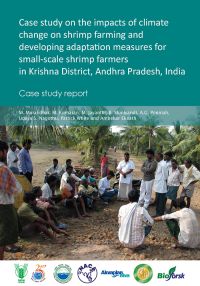
Case study on the impacts of climate change on shrimp farming in Andhra Pradesh, India

Shrimp aquaculture is threatened by climatic changes that affect infrastructure and livelihoods of farmers. Ecological changes, inundation of low-lying lands and saline intrusions into freshwater regions are likely to cause substantial dislocation of communities and disruption of farming systems. The focus of the present study report is on mapping the small scale farmer’s perceptions and attitudes towards climate change impacts and their adaptive capacities to address the impacts in Krishna District, Andhra Pradesh, India.

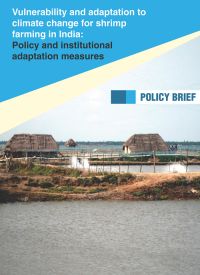
Policy brief: Vulnerability and adaptation to climate change for shrimp farming in India

This brief summarises the results from the interdisciplinary and multi stakeholder participatory study conducted within the Aquaclimate Project in Krishna District, Andhra Pradesh, India looking at the impacts of climate change on shrimp farming. The brief further provides guidelines for development of policy measures to address the climate change impacts on small scale shrimp farming.

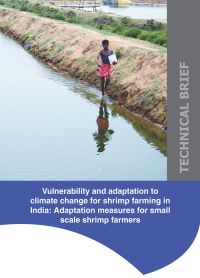
Technical brief: Vulnerability and adaptation to climate change for shrimp farming in India

This technical brief summarises the results from the interdisciplinary and multi stakeholder participatory study conducted within the Aquaclimate project in Krishna District, Andhra Pradesh, India, looking at the impacts of climate change and adaptation measures in the shrimp farming sector. The brief further provides guidelines for adaptation measure that can be undertaken by the farmers together with the institutional, policy and science and technology support for improving their adaptive capacity to cope with future climate change.

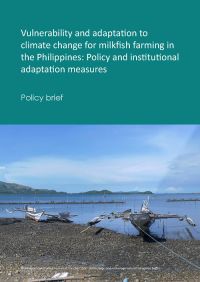
Policy brief: Vulnerability and adaptation to climate change for milkfish farming in the Philippines

This brief summarises the results from the interdisciplinary study conducted within the Aquaclimate project in Iloilo province in the Philippines looking at the impacts of climate change on small scale milkfish farming. The brief provides guidelines for adaptation and policy development to address the climate change impacts on small scale milkfish farming in the Philippines and how adaptation measures should be implemented in the region.

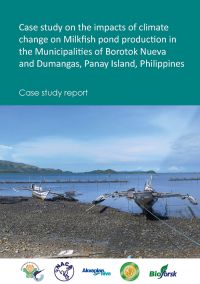
Case study on the impacts of climate change on milkfish pond production in Panay Island, Philippines

This case study examines the impacts of climate change on milkfish farmers in Iloilo. Farmer perceptions of climate change, attitudes and adaptation strategies were mapped via focus group discussion, stakeholder workshops and questionnaires. Measures that could be achieved to reduce vulnerability to climate change include sustainable aquaculture practices; diversification of farmers’ income sources; diversification of culture species; utilising natural resources to increase productivity; and building farmer capacities through access to information and knowledge.

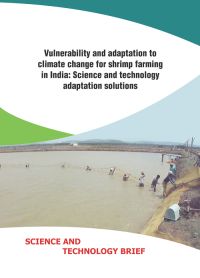
Science brief: Vulnerability and adaptation to climate change for shrimp farming in India

This brief summarises the results from the interdisciplinary and multi stakeholder participatory study conducted within the Aquaclimate project in Krishna District, Andhra Pradesh, India, looking at the impacts of climate change and adaptation measures in the shrimp farming sector. The brief based on scientific analysis and stakeholders inputs, further provides science and technology solutions to be undertaken for improving farmers' adaptive capacity to climate change.