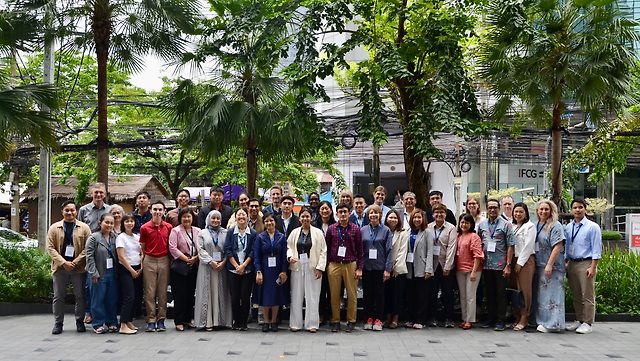
The first AquaInnovate event, held in Bangkok from 12-16 May, brought together aquaculture startups, entrepreneurs, researchers, and investors from across the Asia-Pacific region for an intensive week of learning, pitching, and collaboration. Convened by NACA and FutureFish, with funding support from Canada’s International Development Research Centre (IDRC) AQUADAPT project, the programme focused on accelerating nature-based aquaculture innovation and building a stronger regional startup ecosystem.
A platform for innovation
AquaInnovate was designed to provide entrepreneurs with the knowledge, networks, and tools to transform promising ideas into viable businesses. Over 25 participants from across Asia-Pacific joined the event, representing a diverse mix of early-stage companies, researchers, and innovators. Across five days, they engaged in interactive sessions, personalised coaching, field visits, and practical workshops, all aimed at sharpening business models and fostering partnerships.
Startup pitches and feedback
A key feature of the event was the startup pitch sessions, where 14 aquapreneurs presented solutions ranging from sustainable aquafeeds and probiotics to shrimp health innovations, aquaculture automation, and circular economy approaches. Each pitch was followed by questions and feedback from peers, industry experts, and investors. Entrepreneurs received practical advice on investment readiness, market positioning, and scaling strategies, helping to refine their value propositions.
Industry representatives from HydroNeo and UniFAHS shared lessons on scaling aqua-tech and biotech innovations, stressing the importance of affordability, trust-building, and local validation. Their insights reinforced the challenges and opportunities for startups navigating fragmented markets in Asia.
Expert sessions and coaching circles
The programme featured a series of expert-led sessions on core themes, including:
Business fundamentals - practical steps to strengthen operations, build scalable ventures, and prepare for investment.
Investing for impact - strategies to attract mission-aligned capital and engage with investors in developing Asia.
Nature-based aquaculture solutions - aligning innovation with ecosystems, community resilience, and sustainability.
Gender equality and social inclusion (GESI) ensuring aquaculture innovation is accessible, equitable, and empowering.
Small-group coaching circles gave participants the opportunity to workshop challenges directly with experts, covering issues such as IP ownership, commercialisation strategies, financing, and inclusive business design. These sessions provided targeted feedback and encouraged peer learning.
Field visits: Learning from Thai Innovators
Participants travelled to two pioneering farms in Thailand for hands-on learning. At LST Farm, Somprasong Natetip demonstrated Thailand’s only biosecure hatchery producing SPF all-male freshwater prawns, showcasing genetic RAS systems and low-energy water treatment innovations. At Boonsawang Farm, Gunn and Suthi Mahalao shared their approach to premium seabass farming, covering disease management, certification, and diversification into new species. These visits offered practical insights into the realities of farm operations, innovation adoption, and the commercial drivers shaping aquaculture businesses.
Watch the Presentations
Videos of startup pitches and expert sessions from AquaInnovate 2025 are now available below and on NACA's YouTube channel. For background on the participants and full programme details, please see the AquaInnovate Hub website .
This project contributes to NACA's recent work with the FAO on aquaculture transformation. The aim is to create more efficient, inclusive, resilient, and sustainable food systems through innovation, investment, and partnerships. NACA is developing an Aquaculture Innovation and Investment Hub (AIIH) to help realise this vision in the region, providing a facility that will bring together innovators, startups, and investors to accelerate transformation. The project will contribute to developing National Innovation and Investment Plans for Thailand, The Philippines, and Fiji, which will address issues including climate change, disease prevention and management, environmental sustainability, gender equality and social inclusion, and resource utilisation and management. The project is part of a wider AQUADAPT initiative, a four-year partnership running from 2023-2027, funded by Canada's International Development Research Centre.
AquaInnovate was an immersive AquaHub networking and coaching event for aquaculture entrepreneurs and startups was held in Bangkok from 12-19 May. AQUAINNOVATE brought together promising startups to pitch their ideas, network, and participate in expert coaching circles.
Convened by NACA and FutureFish with funding support from Canada's International Development Research Centre, the programme included sessions on business fundamentals, investing for impact, nature and community based business innovations, and interactions with experts from the the National Innovation Agency, Center of Excellence for Shrimp Molecular Biology and Biotechnology, the National Center for Genetic Engineering and Biotechnology, and Mahidol University.
The programme included visits to local farms that are driving innovation and leading the industry, panel discussions on the aquaculture startup ecosystem and nature-based seafood markets and creative partnerships.
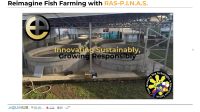
Elisa Claire Sy of E-Primate presents RAS-P.I.N.A.S, a closed-loop, water-efficient system for land-based fish farming. The technology integrates biofiltration, aeration, and mechanical treatment to support high-density production while conserving water and land and reducing disease risk. RAS-P.I.N.A.S also offers flexibility in farm siting, with trade-offs in energy use and infrastructure costs. Recirculating aquaculture systems are gaining traction as a key innovation in Asia’s sustainable aquaculture future.
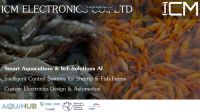
Green Controller by ICM Electronics is a smart water quality monitoring system for aquaculture, powered by high-precision titanium sensors. It tracks dissolved oxygen, salinity, and pH in real time, with full control through a mobile app and instant anomaly alerts. The system enables automated aeration based on live data, reducing energy use, lowering aerator run time, and improving feed conversion efficiency for more sustainable aquaculture operations. This pitch was presented Sukmit Teekhasenee of ICM Electronics.
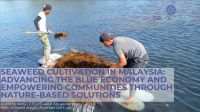
Cweed Aquasolutions, a spin-off from Universiti Malaya, works with coastal communities to develop seaweed cultivation through integrated multi-trophic aquaculture. The initiative repurposes abandoned shrimp ponds in Peninsular Malaysia, providing training and technical support for farmers to start seaweed farming. Cweed Aquasolutions also buys back harvested product, creating a sustainable livelihood model that links community development with nature-based aquaculture solutions. This pitch was presented Adibi M. Nor, CTO of Cweed Aquaculture Solutions.
20 August 2025 | Wanalida Rungrassamee | 2465 views
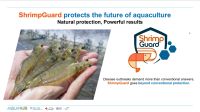
ShrimpGuard, developed by BIOTEC, NSTDA, and Kasetsart University in Thailand, is a phage-based innovation for managing shrimp health. It targets Vibrio infections using bacteriophages combined with immune-boosting agents, reducing antimicrobial use while improving farm productivity and sustainability across ASEAN. The project also engages farmers directly through training, outreach, and field trials to ensure practical application and lasting benefits for coastal communities and the wider aquaculture sector. This pitch was presented by Wanilada Rungrassamee of BIOTEC.
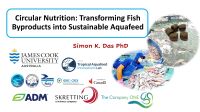
Circular nutrition in aquaculture focuses on reducing waste and closing nutrient loops by transforming fish byproducts into sustainable aquafeed. Simon Das from the Tropical Aquafeed Innovations Lab at James Cook University presents how this model can cut reliance on wild-caught forage fish while supporting cost-effective, nutritionally balanced diets. The lab’s work includes developing weaning protocols for pellet-ready fingerlings, training farmers in advanced feeding practices and economics, and promoting gender and youth inclusion. Circular nutrition highlights how rethinking resource use can make aquaculture both more efficient and more sustainable.
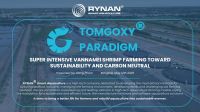
TOMGOXY is an AI- and IoT-powered shrimp farming system developed by RYNAN Aquaculture in Vietnam. It transforms traditional ponds into super-intensive, high-efficiency systems that deliver higher yields with reduced water and energy use. The platform integrates smart sensors, cloud analytics, and advanced aeration to maintain optimal water quality, cut antibiotic reliance, and advance sustainable shrimp aquaculture. By combining digital technology with practical training and on-farm deployment, TOMGOXY helps farmers increase productivity, lower costs, and build long-term resilience in the shrimp industry. This pitch was presented by Dang Pham of RYNAN Aquaculture.
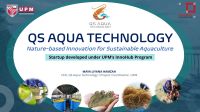
QS Aqua Technology, a startup from the InnoHub Program of Universiti Putra Malaysia, develops nature-based probiotic solutions for sustainable aquaculture. Their approach combines beneficial bacteria that support gut health and maintain balanced pond ecosystems with quorum sensing inhibition compounds from microalgae. These compounds block harmful bacteria from communicating, preventing disease outbreaks and reducing dependence on antibiotics. By improving pond health and resilience through microbial and algal innovations, QS Aqua Technology offers farmers safer, more sustainable tools to manage aquaculture production. This pitch was presented by Maya Liyana Hamzah of QS Aqua Technology.
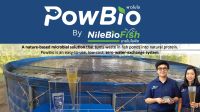
PowBio is a microbial inoculant developed by NileBioFish (NINEBIO GROUP Co., Ltd.) in Thailand to support sustainable biofloc aquaculture systems. Co-developed with Maejo University’s Faculty of Fisheries and Aquatic Resources and supported by the Thailand National Innovation Agency, PowBio uses high-efficiency microorganisms to turn fish pond waste into natural protein. By reducing ammonia and nitrite levels, improving water quality, and recycling nutrients within ponds, PowBio helps farmers cut feed costs, lower water exchange needs, and reduce chemical inputs. The result is healthier harvests without muddy off-flavors—delivered through a practical, low-cost, and easy-to-use solution for more productive and resilient aquaculture. This pitch was presented by Nissara Kitcharoen of NileBiofish.
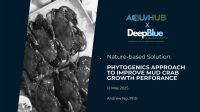
DeepBlue Aquaculture, the world’s largest soft-shell crab operation, is pioneering the use of phytogenics to improve mud crab growth performance. Soft-shell crab farming is traditionally labor-intensive and low-yield, making it difficult to scale. Their proprietary plant-based additive, PhytoEcR, boosts mud crab growth and moulting rate—delivering up to 20% higher weight gain after 45–60 days, with a 40% increase in moulting rate and 35% faster moulting compared to control groups. PhytoEcR is now moving into commercial-scale testing, aligning with global trends in phytogenic feed solutions to enhance productivity and sustainability. This pitch was presented by Andrew Ng of Deep Blue aquaculture.
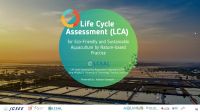
This presentation introduces a life cycle assessment tool designed to evaluate the sustainability of nature-based aquaculture practices. The tool measures environmental impacts such as carbon footprint and supports farmers, researchers, and policymakers in identifying mitigation strategies for more eco-friendly production systems. This pitch was presented by Kobboon Kaewpila of the Life Cycle Sustainability Assessment Laboratory, King Mongkut’s University of Technology Thonburi.
20 August 2025 | Rocky Pairunan and Burhanuddin Zein | 2805 views
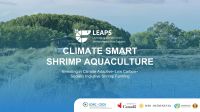
LEAPS is a climate-smart aquaculture initiative in Java that combines shrimp farming with mangrove restoration to strengthen coastal community resilience. Implemented under the AQUADAPT program with funding from Global Affairs Canada and IDRC, the project promotes inclusive, nature-based approaches for small-scale shrimp aquaculture. By integrating real-time IoT water quality monitoring, wastewater treatment and gender-responsive practices, LEAPS reduces greenhouse gas emissions while restoring mangroves and supporting communities. The project also informs evidence-based policy, helping scale sustainable aquaculture solutions across the region. Aligning shrimp farming with ecosystem restoration, LEAPS supports both livelihoods and climate adaptation. This pitch was presented by Rocky Pairunan and Burhanuddin Zein.
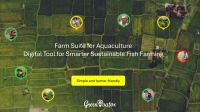
Farm Suite by Greenovator is a digital farm management tool tailored for aquaculture in Myanmar. The platform helps farms and agribusinesses streamline planning and daily operations by tracking activities, inputs, and yields through a real-time, business-grade dashboard. Recognised as a top-3 innovation in the Grow Asia Challenge, Farm Suite provides an affordable, professional alternative to manual record-keeping. With its mobile app interface, it delivers actionable insights that empower aquaculture managers to boost productivity and sustainability. This pitch was presented by Yin Yin Phyu.
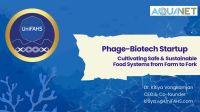
Kitiya Vongkamjan, co-founder of UniFAHS, shares the journey of building a pioneering phage biotechnology company in Thailand. UniFAHS develops bacteriophage-based solutions to tackle antimicrobial resistance and improve food safety in agriculture, aquaculture, livestock, and food processing. UniFAHS was recognised as a Global Finalist in the Extreme Tech Challenge 2022 and has grown into a venture-backed startup, raising USD 1.4 million in seed funding from A2D Ventures, ADB Ventures, and InnoSpace (Thailand). The story highlights how cutting-edge science can be transformed into scalable commercial solutions with real-world impact.
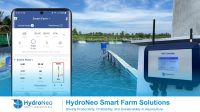
In this presentation, Fabian Reusch, founder of HydroNeo, shares the story of how HydroNeo began and the lessons learned along the way of building a tech startup in Thailand. Aimed at fellow aquaculture entrepreneurs and startup founders, his talk is an open and honest reflection on the realities of the journey — not a polished, glamorous pitch that only highlights the wins, but a candid look at both successes and setbacks, the difficult decisions, and the ongoing challenges that shape the real path of building a company.
20 August 2025 | Mariska Bottema and Rebecca McMillan | 2479 views
Mariska Bottema (WorldFish) and Rebecca McMillan (IDRC) discuss the concept of nature-based aquaculture, why it matters for innovation and entrepreneurship, and how it can support ecosystems, communities, and profitability. Topics include: Defining nature-based aquaculture and its connection to nature-based solutions; criteria such as climate resilience, ecosystem health, reduced antimicrobial use, and inclusivity; global examples: mangrove–shrimp integration, women-led seaweed farming, integrated multi-trophic systems, and rice–fish farming; supportive technologies including IoT, renewable energy, and life cycle assessment; and opportunities for entrepreneurs: resilient farms, reduced risks, lower costs, premium markets, funding, and partnerships.
20 August 2025 | Chef Black, Panu Boonsong, Suangchai Paungkaew and Gun Jinnawat | 2168 views
A discussion on how creative partnerships build markets for nature-based seafood from farm to fork. Topics include rigorous sustainability and certification, smallholder capacity building, traceability and water-quality sensing, decarbonising supply chains, short supply chains and consumer trust, plus species literacy and whole-fish utilisation in Thai cuisine. Panelists:
Special Guest Chef Black (Blackitch Artisan Kitchen).