AquaHub Vision Workshop
12 October 2025 | 1617 views
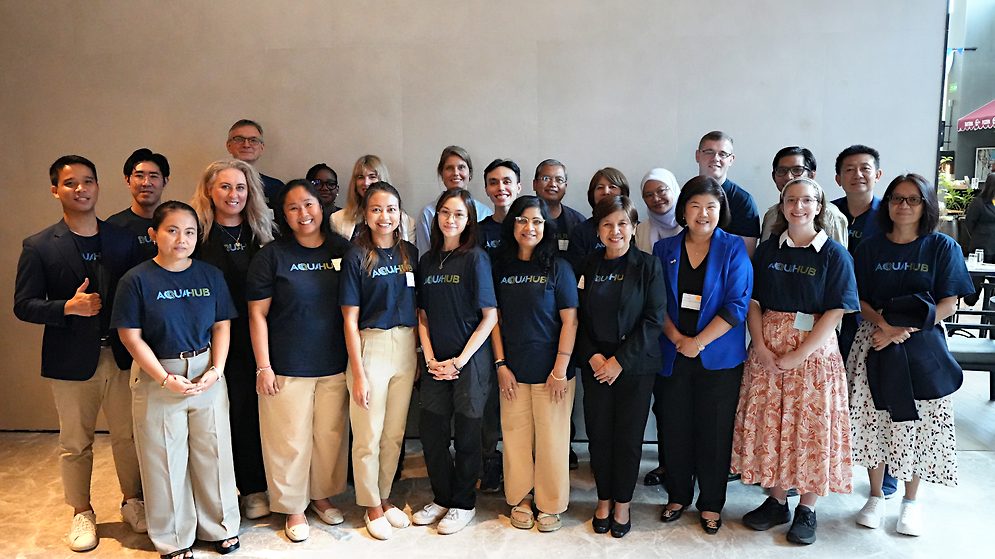
Bangkok, 7 October - NACA convened a one-day, in-person working group to shape the vision, mission and strategy for the AquaHub, a startup incubator and support network for innovators in the aquaculture space. The workshop focused on establishing the AquaHub’s vision, mission, values and partnership principles to define how it will operate, and the immediate steps required to mobilise partners and resources across the Asia–Pacific.
Participants began by clarifying the problems AquaHub should address and why a dedicated hub is the right vehicle. Small group exercises produced draft vision and mission statements looking to 2035, which were then refined through rapid peer feedback. This work was grounded in a brief review of AquaHub’s current status and the wider innovation landscape to ensure complementarity with existing efforts.
The group reached initial consensus on a guiding architecture for the Hub: a draft vision and mission oriented to ecosystem health, community resilience and investable impact; a concise set of non-negotiable values and partnership principles to shape collaboration, due diligence and funding choices; and a simple strategy for how ideas progress through the system. Scenario work stress-tested these elements against common dilemmas to produce principles that are practical and actionable, not aspirational.
A staged support pathway was mapped from early concept to scale, using a progression from “prepare” to “grant” to “market access/accelerators” to “global.” Clear entry points were identified for entrepreneurs, researchers, farmers and investors, with a view to matching support to the maturity of each innovation. The discussion also outlined core assets for the AquaHub to build: lightweight intake and screening tools aligned to the values; stage-specific mentoring and technical support; and mechanisms that connect ventures to market channels and appropriate forms of capital.
Target participant and customer profiles for future activities were defined to keep outreach focused and stage-appropriate. Relationship-building and transparency were emphasised, including clear selection criteria and expectations for all partners. The day closed with agreement on practical next steps and a shared intent to maintain momentum as the model is tested and refined.
Immediate actions include preparing a short summary pack that captures the draft vision and mission, values, strategy and pathways, along with an internal action list; standing up the “virtual AquaHub” web presence; formalising partnership agreements; and developing tools, resources and pilot activities to validate the approach ahead of a planned follow-on innovation event in March 2026.
NACA acknowledges the support of Canada’s International Development Research Centre (IDRC) and its support under the AQUADAPT programme for the project “Knowledge brokering for nature-based solutions in aquaculture and transformation in Asia-Pacific: Support to the Aquaculture Innovation and Investment Hub”.
Creative Commons Attribution.