NACA member governments are: Australia, Bangladesh, Cambodia, China, Hong Kong SAR, India, Indonesia, I.R. Iran, Kingdom of Saudi Arabia, Korea (DPR), Lao PDR, Malaysia, Maldives, Myanmar, Nepal, Pakistan, Philippines, Sri Lanka, Thailand and Vietnam.
Reports received in 2025 only came from few member governments including: Australia, Chinese Taipei, Hong Kong SAR, India, Indonesia, Malaysia, Myanmar, the Philippines and Saudi Arabia. Listed below are the reported aquatic animal diseases covering the third and fourth quarters of 2025 (with first and second quarter reports from Chinese Taipei). The original and updated reports can be accessed at the QAAD page.
Reports received in 2025, as of the 2nd quarter, only came from few member governments including: Australia, Hong Kong SAR, India, Indonesia, Malaysia, Myanmar and Saudi Arabia. Listed below are the reported aquatic animal diseases covering the first and second quarters of 2025. The original and updated reports can be accessed at the Quarterly Aquatic Animal Disease report page.
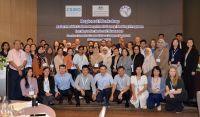
Bangkok, 7 October - NACA convened a one-day, in-person working group to shape the vision, mission and strategy for the AquaHub, a startup incubator and support network for innovators in the aquaculture space. The workshop focused on establishing the AquaHub’s vision, mission, values and partnership principles to define how it will operate, and the immediate steps required to mobilise partners and resources across the Asia–Pacific.
Participants began by clarifying the problems AquaHub should address and why a dedicated hub is the right vehicle. Small group exercises produced draft vision and mission statements looking to 2035, which were then refined through rapid peer feedback. This work was grounded in a brief review of AquaHub’s current status and the wider innovation landscape to ensure complementarity with existing efforts.
The third Asia-Pacific Laboratory Proficiency Testing Program for Aquatic Animal Diseases has been launched, with a regional workshop in Bangkok bringing together 50 people from 13 countries and territories across the region. The program, supported by the Australian Government Department of Agriculture, Fisheries and Forestry and CSIRO’s Australian Centre for Disease Preparedness, builds on more than a decade of collaboration to strengthen diagnostic capacity, safeguard aquaculture livelihoods, and support safe trade and food security.
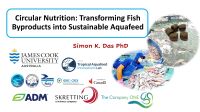
Circular nutrition in aquaculture focuses on reducing waste and closing nutrient loops by transforming fish byproducts into sustainable aquafeed. Simon Das from the Tropical Aquafeed Innovations Lab at James Cook University presents how this model can cut reliance on wild-caught forage fish while supporting cost-effective, nutritionally balanced diets. The lab’s work includes developing weaning protocols for pellet-ready fingerlings, training farmers in advanced feeding practices and economics, and promoting gender and youth inclusion. Circular nutrition highlights how rethinking resource use can make aquaculture both more efficient and more sustainable.
With the implementation of new aquatic animal disease reporting arrangements from January 2021 NACA is publishing reported aquatic animal diseases submitted by countries in the Asia-Pacific region. This report covers the fourth quarter of 2024 and the original and updated reports can be accessed from the QAAD page.
With the implementation of the new aquatic animal disease reporting in the Asia Pacific region from January 2021 NACA is publishing reported aquatic animal diseases submitted by countries in the Asia-Pacific region. This report covers the third quarter of 2024 and the original and updated reports can be accessed from the QAAD page.
8 November 2024 | Chokanan Prompichai | 4676 views
With the implementation of the new aquatic animal disease reporting in the Asia Pacific region from January 2021 NACA is publishing reported aquatic animal diseases submitted by countries in the Asia-Pacific region. This report covers the second quarter of 2024 and the original and updated reports can be accessed from the QAAD page.
With the implementation of the new aquatic animal disease reporting in the Asia Pacific region from January 2021, and in lieu of the published QAAD Reports (last issue published was 4th quarter of 2020), NACA is publishing reported aquatic animal diseases submitted by countries in the Asia-Pacific region. This report covers the first quarter of 2024 and the original and updated reports can be accessed from the QAAD page.
With the implementation of the new aquatic animal disease reporting in the Asia Pacific region from January 2021, and in lieu of the published QAAD Reports (last issue published was 4th quarter of 2020), NACA is publishing reported aquatic animal diseases submitted by countries in the Asia-Pacific region. This report covers the fourth quarter of 2023 and the original and updated reports can be accessed from the QAAD page.
With the implementation of the new aquatic animal disease reporting in the Asia Pacific region from January 2021, and in lieu of the published QAAD Reports (last issue published was 4th quarter of 2020), NACA is publishing reported aquatic animal diseases submitted by countries in the Asia-Pacific region. This report covers the third quarter of 2023 and the original and updated reports can be accessed from the QAAD page.
With the implementation of the new aquatic animal disease reporting in the Asia Pacific region from January 2021, and in lieu of the published QAAD Reports (last issue published was 4th quarter of 2020), NACA is publishing reported aquatic animal diseases submitted by countries in the Asia-Pacific region. This report covers the second quarter of 2023 and the original and updated reports can be accessed from the QAAD page.
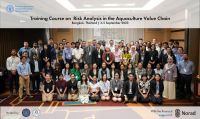
Risk analysis is an essential component of a national aquatic organism health strategy. Now widely applied in many fields, risk analysis provides a science-based framework for evaluating hazards, determining the likelihood and extent of potential harms, mitigating risks and guiding policy decisions. Combining risk and value chain analysis provides a risk-based and people-centred approach to managing disease risks and planning control measures for aquaculture systems. FAO organised a training course on Risk Analysis in the Value Chain from 3-5 September in Bangkok, Thailand, in partnership with NACA, INFOFISH, Thailand Department of Fisheries and the ASEAN Network of Aquatic Animal Health Centres. Financial support was provided by the Norwegian Agency for Development Cooperation and Thailand Department of Fisheries.
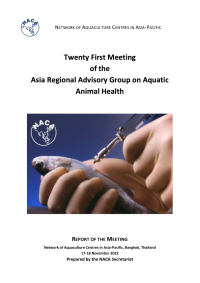
This report summaries the proceedings of the 21st meeting of the Regional Advisory Group on Aquatic Animal Health, held 17-18 November 2022. The role of the group is to review trends in disease and emerging threats in the region, identify developments in global disease issues and standards, to evaluate the Quarterly Aquatic Animal Disease Reporting Program and to provide guidance on regional strategies to improve aquatic animal health management.
With the implementation of the new aquatic animal disease reporting in the Asia Pacific region from January 2021, and in lieu of the published QAAD Reports (last issue published was 4th quarter of 2020), NACA is publishing reported aquatic animal diseases submitted by countries in the Asia-Pacific region. This report covers the fourth quarter of 2022 and the original and updated reports can be accessed from the QAAD page.
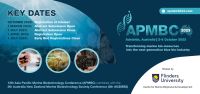
The 13th APMBC and 5th ANZMBS conference are combining to engage marine biotechnologists, industry, investors, and policy makers in current marine biotechnology research, and industry development in the Asia-Pacific region. The conference will be held from 2-6 October 2023 in Adelaide, Australia. This provides a great opportunity to participate in the growth and future development of the marine biotechnology industry in the region and globally. A key objective of the joint Conference is to encourage academic-industry partnerships across the region. Abstract submissions and early bird registrations are now open!
Webinar on fish welfare: What we need to know? Artemia side event at the FAO Sub-Committee on Aquaculture; Handbook for Artemia pond culture in Bangladesh; NACA YouTube channel: @aquacultureasia; Reported aquatic animal diseases in the Asia-Pacific region during the third quarter of 2022; 13th Asia-Pacific Marine Biotechnology Conference, 2-6 October 2023, Australia; Global Seafood Trade Fair, 28-30 June, Guangzhou, China.
With the implementation of the new aquatic animal disease reporting in the Asia Pacific region from January 2021, and in lieu of the published QAAD Reports (last issue published was 4th quarter of 2020), NACA is publishing reported aquatic animal diseases submitted by countries in the Asia-Pacific region. This report covers the third quarter of 2022 and the original and updated reports can be accessed at the QAAD page.
With the implementation of the new aquatic animal disease reporting in the Asia Pacific region from January 2021, and in lieu of the published QAAD Reports (last issue published was 4th quarter of 2020), NACA is publishing reported aquatic animal diseases submitted by countries in the Asia-Pacific region. This report covers the second quarter of 2022 and the original and updated reports can be accessed at the QAAD page.