Innovation

Content related to innovative practices, people and technologies in the aquaculture space.

Copyright, all rights reserved.

Related

Subject tags

A collection of subject tags relating to technical matters.

In this collection

Assessing aquaculture transformation initiatives in China

This video by Wenbo Zhang, Shanghai Ocean University, presents an overview of China’s aquaculture transformation journey as part of the broader “Blue Revolution.” It highlights trends in global aquatic animal production and outlines key challenges such as land use changes and environmental pressures.

The presentation details a series of national policies and strategies introduced since 2019 to promote green, healthy, and high-quality aquaculture development ranging from pond standardisation and deep-sea farming to innovation-driven investment and value chain upgrading. It also reviews recent actions supporting ecological farming, wastewater treatment, reduced chemical use, and improved germplasm resources, and introduces efforts to assess the impact of these transformation initiatives across the sector.

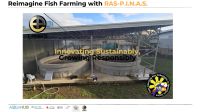
Reimagine Fish Farming with RAS-P.I.N.A.S

This presentation by Elisa Claire Sy of E-Primate, showcases how RAS-P.I.N.A.S - a closed-loop, water-efficient technology - enables high-density, land-based fish farming using biofiltration, aeration, and mechanical treatment strategies. Discover how RAS conserves water and land, minimises disease risk, and offers flexibility in farm siting, while recognising the trade-offs of energy demands and infrastructure costs. Learn why RAS is gaining momentum as a key innovation in Asia's sustainable aquaculture future.

Thailand: Innovation showcase for aquaculture transformation

This video by Montakan Tamtin, Department of Fisheries, features two presentations from Thailand’s delegation to the 3rd High-Level Meeting on Aquaculture Transformation in Asia and the Pacific Region. The first showcases innovation and nature-based solutions in aquaculture via the IDRC-funded AQUADAPT Project; the second presents Thailand’s pilot initiative for low-carbon shrimp farming under an FAO Technical Cooperation Programme.

Innovations on alternatives to antimicrobials in aquaculture

This video by Chokanan Prompichai, NACA, presents two promising innovations aimed at reducing antimicrobial use (AMU) in aquaculture, showcased as part of Thailand’s National Innovation and Investment Plan (NIIP) and via the IDRC-funded InnoVet-AMR 2.0 Project. NanoVac, developed by AIT, uses nanobubbles to deliver vaccines to tilapia, while ShrimpGuard, developed by BIOTEC and KU, is a bacteriophage-based solution for managing shrimp diseases. Both technologies offer potential to combat antimicrobial resistance (AMR) without leaving chemical residues. The presentation compares their readiness, challenges, and adoption, incorporating feedback from shrimp farmers across Thailand. It highlights the need for cost-effective, easy-to-use solutions that align with farmers' real-world needs and regulatory frameworks.

Investing in innovation for transforming aquatic food systems

This video by Tipparat Pongthanapanich, FAO, is focussed on the critical role of investment in transforming aquatic food systems. The discussion explores strategies to mobilise finance from private capital, public investment, and development finance to meet the region’s substantial innovation needs. Topics include how to support SMEs and start-ups, bridge early- to late-stage funding gaps, and manage investment risks. With Asian aquaculture dominating global production but receiving limited venture capital, the session calls for coordinated action to unlock the sector’s full potential for sustainable growth, jobs, and food security.

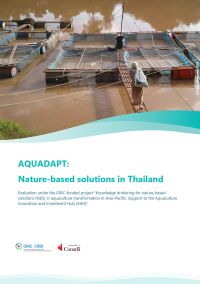
AQUADAPT: Nature-based solutions in Thailand

The project evaluated the effectiveness of various types of nature-based solution (NbS) in Thailand that contribute to climate change resilience by enabling off-grid farm operations and reducing reliance on costly fossil fuels. Aquaculture enterprises were assessed for this project based on the NbS they utilised and the potential benefits they offer in mitigating climate change impacts and enhancing production systems in Thailand. Three enterprises / innovations were selected and are described within.

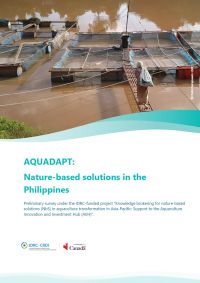
AQUADAPT: Nature-based solutions in Philippines

The project conducted a preliminary survey of the effectiveness of various types of nature-based solution (NbS) in use in the Philippines that contribute to climate change resilience by enabling off-grid farm operations and reducing reliance on costly fossil fuels, renewable materials and improved designs that enhance efficiency. Aquaculture enterprises were assessed for this project based on the NbS they utilised and the potential benefits they offer in mitigating climate change impacts and enhancing production systems.

Based on BFAR Regional Field Office Submissions, 50 aquaculture innovations nationwide have been identified to date. The list will be extended and screened as further regions report, in cooperation with the BFAR National Research Centers.