Adding knowledge to the seed production process of giant featherback (Notopterus chitala) in captivity
3 December 2025 | S.K. Sahoo, P.C. Das, S.N. Sahoo, A.K. Chaudhari, S.S. Giri | 1037 Downloads | .pdf | 3.66 MB
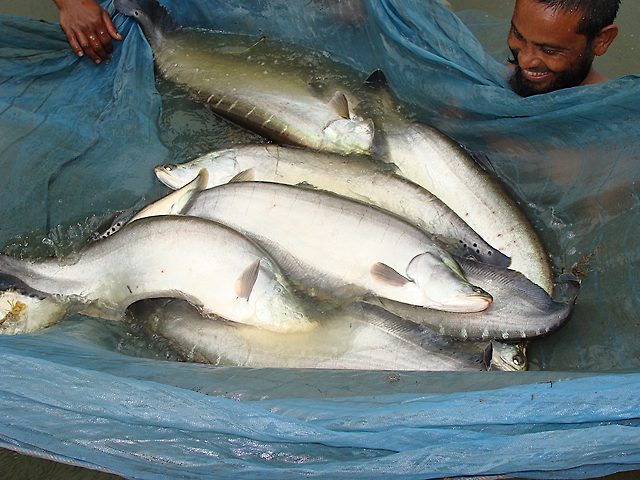
The giant featherback (Notopterus chitala) is a valued food and sport fish in South-East Asia that also serves as a natural pest controller in polyculture systems. Despite strong market demand, the species remains under-developed for commercial aquaculture, primarily due to incomplete knowledge of seed production. Wild populations are classified as Near Threatened or Endangered across parts of the species' range, making captive breeding increasingly important for both aquaculture diversification and conservation.
This article synthesises practical knowledge on breeding and seed-rearing management for N. chitala in captivity. The species is a large, air-breathing freshwater fish that matures slowly, with males breeding in the second year and females in the third. Fecundity is low (8,000–18,000 eggs per female), and eggs are large and spongy when water-hardened.
Brood stock can be developed in ponds of approximately 0.1 ha, with live feed provisions supporting this predatory species. Natural spawning occurs during the monsoon season when hard substrata such as roofing sheets, tyres, or wooden planks are provided in brood ponds. Fertilisation rates exceed 80% through mid-August, declining thereafter. Eggs are transported on substrata to hatcheries with flow-through systems for incubation lasting 6–7 days.
Newly hatched larvae require more than one week to absorb yolk. Low rearing densities (3–4 larvae/L) and live feeds such as Tubifex, Artemia, or zooplankton support survival above 70% over 25–30 days. Gradual weaning to compound feeds containing 40–50% fishmeal is recommended. Fingerlings reach 6–7 g over 6–8 weeks. Health management must address parasitic infections, particularly Trichodina transmission via pond-collected plankton.
1764756227_giant-featherback-notopterus-chitala-breeding.pdf
Creative Commons Attribution.
Related
Aquaculture Asia Magazine, October-December 2025
4 December 2025 | 12118 views | .pdf | 18.27 MB