Integrating fish farming with ducks and poultry in Meghalaya: A case study in a farmer’s field R. N. Mandal, S. Adhikari, H. K. De, A. Das, F. Houque, A. Hussan, S. Sarkar, B. N. Paul and P. K. Sahoo
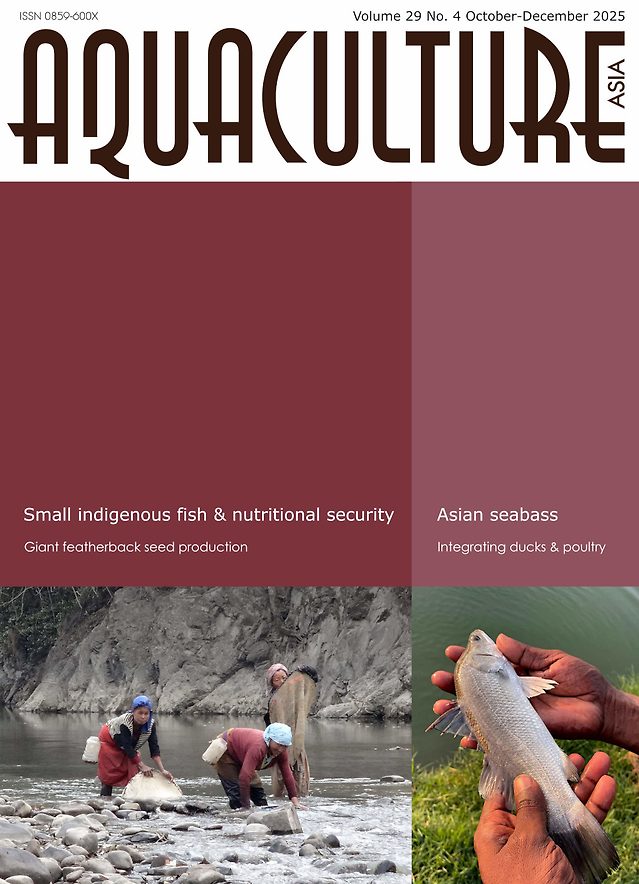
Small indigenous fish species: A source of nutritional security through rural aquaculture development Prem Kumar, Jagruti Mote, Kedar Nath Mohanta, Munilkumar Sukham, and Bijay Kumar Behera
A short note on two new instances of aquaculture species and system diversification in Purba Medinipur, West Bengal, India Subrato Ghosh
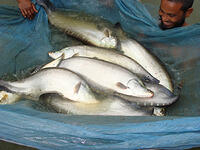
Adding knowledge to the seed production process of giant featherback (Notopterus chitala) in captivity S. K. Sahoo, P. C. Das, S. N. Sahoo, A. K. Chaudhari, S. S. Giri
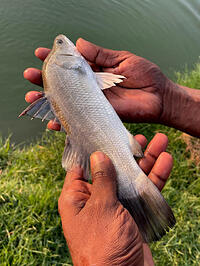
Local knowledge and practices in Asian seabass (Lates calcarifer) nursery to grow-out culture in Andhra Pradesh, India Karthik Kumar Goud Palsam, Ankush L. Kamble and Sai Krishna Veeranki
Aquaculture Asia Magazine is an autonomous publication that gives farmers and scientists in developing countries a voice. Stories concern the small-scale aquaculture prevalent in the region and the circumstances of farmers trying to make ends meet in an increasingly globalised world. We accept articles on any aspect of aquaculture and the related processing, marketing, economic, environmental and social issues. An RSS feed is available if you wish to stay informed of new issues.
3 December 2025 | Karthik Kumar Goud Palsam, Ankush L. Kamble and Sai Krishna Veeranki | 897 Downloads | .pdf | 2.9 MB
Asian seabass has emerged as a promising alternative to shrimp farming in coastal Andhra Pradesh. This article documents the complete production cycle practiced by farmers in Krishna, Eluru and West Godavari districts, from wild egg collection to market-ready fish.
The production process spans 14-16 months across multiple phases: two nursery stages transform eggs into fingerlings, a pre-grow-out phase develops juveniles to 100-200 g, and a final grow-out period produces fish weighing 3-4 kg. Farmers rely heavily on live feed, primarily small shrimp and tilapia, with feed conversion ratios around 6:1.
While the species offers advantages such as fast growth and salinity tolerance, farmers face challenges including fluctuating export prices, rising feed costs and disease outbreaks. The lack of species-specific therapeutics further complicates disease management. Most harvested seabass currently reaches export markets through Kolkata and Chennai, though opportunities exist for domestic value-added products.
The giant featherback (Notopterus chitala) - valued as food, sport fish, and natural pest controller in carp ponds - remains under-utilised in Asian aquaculture despite strong market demand. Limited knowledge of seed production has constrained commercial development, whilst wild populations face pressures from overfishing and habitat loss.
Researchers at ICAR-Central Institute of Freshwater Aquaculture have compiled practical knowledge on captive breeding and larval rearing of this air-breathing species. Their findings address key challenges: establishing brood stock, triggering natural spawning using hard substrata, managing sensitive larvae through the critical first weeks, and preventing disease transmission from live feeds.
The techniques described offer farmers a pathway to reliable seed production, potentially easing supply constraints whilst reducing pressure on wild stocks. The work demonstrates how systematic documentation of breeding protocols can unlock aquaculture potential for neglected native species with conservation value.
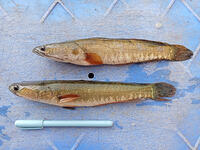
In Purba Medinipur, India's leading fisheries district, two farmers are exploring new directions in aquaculture. Sri Buddhadeb Maity has established commercial farming of the prized murrel (Channa striatus), achieving growth rates of 250-300g within two months. His neighbour, Sri Uttam Manna, has taken an unconventional approach: cultivating freshwater aquarium fish in brackishwater ponds near the Bay of Bengal.
Manna's method challenges established practice. He has observed fewer disease problems than those typically encountered in freshwater aquarium fish operations, potentially due to the salt content in his ponds helping to control pathogens. Both farmers have developed profitable enterprises whilst sharing their methods with neighbouring producers, encouraging diversification across the region.
Small indigenous fish species (SIS) are common in South and Southeast Asian inland waters and are often eaten whole. This article reviews evidence that SIS provide bioavailable vitamin A, iron, zinc, calcium and B12, alongside protein and long-chain omega-3s. It examines practical options for including SIS in carp ponds and rice-fish systems, drawing on recent field programmes, and identifies constraints, especially the seasonal, unreliable supply of seed from capture fisheries. The article considers which species are realistic candidates for hatchery production and what husbandry is required. The aim is to give producers, extension staff and policymakers a clear view of when SIS integration adds value, and what investments are needed to pilot and scale it responsibly.
16 October 2025 | R.N. Mandal, S. Adhikari, H.K. De, A. Das, F. Houque, A. Hussan, S. Sarkar, B.N. Paul and P.K. Sahoo | 1399 Downloads | .pdf | 4.19 MB
How can small farms boost fish yields, cut feed bills and earn from more than one crop at a time? In Meghalaya’s Ri Bhoi district, one farmer shows the way with an integrated fish-duck-poultry system across four linked ponds. Ducks and poultry “pay their rent” by fertilising the water, which powers natural food webs for carp and rohu; simple gravity flow spreads nutrients and improves aeration. Over an eight-month cycle, the farm sells fish, ducks, poultry, eggs and even dyke crops like banana and turmeric - while keeping inputs low and water quality stable. This practical case study explains the layout, stocking plan and daily management behind the results, and why integrated aquaculture is a smart, climate-resilient option for small holders.