Local knowledge and practices in Asian Seabass nursery to grow-out culture in Andhra Pradesh, India
3 December 2025 | Karthik Kumar Goud Palsam, Ankush L. Kamble and Sai Krishna Veeranki | 897 Downloads | .pdf | 2.9 MB
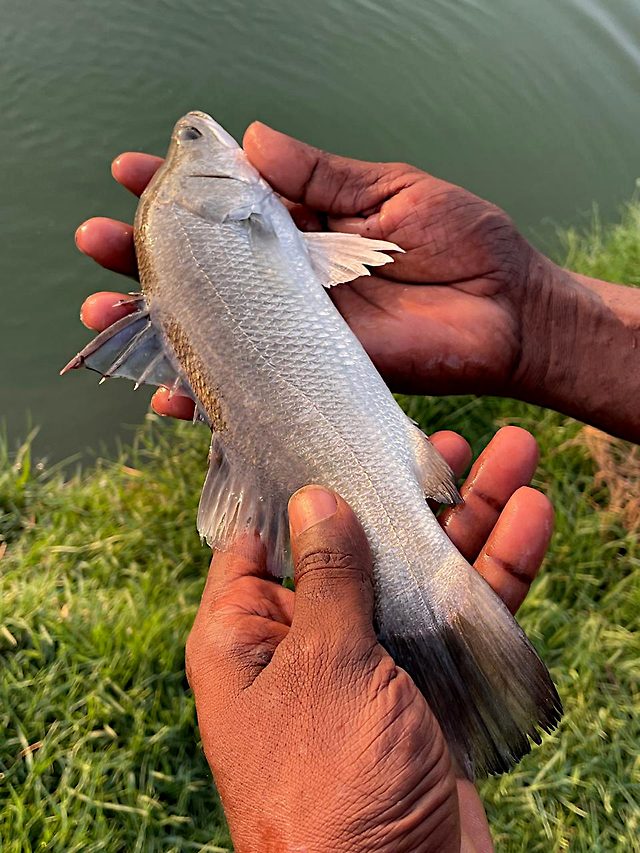
This article describes the established practices for Asian seabass (Lates calcarifer) aquaculture in Andhra Pradesh, India, where post-COVID interest has driven expansion in Krishna, Eluru and West Godavari districts. The production cycle comprises distinct phases spanning 14-16 months from egg to market size.
The first nursery phase involves collecting wild eggs from brackish waters (May–October) and rearing them for 20-30 days to produce 2.54-cm fry. The second nursery phase extends 1-3 months to develop 7.5-10 cm fingerlings. A pre-grow-out stage in smaller ponds further grows fingerlings to 100-200 g juveniles over 2-4 months.
Grow-out occurs in 0.4-1.2 ha rectangular ponds at stocking densities of 1,000-2,000 juveniles per 0.4 ha. Farmers feed once daily using live prey: initially small shrimp (Acetes spp.) and juvenile tilapia, progressing to larger tilapia as fish grow. Each fish consumes approximately 25 kg of live feed over the cycle, achieving final weights of 3-4 kg with a feed conversion ratio around 6:1.
Water quality management includes routine application of zeolite, Gasonex, lime and dissolved oxygen enhancers. Iodine-based disinfectants and potassium permanganate treatments control parasites. Major challenges include market price volatility, escalating feed costs, disease outbreaks and absence of species-specific therapeutics. Current production primarily supplies export markets via Kolkata and Chennai, with potential for expansion into domestic value-added products.
1764763808_local-seabass-culture-practices-andhra-pradesh.pdf
Creative Commons Attribution.
Related
Aquaculture Asia Magazine, October-December 2025
4 December 2025 | 12116 views | .pdf | 18.27 MB