AquaInnovate 2: Scaling Nature-Based Solutions and Regional Synergy in Bangkok
3 April 2026 | 1073 views
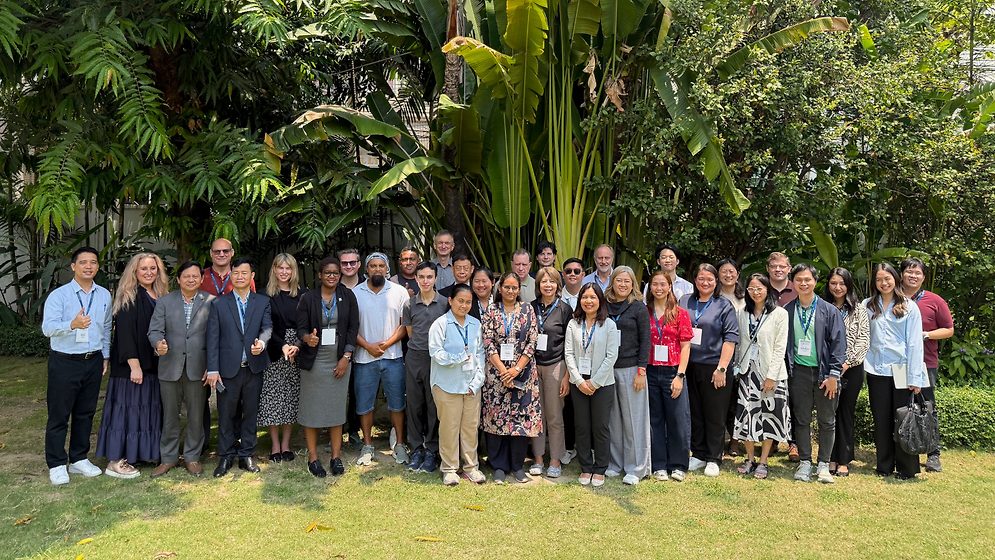
The momentum for aquaculture transformation continued in Bangkok as AquaInnovate 2 convened from 23–27 March 2026. Building on the success of the inaugural event, this second iteration brought together a fresh cohort of entrepreneurs, scientists, and industry leaders in Bangkok to accelerate nature-based solutions and climate innovation across the Asia-Pacific. Organised by NACA and FutureFish, with support from Canada’s IDRC, the week served as a high-intensity bridge between scientific breakthrough and commercial viability.
A Global Stage for Regional Talent
The week opened with a series of high-impact pitch presentations by 12 startups and entrepreneurs:
- Thailand’s Innovation Hub: Presentations were by Karnchana Karnchanamayoon (Siam Farm Services Co., Ltd), Patipond Tiyapunjanit (AQUAWISE), and Tuchakorn Lertwanakarn (Kasetsart University).
- Biotech & Microbiology: Scientific breakthroughs were pitched by Patai Charoonnart (BIOTEC, Thailand), Warangkhana Songsungthong (BIOTEC, Thailand), and Trinh Thanh Trung (Institute of Microbiology and Biotechnology, Vietnam).
- Regional Scaling: International perspectives were brought by Vijaya Molli (Aquavida Tech, India), Nguyen Van Nguyen (APOTEC-RIA2, Vietnam), and Jiosese Tale (Kerry Farms Fiji Ltd).
- Social & Community Enterprise: Solutions focused on impact were presented by Hector Abes (Kaizen Aquaventure Inc., Philippines), Hilarie P. Orario (De La Salle University, Philippines), and Jonathan Brenes (Yunus Thailand)
Deep Dives and Expert Coaching
The second day shifted focus toward the "AquaLead" curriculum, where industry veterans led sessions on four critical pillars:
- Nature-Based & Climate Innovation: Led by Rebecca McMillan (IDRC) and Edward Allison (WorldFish).
- Social Impact & Community Engagement: Interactive sessions led by Sizwile Khoza (SEI) and Callum Mackenzie (Yunus Thailand Foundation).
- Business Fundamentals: Operational strategies presented by Chris Aurand (Space-F).
- Investing for Impact: Insights into attracting mission-aligned capital from Patti Chu (Mana Impact) and Chris Justice (Tathva).
The afternoon featured Expert Coaching Circles, where participants rotated through small-group sessions to receive bespoke advice on their specific business models and technical challenges.
From Lab to Farm: Practical Immersion
Theory met practice on the third day during field visits to two innovative Thai aquaculture sites:
- Manit Farms: Participants explored large-scale operations and received an introduction to modern farm management and innovation adoption.
- Family farm visit: A dedicated session on seaweed cultivation and its role in sustainable coastal livelihoods.
Into the Shark Tank
The immersive experience continued at The Food School on Day 4, where the program’s focus shifted from operational theory to market reality. In a high-stakes "Shark Tank" session, the innovators pitched their refined value propositions to a panel of established business leaders and investors. This exercise forced participants to defend their commercial viability and impact strategies in a professional incubator environment.
Following the pitches, the focus moved from the boardroom to the kitchen for a "Thai fish demonstration and cooking event". Moderated by Thanisorn "Orb" Chanthaphan, a renowned specialist in sustainable seafood, this session underscored the critical link between sustainable production methods and the exacting standards of the culinary industry.
The day’s activities highlighted a core truth for aquaculture startups: technical innovation alone is rarely enough for market penetration. By engaging directly with culinary experts, the innovators learned that a product’s success often depends on the endorsement of influential buyers, such as leading chefs, whose selection of a brand not only validates its quality but serves as the ultimate catalyst for consumer recognition and premium market positioning.
Looking Ahead: The AquaHub Vision
The workshop concluded with a "Lessons Learnt Journey," where participants drafted action plans and critical priorities for their ventures. Regional reflections from the Pacific and Thailand emphasized the need for continued cross-border collaboration.
The final session unveiled the AquaHub Vision for 2026 and Beyond. This roadmap outlines a permanent support process and a digital platform designed to ensure that the innovations sparked during the week grow into a resilient, pan-regional ecosystem for sustainable aquaculture.
Videos will be available shortly
Videos of the workshop presentations from the workshop are in preparation and will be available on this page soon (please check back), and on NACA's YouTube channel.
Creative Commons Attribution.