Markets and trade

Content related to market access and trade issues.

Creative Commons Attribution.

Related

Subject tags

A collection of subject tags relating to technical matters.

In this collection

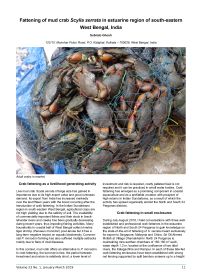
Fattening of mud crab Scylla serrata in estuarine region of south-eastern West Bengal, India

Live mud crab has a high export value and good overseas demand. Over the past fifteen years exports from India have increased, with the introduction of crab fattening practices. Wild-caught seed are held in pens constructed of bamboo screens for several weeks and fed to increase their body weight and hence value. Fattened crabs are onsold to traders exporters, who may air lift them to Singapore and other regional markets for the live restaurant trade.

FAO and NACA to convene Global Conference on Aquaculture 2020

FAO and NACA have signed an agreement to convene a global conference on aquaculture in 2020. This will be the fourth conference in a series that began at the dawn of the industry in Kyoto, 1976. Aquaculture 2020 will be held late in the year in China. Arrangements, programme and partner details will be announced via the NACA website in due course.

Harvesting and marketing strategies in culture-based fisheries

A discussion of harvesting and marketing strategies to improve economic returns in culture-based fisheries.

Strategic leverage on value chains: Fellowships on offer

IDRC and the National University of Singapore (NUS) are offering fellowships for Southeast Asian entrepreneurs, leaders in business, government, and civil society who want to better understand Southeast Asian value chains. The four-day program from 19-22 March 2018 will give participants a useful toolkit of ideas to take full advantage of a connected ASEAN Economic Community. Women leaders and participants from Cambodia, Indonesia, Laos, Malaysia, Myanmar, the Philippines, Thailand, Timor-Leste, and Vietnam are especially encouraged to apply.
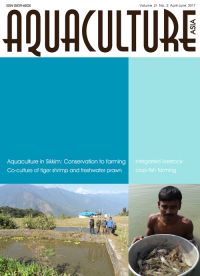
Aquaculture Asia Magazine, April-June 2017

In this issue:

Inspiring story of aquaculture in Sikkim - a journey from conservation to farming; farming of scampi and tiger shrimp together - a case study from West Bengal; Labeo pangusia - a candidate for diversification of hill aquaculture; sustainability of an integrated livestock-fish-crop farming system as a small scale enterprise; sustainable coastal aquaculture in India; potential scope and prospects of domestic fish market in Chhattisgarh.

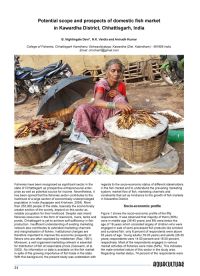
Potential scope and prospects of domestic fish market in Kawardha District, Chhattisgarh, India

Trade in fisheries products is an important source of livelihoods for economically underprivileged people in Chhattisgarh. A socio-economic profile of traders and other actors from a domestic fish market is presented, including age, gender, education and income levels. The market infrastructure, distribution channels and species traded are described. Constraints to marketing arrangements are identified and include a lack of cold chain, storage and transport facilities.

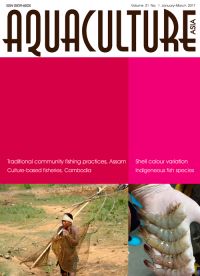
Aquaculture Asia Magazine, January-March 2017

In this issue:

Anti-microbial resistance in aquaculture; participatory market chain approaches to boost fish nurseries; traditional community fishing practices of rural Assam; practical significance of restricted feeding regimes in aquaculture; Bangana dero: A potential indigenous fish species for diversification of carp culture; shell colour variation in farmed Litopenaeus vannamei: Comparison of white- and brown-shelled shrimp; culture-based fisheries: A low-tech, greenhouse friendly approach to improving food and income for Cambodian families.

Giant Prawn 2017

The fourth major international event on giant freshwater prawns was organised by the Asian Institute of Technology from 20-24 March 2007. The conference, organised by Salin Krishna and Michael New, built on a series of highly successful events that trace back to the very beginnings of the industry. The first conference, Giant Prawn 1980 brought together all those involved in freshwater prawn research and farming for the first time and set many priorities for future research and development.

15th meeting of the Asia Regional Advisory Group on Aquatic Animal Health

The 15th meeting was held from 21-23 November 2016, in Bangkok, Thailand. A special session was held on addressing the use of anti-microbial substances in aquaculture and the development of anti-microbial resistance. This is an issue of global concern for both human and animal health, and it had been addressed by a resolution at FAO’s Thirty-ninth Conference in June 2015. The meeting reviewed in detail the status of aquatic animal disease in the region.

Technical Advisory Committee

The Technical Advisory Committee is a body of independent experts that make recommendations on development of the NACA Work Programme. The committee meets bi-annually.

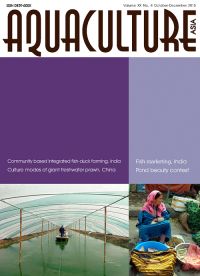
Aquaculture Asia Magazine, October-December 2015

In this issue:

Aquaculture feed supply chain attracting scrutiny. Pond beauty contest, Ram Kumar and social development. Culture modes of giant freshwater prawn in Yangtze River Delta for early harvest. Fish marketing in Kashmir, India - a case study of Srinagar. Community-based integrated fish-duck farming: A boon for rural development in agro-climatic conditions of Assam, India. Gastropod and bivalve fishery of Kakinada Bay, Andhra Pradesh, India: Management and conservation issues.

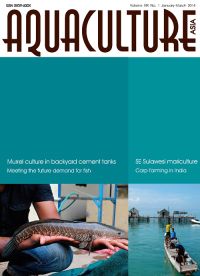
Aquaculture Asia Magazine, January-March 2014

In this issue:

Towards meeting future demand for fish: Aquaculture in inland or marine land or water-based systems? Status of carp farming in India. Recent trends in mariculture in southeast Sulawesi, Indonesia. Murrel (snakehead) culture in backyard cement tanks: A breakthrough and a success story. Mobile telephony - ICT eneabled fisheries extension service for sustainable shrimp farming. International Symposium on Small-scale Freshwater Aquaculture Extension. Report on early mortality syndrome / acute hepatopancreatic necrosis syndrome of shrimp.

Trade, markets and value chain management for the sustainable intensification of Asian aquaculture

Bangladesh ranked thirteenth in 2009 among 34 Asian countries in terms of aquaculture production. Within the fisheries sector, shrimp make the largest contribution in terms of foreign exchange earnings. Focus should be on overcoming the constraints identified along the value chain. Efforts should focus on increasing profitability and income from the sector, by improving governance through proper implementation of institutional policies and rules; improving access to resources and other measures.

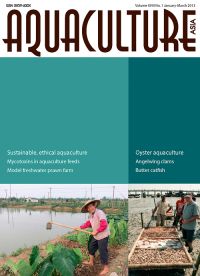
Aquaculture Asia Magazine, January-March 2013

In this issue:

Health issues are not going away. Sustainable and Ethical Aquaculture Trade project in China. Oyster aquaculture for coastal defense and food production in Bangladesh. Importance of mycotoxins in aquaculture feeds. A model modular farm for size grading and monosex culture of freshwater prawn. Angelwing clam (Pholas orientalis) future assured after Thai DOF's breeding success. Ompok bimaculatus, an emerging species for diversification of aquaculture in Tripura, North-eastern India.

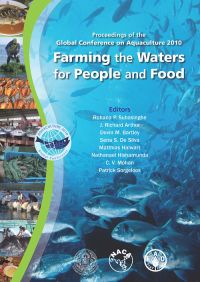
Proceedings of the Global Conference on Aquaculture 2010

The Global Conference on Aquaculture 2010 reviewed the present status and trends in aquaculture development, addressed emerging issues relevant to aquaculture development, assessed opportunities and challenges for future aquaculture development and built consensus on advancing aquaculture as a global, sustainable and competitive food production sector. This volume provides information on how aquaculture could be mobilized to alleviate global poverty and improve food and nutrition security in the coming decades.

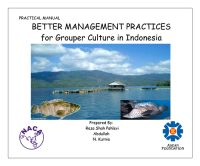
Better management practices for grouper culture in Indonesia: A practical manual

This practical manual covers key aspects for successful grouper farming including formation of farmer groups, cage crop planning, crop calendar and better management practices for cage aquaculture of grouper. These include site selection, design, cage preparation, seed selection and stocking practices, feed, water and health management, harvest and post-harvest, record keeping, marketing and capital strengthening. It is designed for use by small-scale farmers.

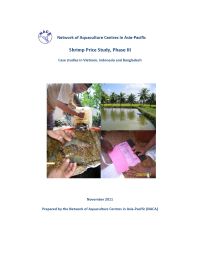
Shrimp price study, phase III: Case studies in Vietnam, Indonesia and Bangladesh

This study is a continuation of “Evaluation of the impact of the Indian Ocean tsunami and US antidumping duties on the shrimp farming sector of South and South-East Asia” with the aim of assessing the impact of the 2004 Indian Ocean tsunami and the introduction of anti-dumping duties on shrimp farming in the Asian region, with special focus on the effect that these unforeseen events had on shrimp prices and livelihoods of the stakeholders.

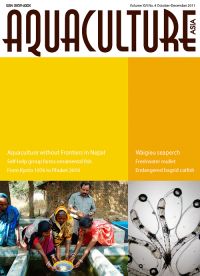
Aquaculture Asia Magazine, October-December 2011

In this issue:

Visit to the AwF funded small-scale aquaculture project in Nepal. Success story of the Barakhandapat Ornamental Fish Breeding Unit, India. From Kyoto 1976 to Bangkok 2000 and Phuket 2010: Aquaculture development and personal transitions. Embryonic and larval development of Waigieu seaperch Psammoperca waigiensis. Culture feasibility of freshwater mullet Rhinomugil corsula in ponds in India. Management in seed production of an endangered catfish Horabagrus brachysoma during its hatchery phase.

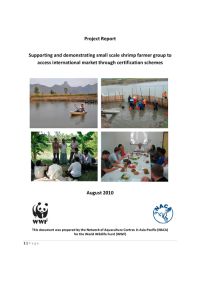
Supporting and demonstrating small scale shrimp farmer group to access international market through certification

This project was conducted to demonstrate small scale shrimp farmer group access to international markets through certification schemes. This project proved that small-scale farmers organised into groups, can improve their technical capacities, and achieve access to markets. This achievement was the result of strong partnerships with producers, private sector and government agencies assisting to develop a sustainable business model for small scale aquaculture. Cost of compliance was found to be a significant barrier to entry.

Guidelines on Aquaculture Society Certification

These guidelines prepare and enable aquaculture societies to seek group certification from independent third party certification programmes. The guidelines are independent of commodity and certification standards. They were developed as part of a collaborative MPEDA/NaCSA/NACA project on the certification of aquaculture societies. Draft guidelines developed by the project partners were discussed at the inception meeting on aquacutlure society certifiction held at Kakinada during 1-2 September 2009.