The Health and Biosecurity Programme assists members to reduce the risks of aquatic animal disease impacting the livelihoods of farmers, national economies, trade, environment and human health by:
Improving regional cooperation in aquatic animal health and welfare.
Developing and implementing national strategies on aquatic animal health.
Improving surveillance, reporting and response to disease emergencies.
Promoting harmonisation of diagnostic procedures and risk assessment.
Widespread promotion of better aquatic animal health management practices at the farm level.
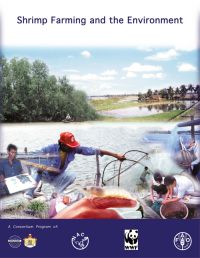
L'élevage de la crevette est l’un des secteurs d'aquaculture le plus en essor dans beaucoup de régions du monde, il est également l’un des plus controversés. L'expansion rapide de ce secteur a généré, certes, des sources de revenus pour plusieurs pays, mais elle a été accompagnée par une préoccupation croissante sur les impacts environnemental et social. Les Principes Internationaux pour l'Elevage Responsable de la Crevette fournissent la base sur laquelle les parties prenantes peuvent collaborer pour un développement plus durable de l'élevage de crevette.
The use of alien species is a proven means to increase production and value from aquatic ecosystems. However, alien species are now recognised as one of the most significant threats to aquatic biodiversity. There are a range of international mechanisms that have been established to assist countries in meeting international obligations and responsibilities. Implementation is often difficult due to lack of awareness and problems with enforcement. Regional coordination of policies is needed for effective national management.
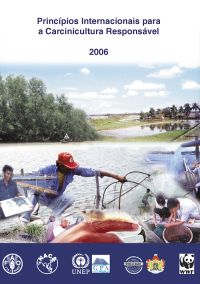
O Cultivo de Camarão é um dos setores de mais rápido crescimento na aqüicultura em várias partes do mundo e também o mais controverso. A rápida expansão deste setor possibilitou a geração de renda para muitos países, entretanto, ela tem sido acompanhada por crescentes preocupações sobre seus impactos ambientais e sociais. Os Princípios Internacionais para a Carcinicultura Responsável provêm a base sobre a qual todas as partes interessadas poderão colaborar para um desenvolvimento mais sustentável do cultivo de camarão.
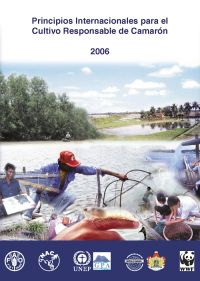
El cultivo de camarón es uno de los sectores de la acuicultura de más rápido crecimiento y también uno de los más polémicos en muchas partes del mundo. La rápida expansión de este sector generó ingresos para muchos países, pero ha estado acompañada por preocupaciones crecientes relacionadas con sus impactos ambientales y sociales. Los Principios Internacionales para el Cultivo Responsable de Camarón proporcionan las bases sobre las cuales los diversos participantes pueden colaborar en pro de un desarrollo más sostenible de la camaronicultura.
Shrimp Health Management brochures provide better management practices in a reader friendly format. These brochures were prepared as extension materials through the village based demonstration programme by the Marine Products Export Development Authority of India and NACA. The programme continues building success and involved a total of 29 villages and 29 Aquaclubs in five Indian states (Andhra Pradesh, Tamilnadu, Orissa, Gujarat, and Karnataka) in 2006.
This report, the 34th in the series, contains information about the aquatic animal health status of fourteen states in the Asia-Pacific region. The foreword discusses efforts towards international harmonisation in aquatic animal health standards.
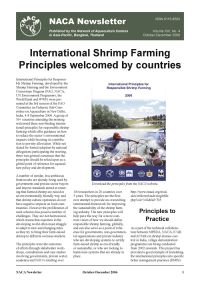
International shrimp farming principles welcomed by countries. Discussions on the establishment of a "Mahseer R&D Centre". Microsatellite DNA markers for mahseer are now available. First study on genetic variation of the critically endangered Mekong giant catfish. IMNV found in Asia-Pacific. Thailand and US to jointly install tsunami wave sensors. Co-management in aquaculture explored at APFIC Forum. Virus may control Australia's feral carp problem. A milestone in India's sustainable shrimp farming efforts. Fish introduction in India: Status, challenges and potentials. 8th Asian Fisheries Forum. STREAM Update. Website management training to support Thai Post-tsunami Rehabilitation website.
Shrimp farming is one of the fastest growing aquaculture sectors in many parts of the world and also one of the most controversial. Rapid expansion of this sector generated income fo many countries, but has been accompanied by rising concerns over environmental and social impacts. The International Principles for Responsible Shrimp Farming provide the basis upon which stakeholders can collaborate for a more sustainable development of shrimp farming.
Shrimp farming is one of the fastest growing aquaculture sectors in many parts of the world and also one of the most controversial. Rapid expansion of this sector generated income fo many countries, but has been accompanied by rising concerns over environmental and social impacts. The International Principles for Responsible Shrimp Farming provide the basis upon which stakeholders can collaborate for a more sustainable development of shrimp farming.
This report, the 33rd in the series, contains information about the aquatic animal health status of seventeen states in the Asia-Pacific region. The foreword discusses emerging diseases in the region.
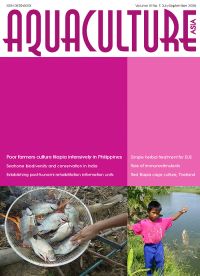
Resources and biodiversity of seahorses and their need for conservation in India. Captive breeding of pangasid catfish Pangasius pangasius. Establishment of post-tsunami rehabilitation information units in Thailand. Poor farmers culture tilapia intensively in ponds in Central Luzon, Philippines. Simple herbal treatment for treatment of EUS in snakehead. DNA vaccination in health management. The role of immunostimulants. Red tilapia cage culture in central Thailand. Quality improvement of farmed fish in Iranian markets.
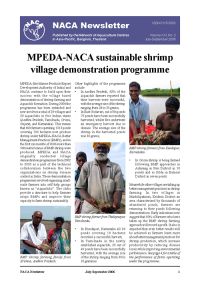
MPEDA-NACA sustainable shrimp village demonstration programme. Inter-calibration of white spot syndrome virus (WSSV) PCR laboratories in India. Shrimp health management training. Rotary International/NACA meeting facility up at Koh Yao Noi. Tsunami-affected farmers train in marine cage aquaculture. Marine finfish aquaculture network at the APAN meeting in Singapore. Aquatic animal health policy workshops build consensus in ASEAN nations. Aquaculture Compendium released. Developments in establishing a conservation plan for the Mekong giant catfish. ROUNDTABLE: Exploring south-south cooperation opportunities in sustainable shrimp farming in West Africa, Conakry (Guinea). Technical missions to Cambodia and Lao PDR.
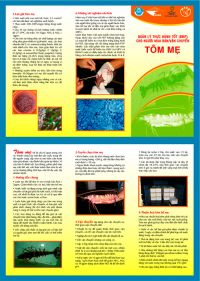
A series of leaflets on better management practices for Penaeus monodon shrimp aquaculture in Vietnam. The leaflets are available in both Vietnamese and English and cover: Broodstock management for suppliers, postlarvae selection and transportation for seed traders, shrimp seed quality, pond preparation, good pond management, shrimp health management.
This report, the 32nd in the series, contains information about the aquatic animal health status of fifteen states in the Asia-Pacific region. The foreword discusses regional cooperation for promotion of aquatic animal health management.
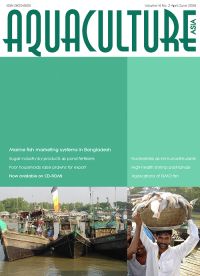
High-health postlarvae a prerequisite for sustainability of the Indian shrimp industry. Broodstock and all-female scampi grow out ponds in south India. Genetically modified fish and potential applications. Rainbow trout farming in hill terraces of Nepal. Sugar industry by-products as plankton boosters and yield enhancers in carp culture. Growth and production of Penaeus monodon in low saline culture systems. Poor households raise prawns for export. Marine fish marketing in Bangladesh.
NACA Governing Council endorses new work programme, elects Sena De Silva as next Director General. RapiDot Kit - Farmer friendly kit for WSSV detection. Regional mariculture program strengthened. Economics and marketing analysis of the live reef fish food trade in the Asia-Pacific. Workshop on molecular techniques in aquaculture and seafood safety, Mangalore, India. Better-practice approaches for culture-based fisheries development in Asia. High-level Bahrain fisheries deletation visits Iran. First monthly meeting of fish farmers at One-stop Aqua Shop in Punjab Pakistan. Fish breeding training program for farmers of OAS, Kaipara. Provincial workshops on National Fisheries Policy and Strategy Framework held in Punjab and Sindh, Pakistan. Monitoring and evaluating the impacts of aquaculture on the agency and well-being of women. STREAM welcomes AYAD volunteer. Workshop to strengthen aquatic animal health capacity and biosecurity in ASEAN. Asian Federation for Information Technology in Agriculture (AFITA) 2006 in Bangalore. Aquaculture rehabilitation project launched by Indonesian Minister of Marine Affairs and Fisheries.
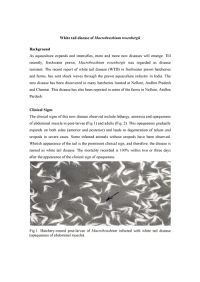
White tail disease in Macrobrachium rosenbergii is emerging as a serious problem in the region. Two viruses, M. rosenbergii nodavirus (MrNA) and extra small virus (XSV) have been found to be associated. The role of MrNV and XSV is not yet clear. Considering the economic impact and potential for the disease to spread, white tail disease (MrNV and XSV) has been listed under non-OIE listed crustacean diseases relevant to the region and NACA/FAO/OIE Regional QAAD list.
This is the proceedings of the workshop on Building capacity to combat impacts of aquatic invasive alien species and associated trans-boundary pathogens in ASEAN countries, held in Penang, Malaysia, on the 12th-16th July 2004. The workshop built on the recommendations from a 2002 workshop organised by the Global Invasive Species Program and a 2003 workshop of countries sharing the Mekong watershed, in promoting awareness, coordination mechanisms and information exchange systems and identifying management and risk mitigation measures.
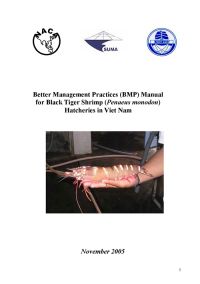
In order to provide practical and effective technical guidance for shrimp hatchery management, it is necessary to establish a set of better management practices (BMPs) which underpin an effective hatchery production system. This document is not a complete manual on the management of P. monodon hatcheries but concentrates on the implementation of BMPs for the hatchery covering all of the critical stages and processes in the production cycle, which are currently believed to be causing problems in Vietnamese hatcheries.