Marine finfish

Information relating to aquaculture of marine finfish.

Creative Commons Attribution.

Related

Species / commodity tags

Major farmed commodity or species groups.

In this collection

NACA Newsletter Volume XVIII, No. 2, April-June 2003

In this issue:

Recommendations of the Aquamarkets Consultation 2003. EC-funded project targets seafood trade and poverty. Shrimp disease control and coastal management. Fisheries and Adaptive Learning project. Shrimp aquaculture certification: Request for information & advice on a new web site. Workshop on control and responsible use of alien species. MPEDA/NACA Technical Assistance on Shrimp Health and Coastal Management. Changes to the regional list of aquatic animal diseases. STREAM SAPA Stakeholder Workshop in Hanoi. Regional Training Course on Grouper Hatchery Production. Review on low food chain species for marine fish culture. NACA/Deakin University to visit Indonesia 2-7 April 2003.

Aquaculture Asia Magazine, January-March 2003

In this issue:

Fertilisation, soil and water quality management. Commercialisation of giant freshwater prawn culture in India. Aquaculture in reservoir-fed canal systems. Production of black-lip pearl oyster Pinctada margaritifera. Hybridisation hassles. Breeding sea cucumber Holothuria scabra in Vietnam. Use of palm kernel meal in feeds. Getting the most out of your feed. Marine finfish aquaculture in Myanmar. Penaeus monodon culture in low-salinity areas. Fisheries and aquaculture in Nepal.

Report of the first meeting of the Asia Regional Advisory Group on Aquatic Animal Health, 6-8 November 2002

The Asia Regional Advisory Group on Aquatic Animal Health meets annually to discuss regional health issues including emerging disease threats. This report includes a review of regional disease status circa 2002, global and regional disease reporting arrangements, global issues and standards, progress in implementation of the Regional Technical Guidelines on Health management for the Responsible Movement of Live Aquatic Animals, identification and designation of regional aquatic animal health resources and regional and international cooperation.

An economic assessment of current practice and methods to improve feed management of caged finfish in several SE Asia regions

This paper examines farming practices in marine fish cage aquaculture in southeast Asia with reference to feed and feeding. It proposes a range of reforms to improve the economic performance of the sector, including selective breeding, use of hatchery-reared fingerings, modernisation of cage systems, improved feed management and use of dry pelleted feeds, relocation of cages to better quality sites and a greater degree of government and private sector co-operation in research and development.

Aquaculture Asia Magazine, July-September 2002

In this issue:

Aquaculture for poverty alleviation and food security. Shrimp pond waste management. Properties of liming materials. Seed production of mud crab Scylla spp. The dilemmas of strain selection. Seed production of the crucifix crab Charybdis feriatus. A general approach to disease treatment and control. Breeding and seed production of mangrove snapper Lutjanus argentimaculatus. Responsible use of antibiotics in shrimp farming. Health management for cultured marine fishes. Molecular methods for rapid detection of pathogens in seafood.

NACA Newsletter Volume XVII, No. 3, July-September 2002

In this issue:

Iran poised to become member. Indonesia Ministry endorses membership. NACA and FAO implements Phase II of the Asia-Pacific Regional Program on Molluscan Health Management. Message to NACA Alumni: Proposed Alumni Network. Research and Technology for Farmer and Environment Friendly Farming of Marine Fish in the Asia-Pacific. NACA Organises Four Training courses and Study Tours for Bangladesh in the third quarter.

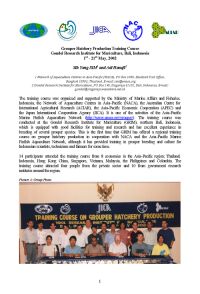
Report of the Grouper Hatchery Production Training Course, May 2002

This report documents a training course that was held at the Research Institute for Mariculture, Bali, Indonesia in May 2003. The course covered both theoretical aspects of grouper husbandry via lectures and practical hands-on work in a grouper hatchery, including broodstock management, tank preparation egg collection, live feed production, health management, harvesting and transport and visits to commmercial grouper and milkfish hatcheries, grow-out facilities, markets and exporters.
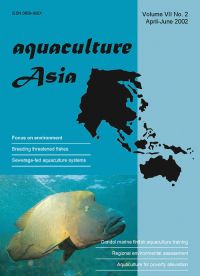
Aquaculture Asia Magazine, April-June 2002

In this issue:

Prawn farm energy audits. Freshwater fish farming and poverty alleviation in Bangladesh. Artificial propagation for conservation of endangered species. Sewerage-fed aquaculture systems of Kolkata. Rice-fish farming in India. The use of lime, gypsum, alum and potassium permanganate in water quality management. Fish gene technology research in China. Low-salinity shrimp farms. Seed production of Clarius batrachus. Supplying good-quality seed for sustainable aquaculture and more.

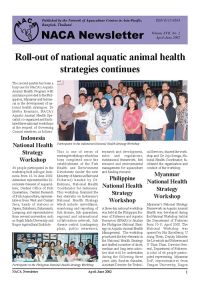
NACA Newsletter Volume XVII, No. 2, April-June 2002

In this issue:

Roll-out of national aquatic animal health strategies continues. STREAM concludes inception phase of 'Improved Policy on Aquaculture Service Provision to Poor People' Project in India. Expert consultation on rapid diagnosis of shrimp viral diseases held in Chennai, India. ACIAR/NACA Workshop on Feeds and Feeding Constraints in Inland Aquaculture: Research and Extension Priorities. NACA supports health management in Indian shrimp farming. Marine Finfish Aquaculture aquaculture programme gears up for workshop. Launch of Trans-Himalayan Coldwater Fisheries Network Website. NACA Organises Emergency Assistance to Indonesia in the Control of a Serious Koi and Common Carp Disease.

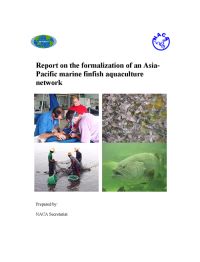
Report on the formalisation of an Asia-Pacific marine finfish aquaculture network

The Asia-Pacific Grouper Network was initiated in 1998 at a meeting of grouper aquaculture researchers in Bangkok, Thailand, to promote effective regional cooperation among Asia-Pacific economies involved in grouper aquaculture research and development. This report has been prepared based on the recommendations of the NACA member governments to formalise the network within NACA as a regional network to support research and development in marine fish culture in the Asia-Pacific region.

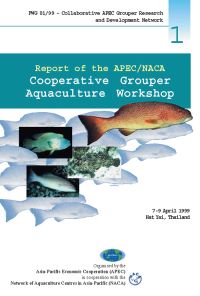
Report of the APEC/NACA Cooperative Grouper Aquaculture Workshop, Hat Yai, Thailand, 7-9 April 1999

These are the proceedings of a workshop hosted by APEC and NACA under the project 'Collaborative APEC-NACA Grouper Aquaculture Network' (APEC Project FWG 01/99). The objectives of the workshop included the establishment of a regional research network to facilitate development of a sustainable grouper aquaculture industry; reduction of reliance on wild fingerlings for coastal grouper aquaculture, facilitate development of new aquaculture industries.

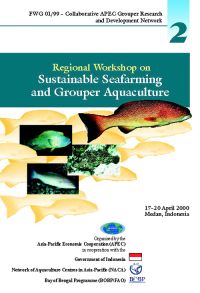
Report of the Regional Workshop on Sustainable Seafarming and Grouper Aquaculture, Medan, Indonesia, 17-20 April 2000

These are the proceedings of a workshop focussed on grouper culture, but also explored management strategies required to support the sustainable development of seafarming in the Asian region. The emphasis was on technology transfer and management strategies for the benefit of farmers and coastal communities. The workshop included special sessions on diversification of seafarming systems and culture species, the role of seafarming in the livelihoods of coastal communities.

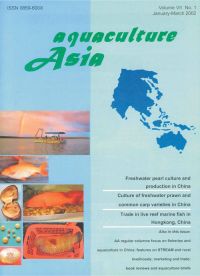
Aquaculture Asia Magazine, January-March 2002

In this issue:

Chemical residues. Live reef fish trade in Hong Kong. Barramundi farming in Australia. Freshwater pearl and prawn production in China. Status of common carp varieties under culture in China. Induced spawning of Pangasius sutchi. Cambodian farmers innovate cost-effective variations on Chinese hatcheries. Genes and fish. Improving rural livelihoods in Cambodia, Vietnam, Nepal and the Philippines through the STREAM Initiative. Marine finfish news, book reviews and more.

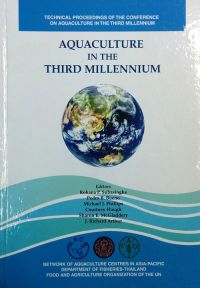
Proceedings of the Conference on Aquaculture in the Third Millennium

This volume, the third major publication arising from the Conference on Aquaculture in the Third Millennium, contains the information essential to conduct well-informed discussion of sustainable aquaculture development - both at the Conference, as well as after. The information provide basic reference points on the progress, direction and magnitude of aquaculture changes, and the factors associated with these changes, within global, regional, sectoral, thematic and technical perspectives.

Workshop and conference proceedings

NACA frequently organises technical workshops and consultations on aspects of aquaculture. The proceedings of such meetings are made available for free download. Audio and video recordings of technical presentations are also available for some meetings (please see the podcast section).

Projects

NACA implements collaborative development assistance projects on issues of regional interest. Individual projects draw heavily on the personnel and facilities of participating centres in member states. Projects are essentially implemented by participating centres with the Secretariat acting as a coordinating body. NACA supports technical exchange, capacity building, institutional strengthening and policies for sustainable aquaculture development. Network partners include research centres, member governments, farmer associations, development agencies and the Food and Agriculture Organization of the United Nations.

Publications

NACA publishes a wide range of aquaculture publications including technical manuals, workshop proceedings, better practice guidelines and several serials including Aquaculture Asia Magazine, the NACA Newsletter and the Quarterly Aquatic Animal Disease Report. To keep up to date with developments you could consider subscribing to our RSS feed

Asia Regional Advisory Group on Aquatic Animal Health

The Asia Regional Advisory Group on Aquatic Animal Health meets annually to discuss regional disease issues including emerging disease threats. The group was established by the Governing Council of NACA to provide advice to member governments in the Asia-Pacific region. This collection comprises the reports of the annual meetings of the group. The reports are a rich source of information concerning the current disease status of the region and new or emerging diseases of aquatic animals.