Marine finfish

Information relating to aquaculture of marine finfish.

Creative Commons Attribution.

Related

Species / commodity tags

Major farmed commodity or species groups.

In this collection

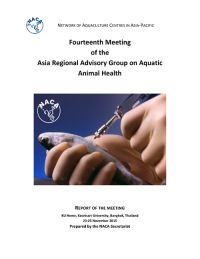
Report of the fourteenth meeting of the Asia Regional Advisory Group on Aquatic Animal Health, 23-25 November 2015

The Asia Regional Advisory Group on Aquatic Animal Health meets annually to discuss regional health issues including emerging disease threats. This report includes a review of regional disease status circa 2015, global and regional disease reporting arrangements, global issues and standards, progress in implementation of the the Regional Technical Guidelines on Health management for the Responsible Movement of Live Aquatic Animals, identification and designation of regional aquatic animal health resources and regional and international cooperation.

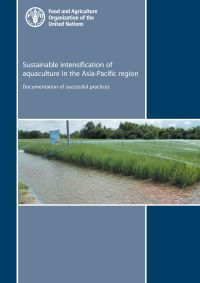
Sustainable intensification of aquaculture in the Asia-Pacific region: Documentation of successful practices

This publication is the major output of a regional programme jointly implemented by FAO and NACA in 2015 to document and disseminate successful practices that contribute to the sustainable intensification of aquaculture in the Asia-Pacific region. Twelve practices are described that contribute to at least one of the following: Improved production and resource use efficiency (land, water, feed, energy); improved environmental benefits; strengthened economic viability and farmers' resilience; and improved social acceptance and equity.

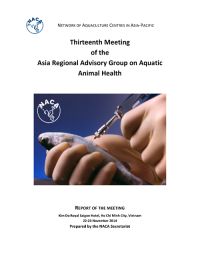
Report of the thirteenth meeting of the Asia Regional Advisory Group on Aquatic Animal Health, 22-23 November 2014

The Asia Regional Advisory Group on Aquatic Animal Health meets annually to discuss regional health issues including emerging disease threats. This report includes a review of regional disease status circa 2014, global and regional disease reporting arrangements, global issues and standards, progress in implementation of the the Regional Technical Guidelines on Health management for the Responsible Movement of Live Aquatic Animals, identification and designation of regional aquatic animal health resources and regional and international cooperation.

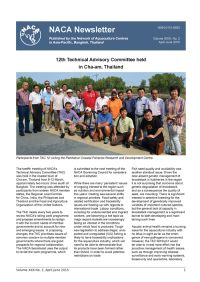
NACA Newsletter, Volume XXX, No. 2, April-June 2015

In this issue:

12th Technical Advisory Committee held in Cha-am, Thailand. Audio recordings: WAS special session on regional cooperation for improved biosecurity. AFSPAN Final Technical Report now available! Pillay Aquaculture Foundation Awards for Scientists in Least Developed Countries. Gender seminar conducted and ASEAN Gender Network launched. A two-tube, nested PCR detection method for AHPND bacteria. 9th Regional Grouper Hatchery Production Training Course. Developing an environmental monitoring system to strengthen fisheries and aquaculture in the Lower Mekong Basin. Asia-Pacific Regional Workshop on the Status of Aquatic Genetic Resources for Food and Agriculture.

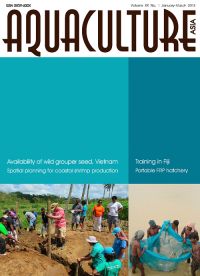
Aquaculture Asia Magazine, January-March 2015

Further training provided to aquaculturists in Fiji. Spatial planning for sustainable coastal shrimp production. Availability of grouper (Serranidae) fingerlings and seed in the coral reef of Son Tra Peninsula, central Viet Nam. Small-scale carp seed production through portable FRP hatchery at Khanguri, Odisha. Regional consultation on culture-based fisheries developments in Asia. Gender Assessment Synthesis Workshop. Broodstock management in aquaculture. Urgent appeal to control spread of the shrimp microsporidian parasite Enterocytozoon hepatopenaei (EHP).

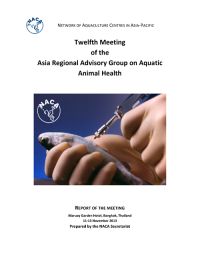
Report of the twelfth meeting of the Asia Regional Advisory Group on Aquatic Animal Health, 11-13 November 2013

The Asia Regional Advisory Group on Aquatic Animal Health meets annually to discuss regional health issues including emerging disease threats. This report includes a review of regional disease status circa 2013, global and regional disease reporting arrangements, global issues and standards, progress in implementation of the the Regional Technical Guidelines on Health management for the Responsible Movement of Live Aquatic Animals, identification and designation of regional aquatic animal health resources and regional and international cooperation.

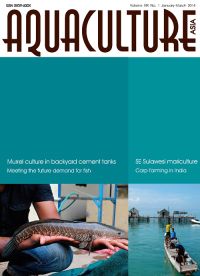
Aquaculture Asia Magazine, January-March 2014

In this issue:

Towards meeting future demand for fish: Aquaculture in inland or marine land or water-based systems? Status of carp farming in India. Recent trends in mariculture in southeast Sulawesi, Indonesia. Murrel (snakehead) culture in backyard cement tanks: A breakthrough and a success story. Mobile telephony - ICT eneabled fisheries extension service for sustainable shrimp farming. International Symposium on Small-scale Freshwater Aquaculture Extension. Report on early mortality syndrome / acute hepatopancreatic necrosis syndrome of shrimp.

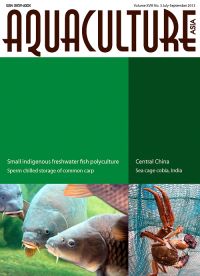
Aquaculture Asia Magazine, July-September 2013

In this issue:

A second trip to Hubei Province, central China. Sea cage growout of cobia Rachycentron canadum in the Gulf of Mannar. Culture of small indigenous fish species in polyculture with Indian major carps and high value crops along pond dykes. Study on sperm chilled storage of common carp Cyprinus carpio in Vietnam. Culture-based fisheries exchanges between Lao PDR and Cambodia. Culprit behind massive shrimp die-offs in Asia unmasked.

Nursery management of grouper: A best-practice manual

This manual provides practical guidelines for those engaged in the nursery culture of groupers in Indonesia as well as elsewhere in the tropics. It provides information on husbandry of groupers in the nursery phase, to reduce losses due to disease and cannibalism, and thus to increase the profitability of grouper nursing. The guidelines are derived from outcomes of ACIAR-funded research as well as other published information on grouper nursery management.

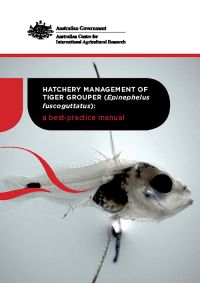
Hatchery management of tiger grouper (Epinephelus fuscoguttatus): A best-practice manual

This manual provides guidelines for the production of tiger grouper fingerlings. It outlines best-practice methods for broodstock maintenance, spawning, egg incubation and rearing of larvae through to 2–3 cm, fully metamorphosed juveniles. The guidelines have been developed from the outcomes of ACIAR-funded research, as well as from the experience of Indonesian, Philippine and Australian scientists and commercial hatchery operators, and published information. It provides an aid for improving the availability of grouper seed stock.
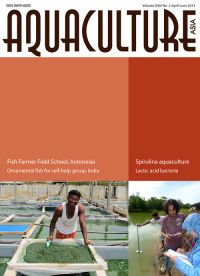
Aquaculture Asia Magazine, April-June 2013

In this issue:

Workshop on mainstreaming gender in NACA. Fish Farmer Field School: Towards healthier milkfish / shrimp polyculture and fish farmer empowerment in South Sulawesi. A success story of Maa Tarini Self Help Group Ornamental Fish Unity, India. Use of lactic acid bacteria in fish farming. AFSPAN field surveys underway. Anti-viral treatment for healthier black tiger prawns. Jungle perch on the comeback trail. Nursery management of grouper manual. Hatchery management of tiger group manual.

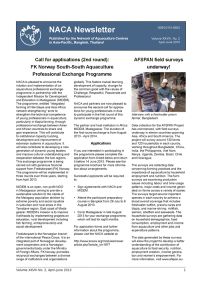
NACA Newsletter, Volume XXVIII, No. 2, April-June 2013

In this issue:

Call for applications (2nd round): FK Norway South-South Aquaculture Professional Exchange Programme. AFSPAN field surveys underway! 4th Global Symposium on Gender in Aquaculture and Fisheries. An anti-viral treatment for healthier black tiger prawns. Jungle perch on the comeback trail. Nursery management of grouper: A best-practice manual (Indonesian translation). Hatchery management of tiger grouper (Epinephelus fuscoguttatus): A best-practice manual (Indonesian translation). Priority adaptations to climate change for Pacific fisheries and aquaculture: Reducing risks and capitalising on opportunities. Improving biosecurity through prudent and responsible use of veterinary medicines in aquatic food production.

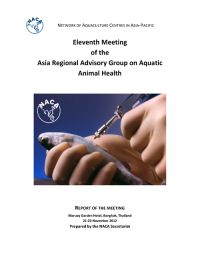
Report of the eleventh meeting of the Asia Regional Advisory Group on Aquatic Animal Health, 21-23 November 2012

The Asia Regional Advisory Group on Aquatic Animal Health meets annually to discuss regional health issues including emerging disease threats. This report includes a review of regional disease status circa 2012, global and regional disease reporting arrangements, global issues and standards, progress in implementation of the the Regional Technical Guidelines on Health management for the Responsible Movement of Live Aquatic Animals, identification and designation of regional aquatic animal health resources and regional and international cooperation.

Marine capture fisheries as a source of food for aquaculture in the Asian region

Asian aquaculture is the world’s major user of fishmeal, and 86 percent of fishmeal used in Asia (excluding China) now goes to aquaculture. With no new sources of fish, many argue that we have already reached the limit in coastal trawl fisheries. There is a shift away from using fresh fish directly as feed, towards pelleted feeds. The Asian aquaculture industry will be affected as supplies tighten and costs rise.

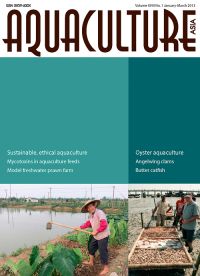
Aquaculture Asia Magazine, January-March 2013

In this issue:

Health issues are not going away. Sustainable and Ethical Aquaculture Trade project in China. Oyster aquaculture for coastal defense and food production in Bangladesh. Importance of mycotoxins in aquaculture feeds. A model modular farm for size grading and monosex culture of freshwater prawn. Angelwing clam (Pholas orientalis) future assured after Thai DOF's breeding success. Ompok bimaculatus, an emerging species for diversification of aquaculture in Tripura, North-eastern India.

NACA Newsletter, Volume XXVIII, No. 1, January-March 2013

In this issue:

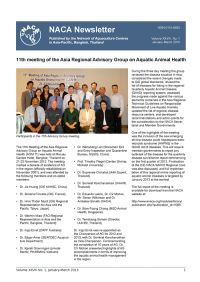
11th meeting of the Asia Regional Advisory Group on Aquatic Animal Health. Aquaculture community mourns Prof. M.C. Nandeesha. Got a story for Aquaculture Asia Magazine? AusAID funded project on Institutional Support for Development of Mariculture in South East Sulawesi commences. Regional training course on broodstock management in aquaculture, Vietnam 27 May - 1 June 2013. Video recordings from workshop on sustainable intensification of aquaculture released!

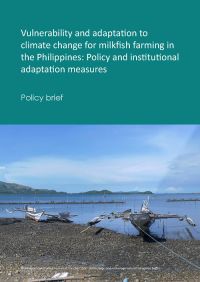
Policy brief: Vulnerability and adaptation to climate change for milkfish farming in the Philippines

This brief summarises the results from the interdisciplinary study conducted within the Aquaclimate project in Iloilo province in the Philippines looking at the impacts of climate change on small scale milkfish farming. The brief provides guidelines for adaptation and policy development to address the climate change impacts on small scale milkfish farming in the Philippines and how adaptation measures should be implemented in the region.

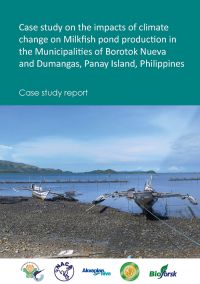
Case study on the impacts of climate change on milkfish pond production in Panay Island, Philippines

This case study examines the impacts of climate change on milkfish farmers in Iloilo. Farmer perceptions of climate change, attitudes and adaptation strategies were mapped via focus group discussion, stakeholder workshops and questionnaires. Measures that could be achieved to reduce vulnerability to climate change include sustainable aquaculture practices; diversification of farmers’ income sources; diversification of culture species; utilising natural resources to increase productivity; and building farmer capacities through access to information and knowledge.

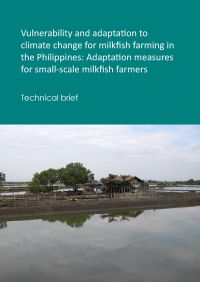
Technical brief: Vulnerability and adaptation to climate change for milkfish farming in the Philippines

This technical brief summarises the results from an interdisciplinary study in two municipalities in Panay Island, Philippines, looking at vulnerability to climate change, impacts and adaptation measures for milkfish farmers. The brief provides guidelines for adaptation measure that can be undertaken by the farmers together with institutional, policy, science and technology support required to improve their adaptive capacity to cope with future climate change.

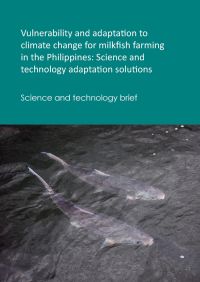
Science brief: Vulnerability and adaptation to climate change for milkfish farming in the Philippines

This brief summarises the results from the interdisciplinary study conducted within the AQUACLIMATE project in Iloilo province in the Philippines, looking at the impacts of climate change on small scale milkfish farming. The brief provides guidelines for academics, researchers and technologists to support farmers for adaptation measures to address the climate change impacts on small scale milkfish farming.