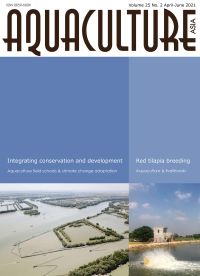
Integrated taxonomy, conservation and sustainable development: Multiple facets of biodiversity; A note on 100th birth anniversary of the late Dr Hiralal Chaudhuri; Aquaculture field schools supporting mangroves for climate change adaptation of Indonesian milkfish-shrimp farmers; An insight to red tilapia breeding and culture: A farmer advisory; Aquaculture for livelihoods and food security in North-western India; NACA Newsletter.
The 88th edition of the Quarterly Aquatic Animal Disease Report contains information from thirteen governments. The foreword provides an announcement on the new format for the Aquatic Animal Disease Report from January 2021 onwards.
28 April 2021 | Teena Jayakumar, T.K, T.T. Ajith Kumar, Mahender Singh, Vindhya Mohindra, Rajeev K. Singh, Rajesh Dayal, J.K. Jena and Kuldeep K. Lal | 2097 Downloads | .pdf | 528.3 KB
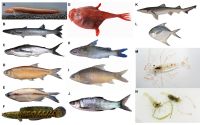
Focussed explorations from the ICAR-National Bureau of Fish Genetic Resources (NBFGR), an organisation mandated for cataloguing of genetic resources of India include surveys of various ecosystems ranging from fauna of deep sea to the high-altitude regions of the Himalaya, falling under diverse biogeographic zones and unexplored regions of the country, including North-eastern India, Western Ghats, Lakshadweep and the Andaman and Nicobar Islands. This article describes the results of these efforts, which include discovery of 14 new fish species and six new distribution records between 2015 to 2020.
This report summarises the proceedings of the 19th meeting of the Advisory Group, held 26-27 November 2020 via video conference. The group's role includes reviewing disease trends and emerging threats in the region, identifying developments in global aquatic disease issues and standards, evaluating the Quarterly Aquatic Animal Disease Reporting Programme and providing guidance on regional strategies to improve aquatic animal health management.
The 87th edition of the Quarterly Aquatic Animal Disease Report contains information from fifteen governments. The foreword discusses the 19th Meeting of the Asia Regional Advisory Group on Aquatic Animal Health, held 26-27 November 2020.
The 86th edition of the Quarterly Aquatic Animal Disease Report contains information from fifteen governments. The foreword provides a discussion of a webinar on decapod iridescent virus 1 (DIV1), held on 20 August 2020.
13th Technical Advisory Committee; Presentation of the State of World Aquaculture and Regional Aquaculture Reviews 2020; Online training course on mariculture technologies for the Asia-Pacific region; Quarterly Aquatic Animal Disease Report, January-March 2020; Regional Webinar on Infection with Decapod Iridescent Virus 1 (DIV1) and Preparedness for Emerging Shrimp Diseases; China announces import measures to respond to nucleic acid positives of COVID-19 detected from the outer packaging of frozen white leg shrimp from Ecuador.
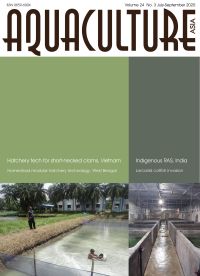
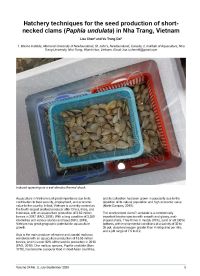
Hatchery techniques for the seed production of short-necked clams (Paphia undulata) in Nha Trang, Vietnam; Lovesome chum of the aquarium are wreaking havoc in East Kolkata Wetlands, India; Concept of indigenous recirculatory aquaculture system executed in West Bengal, India and other places; Homestead modular hatchery technology of brackishwater catfish, Mystus gulio: A potential alternate livelihood option for small and marginal farmers of Sunderban; NACA Newsletter.
13 May 2020 | Lisa Chen and Vu Trong Dai | 2370 Downloads | .pdf | 2.87 MB
Aquaculture of short-necked clam Paphia undulata in Vietnam started approximately ten years ago, but production has been very small due to the lack of seed supply from hatcheries. The Institute of Aquaculture at Nha Trang University, is the first to conduct artificial seed production research on P. undulata and the first hatchery in Khanh Hoa province to produce seed of this species. This article describes techniques to induce spawning in P. undulata using wet and dry thermal shock stimuli. It also describes broodstock preparation, larval rearing, transportation techniques and the market value of this species.
The 84th edition of the Quarterly Aquatic Animal Disease Report contains information from eleven governments. The foreword discusses meetings of the ad hoc Steering Committee of the Regional Collaboration Framework on Aquatic Animal Health in Asia and the Pacific.
This report was prepared by the 18th Asia Regional Advisory Group on Aquatic Animal Health (AG) that met at Bangkok, Thailand on 18-19 November 2019. The group discussed OIE standards and global issues, review of regional disease status, reports on the aquatic animal health programmes of partner agencies, and disease reporting.
15 January 2020 | DAA 11 national Technical Organizing Committee | 1225 Downloads | .pdf | 1.05 MB
The 11th Symposium on Diseases in Asian Aquaculture (DAA11) marks 30 years since the Fish Health Section - Asean Fisheries Society (FHS-AFS) establishment and it will be celebrated in Malaysia. Local hosts, the Department of Fisheries Malaysia (DOF) under the Ministry of Agriculture and Agro-based Industry together with the Ministry of Modernisation of Agriculture, Native Land and Regional Development Sarawak (MANRED) will be organising the event in cooperation with the FHS-AFS.
This report summarises the proceedings of the 17th meeting of the Advisory Group, held 13-14 November 2018 in Bangkok, Thailand. The group's role includes reviewing disease trends and emerging threats in the region, identifying developments in global aquatic disease issues and standards, evaluating the Quarterly Aquatic Animal Disease Reporting Programme and providing guidance on regional strategies to improve aquatic animal health management.
The 79th edition of the Quarterly Aquatic Animal Disease report contains information from eleven governments. The foreword discusses the outcomes of the 17th Meeting of the Asia Regional Advisory Group on Aquatic Animal Health, held in Bangkok, 13-14 November 2018.
Current status of freshwater cage aquaculture in India; Fattening of mud crab Scylla serrata in estuarine region of south-eastern West Bengal; Aquaponics - sustainable farming method in the fight against hunger; aquatic invasive apple snails (Pomacea spp.) in Timore-Leste - current status, spread and management in rice fields; NACA Newsletter.
21 January 2019 | Americo Alves Brito, Ravindra C. Joshi and Soetikno S. Sastroutomo | 1899 Downloads | .pdf | 2.09 MB
Anecdotal evidence suggests that apple snails were first introduced into Timor-Leste as food by migrants, although there is no exact information on when this occurred. The first reported damages to rice crops from the snails was around 1985 in the south and west. There is an urgent need for systematic surveys on the areas invaded and the rice crop losses. Synthetic molluscicide formulations are used to control snail populations, along with a variety of non-chemical management interventions.
The 78th edition of the Quarterly Aquatic Animal Disease Report contains information from twelve governments in the Asia-Pacific region. The foreword discusses three recent aquatic animal health consultations: The ASEAN Regional Technical Consultation on Aquatic Emergency Preparedness and Response Systems for Effective Management of Transboundary Disease Outbreaks in Southeast Asia; the Regional Consultation and Related Study on Antimicrobial Resistance Risk to Aquaculture in Asia; and the Preliminary Consultation on Monitoring of Antimicrobial Resistance in Bacterial Pathogens in Aquaculture.
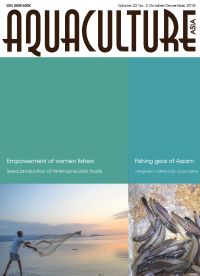
Concept of seed production of Heteropneustes fossilis in farmers' fields in West Bengal, India; Fishing gear and practices in flood waters of Assam; Fisherwomen empowerment: Shedding light on the invisible gender; Integrated multi-trophic aquaculture systems: A solution of sustainability.
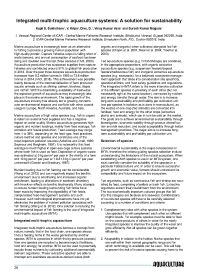
4 October 2018 | Kapil S. Sukhdhane, V. Kripa, D. Divu, Vinay Kumar Vase and Suresh Kumar Mojjada | 5213 Downloads | .pdf | 397.16 KB
Marine aquaculture of high value species such as fish is generally reliant on external food supplies and has a negative impact on water quality, generating high organic and nutrient loadings. Integrated multi-trophic aquaculture offers a solution to reduce environmental impact of farming systems, culturing complimentary species that can recycle nutrients and reduce nutrient pollution while generating additional products for sale. This article looks at species selection and integration of trophic levels in system design.
The 77th edition of the Quarterly Aquatic Animal Disease Report contains information from nine governments. The foreword discusses an intensive seven-day training course on tilapia lake virus (TiLV) that was jointly organised by China's National Fisheries Extension Center, Sun Yat-Sen University and the Food and Agriculture Organization of the United Nations.