Stock enhancement

Information relating to stock enhancement practices.

Creative Commons Attribution.

Related

Subject tags

A collection of subject tags relating to technical matters.

In this collection

Phuket Consensus: A re-affirmation of commitment to the Bangkok Declaration

The Phuket Consensus is a declaration on aquaculture development endorsed by participants of the Global Conference on Aquaculture 2010, held in Phuket, Thailand, 22-25 September. The consensus builds on the Bangkok Declaration, which was formulated at the International Conference on Aquaculture in the Third Millennium, held in Bangkok, 20-25 February 2000. The consensus and declaration provide strategic guidance on sustainable development of aquaculture considering social, environmental, technical and economic issues.
Inland Fisheries Resource Enhancement and Conservation in Bangladesh

Various measures for resource enhancement, conservation and management have been tried in Bangladesh in order to prevent the decline of fisheries resources. The needs of Bangladesh’s poor fisher community to eat what they catch and lack of a legal legislative framework means this situation can only worsen. Hope is offered by new conservation initiatives including habitat restoration, enhancement of depleting fish stocks, transferral of fishing rights and establishment of fish sanctuaries at strategic points.

Inland Fisheries Resource Enhancement and Conservation in India

India produces 4.6 million tonnes of fish annually from its inland water bodies, of which 1 million tonnes originates from enhancement and capture fisheries of open waters. Reservoirs of all categories together produce 94,000 tonnes of fish against a potential of nearly 1 million tonnes. Ownership of inland water bodies vests with the government and the fishing rights of reservoirs and beels are given to individuals, groups and communities according to norms that vary across the states.

Inland Fisheries Resource Enhancement and Conservation in Indonesia

Fisheries resources conservation development in Indonesia is based on the protection of endangered and vulnerable freshwater species and maintaining biodiversity integrity, and has been developed with community participation. In order to increase the population and diversification of fish species in inland waters stock enhancement has been carried out since the Dutch occupation when more than 17 species were stocked in inland waters in Indonesia.

Inland Fisheries Resource Enhancement and Conservation in Sri Lanka

Early attempts of fisheries enhancement in Sri Lankan freshwaters were aimed at establishing commercial fisheries. A fisheries enhancement strategy was introduced to village reservoirs of the country in 1980s on a trial basis. Presently, inland fisheries enhancement strategies in Sri Lanka are practiced in seasonal reservoirs and minor perennial reservoirs. The annual CBF production from these reservoirs is about 6 600 tonnes, accounting for about 17 percent of the inland fisheries production.

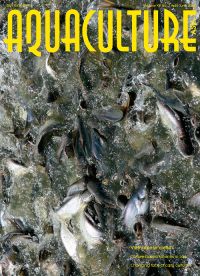
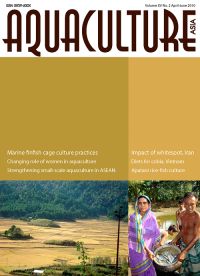
Aquaculture Asia Magazine, April-June 2010

In this issue:

The Dedanaw Project, Myanmar. The changing face of women for small-scale aquaculture in Bangladesh. Strengthening capacity of small holders in ASEAN. Carp seed production in Orissa, India. Sustainable mountain paddy-fish farming of the Apatani tribes. The economic impacts of whitespot virus on shrimp production in Iran. Current practices of marine finfish cage culture in China, Indonesia, Thailand and Vietnam. Effects of trash fish on growth and body composition of cobia.

NACA Newsletter, Volume XXV, No. 2, April-June 2010

In this issue:

Expert Workshop on Inland Fisheries Resource Enhancement and Conservation in Asia. Reviews in Aquaculture: Special issue on the Use and Exchange of Aquatic Genetic Resources. Dr Ayyappan becomes the Director General of ICAR. CIBA training course - capacity building on entrepreneurship development in coastal aquaculture. Success Stories in Asian Aquaculture - now available for free download! Giant Prawn 2011. Peer reviewed publications. Meetings address climate change impacts on small scale milkfish farmers in the Philippines.

Inland Fisheries Resource Enhancement and Conservation in China

Inland aquatic ecosystems in China have been largely influenced by the large-scale economic activities and over-exploitation of aquatic resources. A wide range of fisheries resource enhancement and conservation activities have been carried out throughout China. This presentation reviews the history and practices and analyses the problems and insufficient in inland fisheries resource enhancement and conservation in China, and finally recommends some suggestions on technology and operation in order to sustain inland fisheries resources.

Inland Fisheries Resource Enhancement and Conservation in the Republic of Korea

The beginning of inland fisheries resource stock enhancement in the Republic of Korea dates back to the early 1970’s, when fishing pressure was relatively low, and its development was closely related to the overall trends in the inland fisheries production. The release of hatchery reared juveniles of inland fisheries resources has become an increasingly common practice for stock enhancement and conservation over the last three decades.

Inland Fisheries Resource Enhancement and Conservation in Myanmar

Myanmar's inland water resources are still largely in a pristine condition. Fish, consumed in fresh and many processed forms is an important component of the protein intake of the population; consumption is estimated at 43 kg capita per year in 2008-2009. Stock enhancement of inland waters in Myanmar has been conducted since 1967, initiated through a seed replenishing program to the natural water, such rivers, lake, dams even rice fields.

Inland Fisheries Resource Enhancement and Conservation in Nepal

The ecological and biophysical diversity existing in Nepal offers comparative advantages and opportunities to develop and restore inland fishery resources for livelihood enhancement and poverty alleviation of rural communities. Through good governance and proper legislative measures it is required to establish improved environmental protection. Efforts need to target beneficiaries such as disadvantaged and marginalized ethnic communities with training and awareness raising, appropriate legal instruments and infrastructure development needs proper mitigation in hydropower generation/irrigation projects.

Inland fishery resource enhancement and conservation in Thailand

The production from inland capture fisheries in Thailand is about 1 million tonnes per annum. Engineering the environment and fish stocking are the two major practices adopted, and closed-season fishing as well as control of fishing gears are used for conservation purposes. Fish stocking programs date back to the 1950s have been continuously conducted. This presentation provides a historical perspective on stock enhancement practices in Thailand since the 1950s.

Inland fisheries resource enhancement and conservation in Vietnam

Inland fisheries resource enhancement has been considered a major component of reservoir fisheries management since 1962. Multipurpose reservoir construction commenced about the 1960s for irrigation, hydropower generation and flood control. Reservoir fisheries are always a secondary or tertiary activity and are given low priority; however stocking has been considered a major component of reservoir fisheries management. This presentation reviews the history of and changes to stock enhancement practices in Vietnamese reservoirs since the 1960s.

Role of fish species introduction in reservoir fisheries in China: Case study on icefish

Fish species introduction has been a very important method of increasing fisheries production and economic output in China. A good example is the introduction of the icefish Neosalanx taihuensis into reservoirs and lakes in most areas of China. The present study aims to provide basic information on production, management strategies and biological characteristics in target reservoirs and lakes in China and guide introduction and management practices of the fish.

NACA Newsletter, Volume XXIV, No. 3 July-September 2009

In this issue:

Lao PDR becomes the 18th member of NACA at the 20th GCM. Vietnamese catfish farmers visit Andhra Pradesh, India. Global Conference on Aquaculture 2010. Expert Meeting on the Use and Exchange of Aquatic Genetic Resources. Culture, capture conflicts: sustaining fish production and livelihoods in Indonesian reservoirs. Regional Grouper Hatchery Training Course, 11 - 31 October 2009. Sri Lankan group trained in cage culture in Thailand. First step towards the creation of a network of aquaculture centres in the Americas.

Status of Reservoir Fisheries in Five Asian Countries

Reservoir fish fauna, fisheries production and management methods, amongst others factors, differ widely. The differences in fish yield between reservoirs and/or between countries cannot be easily understood and are unlikely to be determined by individual parameters or characteristics. This volume takes stock of the current management practices with a view to utilising this knowledge to develop and or evolve appropriate national and or regional strategies for sustained development of reservoirs fisheries.

Aquaculture Asia Magazine, October-December 2008

In this issue:

An increasingly secure future for wastewater-fed aquaculture in Kolkata, India? First culture-based fisheries growth cycle in Lao PDR is overhwelmingly encouraging. Revival of abandoned shrimp farms in Andhra Pradesh. Growth of industries linked with aquaculture in Kolleru Lake area, India. Applications of nutritional biotechnology in aquaculture. Technical and management aspects of catfish hatcheries in Vietnam. Asian seabass farming. Mariculture development opportunities in southeast Sulawesi, and much more.

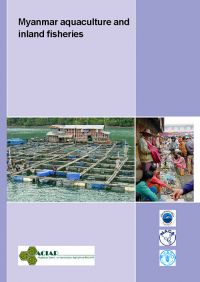
Myanmar aquaculture and inland fisheries

Fish and fish products are crucial in the nutrition and livelihoods of the Myanmar people. However, little information is available on their patterns of consumption, inter-regional differences, availability and types of fish consumed. This report is the outcome of two concurrent missions, one to coastal areas and one to inland areas. The report includes the findings of the missions as well as conclusions and recommendations in support of the long-term sustainability of fishery resources in Myanmar.

Aquaculture Asia Magazine, April-June 2008

In this issue:

From integrated carp polyculture to intensive monoculture in the Pearl River Delta, China. Better management practices for Vietnamese catfish. Ipomoea aquatica - an aquaculture friendly macrophyte. Status of fisheries and aquaculture development in Pakistan. The changing face of post-grad education in aquaculture: Contributing to soaring production and sustainable practices. Hatchery management in Bangladesh. Production of Cirrhinus molitorella and Labeo chrysophekadion for culture-based fisheries in Lao PDR and much more.

NACA Newsletter Volume XXIII, No. 2, April-June 2008

In this issue:

19th Governing Council meeting held in Kathmandu, Nepal. OIE/NACA Regional Workshop on Aquatic Animal Health. Vietnam catfish BMP project kicks off. Planning meeting, Regional Project on Reservoir Fisheries Development and Management. NACA to document 'Aquaculture Success Stories'. 6th Regional Grouper Hatchery Training Course 5-25 May 2008. Establishing a Working Party on Aquaculture Statistics. Implementing the ASEAN Roadmap for Integration of Fisheries Sector. London Expert Workshop on Aquaculture Certification.