Global population is forecast to reach around 9 billion by 2050. To feed the world, global agricultural output must increase by around 60% from present levels. This must be achieved against a background of increasing competition for natural resources such as water, feed ingredients and farming sites.
Maintaining environmental integrity while massively increasing food production will require farming systems to reduce their unit production environmental footprint. Many farming practices that are regarded as sustainable today will not be acceptable when scaled up. Sustainable intensification of aquaculture means doing more with less. The Environment and Sustainability Programme aims to help aquaculture become a more efficient user of natural resources, both in terms of farm productivity and environmental efficiency.
The programme develops better management practices for major aquaculture farming systems, and promotes aquaculture as a secondary or additional use of water resources. The programme focusses on practical interventions that can be directly achieved by small-scale farmers in a developing country context.
Key activities
Key activities of the programme are:
Development of better management practices for key aquaculture production systems.
Organising small-scale farmers into associations to facilitate cluster-based approaches to extension.
Development of culture-based fisheries as a secondary use of water bodies.
Development of strategic policy frameworks to guide governments and development agencies in promoting sustainable intensification of aquaculture.
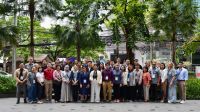
Pathum Thani, 5-6 October - NACA participated in the 3rd AQUADAPT Peer-Learning Event at the Asian Institute of Technology Conference Center. Partners reviewed progress on nature-based solutions (NbS) in aquaculture, shared experience and set priorities for the year ahead. The two-day programme combined project presentations, a world-café on climate resilience, and working sessions designed to turn research insights into practice.
The AquaHub project of NACA and FutureFish led a working session on “Knowledge brokering: Private sector engagement and nature-based and inclusive business models,” convening researchers and practitioners to sharpen strategies for scaling NbS through market actors across the value chain, from small-scale farmers and associations to SMEs and larger enterprises. Discussion centred on pragmatic engagement models that can connect research outcomes to investable, inclusive business opportunities.
Bangkok, 7 October - NACA convened a one-day, in-person working group to shape the vision, mission and strategy for the AquaHub, a startup incubator and support network for innovators in the aquaculture space. The workshop focused on establishing the AquaHub’s vision, mission, values and partnership principles to define how it will operate, and the immediate steps required to mobilise partners and resources across the Asia–Pacific.
Participants began by clarifying the problems AquaHub should address and why a dedicated hub is the right vehicle. Small group exercises produced draft vision and mission statements looking to 2035, which were then refined through rapid peer feedback. This work was grounded in a brief review of AquaHub’s current status and the wider innovation landscape to ensure complementarity with existing efforts.
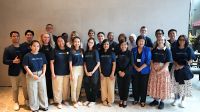
A networking and coaching event for aquaculture entrepreneurs and startups was held in Bangkok from 12-19 May. AQUAINNOVATE brought together promising startups to pitch their ideas, network, and participate in expert coaching circles.
Convened by NACA and FutureFish with funding support from Canada's International Development Research Centre, the programme included sessions on business fundamentals, investing for impact, nature and community based business innovations, and interactions with experts from the the National Innovation Agency, Center of Excellence for Shrimp Molecular Biology and Biotechnology, the National Center for Genetic Engineering and Biotechnology, and Mahidol University.
Green Controller by ICM Electronics is a smart water quality monitoring system for aquaculture, powered by high-precision titanium sensors. It tracks dissolved oxygen, salinity, and pH in real time, with full control through a mobile app and instant anomaly alerts. The system enables automated aeration based on live data, reducing energy use, lowering aerator run time, and improving feed conversion efficiency for more sustainable aquaculture operations. This pitch was presented Sukmit Teekhasenee of ICM Electronics.
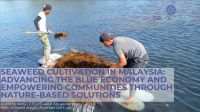
Cweed Aquasolutions, a spin-off from Universiti Malaya, works with coastal communities to develop seaweed cultivation through integrated multi-trophic aquaculture. The initiative repurposes abandoned shrimp ponds in Peninsular Malaysia, providing training and technical support for farmers to start seaweed farming. Cweed Aquasolutions also buys back harvested product, creating a sustainable livelihood model that links community development with nature-based aquaculture solutions. This pitch was presented Adibi M. Nor, CTO of Cweed Aquaculture Solutions.
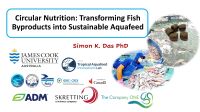
Circular nutrition in aquaculture focuses on reducing waste and closing nutrient loops by transforming fish byproducts into sustainable aquafeed. Simon Das from the Tropical Aquafeed Innovations Lab at James Cook University presents how this model can cut reliance on wild-caught forage fish while supporting cost-effective, nutritionally balanced diets. The lab’s work includes developing weaning protocols for pellet-ready fingerlings, training farmers in advanced feeding practices and economics, and promoting gender and youth inclusion. Circular nutrition highlights how rethinking resource use can make aquaculture both more efficient and more sustainable.
This presentation introduces a life cycle assessment tool designed to evaluate the sustainability of nature-based aquaculture practices. The tool measures environmental impacts such as carbon footprint and supports farmers, researchers, and policymakers in identifying mitigation strategies for more eco-friendly production systems. This pitch was presented by Kobboon Kaewpila of the Life Cycle Sustainability Assessment Laboratory, King Mongkut’s University of Technology Thonburi.
20 August 2025 | Rocky Pairunan and Burhanuddin Zein | 2465 views
LEAPS is a climate-smart aquaculture initiative in Java that combines shrimp farming with mangrove restoration to strengthen coastal community resilience. Implemented under the AQUADAPT program with funding from Global Affairs Canada and IDRC, the project promotes inclusive, nature-based approaches for small-scale shrimp aquaculture. By integrating real-time IoT water quality monitoring, wastewater treatment and gender-responsive practices, LEAPS reduces greenhouse gas emissions while restoring mangroves and supporting communities. The project also informs evidence-based policy, helping scale sustainable aquaculture solutions across the region. Aligning shrimp farming with ecosystem restoration, LEAPS supports both livelihoods and climate adaptation. This pitch was presented by Rocky Pairunan and Burhanuddin Zein.
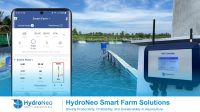
In this presentation, Fabian Reusch, founder of HydroNeo, shares the story of how HydroNeo began and the lessons learned along the way of building a tech startup in Thailand. Aimed at fellow aquaculture entrepreneurs and startup founders, his talk is an open and honest reflection on the realities of the journey — not a polished, glamorous pitch that only highlights the wins, but a candid look at both successes and setbacks, the difficult decisions, and the ongoing challenges that shape the real path of building a company.
20 August 2025 | Mariska Bottema and Rebecca McMillan | 2197 views
Mariska Bottema (WorldFish) and Rebecca McMillan (IDRC) discuss the concept of nature-based aquaculture, why it matters for innovation and entrepreneurship, and how it can support ecosystems, communities, and profitability. Topics include: Defining nature-based aquaculture and its connection to nature-based solutions; criteria such as climate resilience, ecosystem health, reduced antimicrobial use, and inclusivity; global examples: mangrove–shrimp integration, women-led seaweed farming, integrated multi-trophic systems, and rice–fish farming; supportive technologies including IoT, renewable energy, and life cycle assessment; and opportunities for entrepreneurs: resilient farms, reduced risks, lower costs, premium markets, funding, and partnerships.
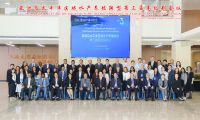
The 3rd High‑Level Meeting on Aquaculture Transformation in Asia and the Pacific, held 1–2 July in Shanghai, brought together governments, industry leaders and development partners to drive innovation, investment and sustainability in the region’s aquaculture sector. Discussions focused on scaling low‑cost fish production, making technology adoption easier for small farmers, improving access to finance, and strengthening regional cooperation. The meeting set clear priorities for accelerating transformation by 2030, with resources and key presentations now available online. Videos of the presentations are available for viewing on YouTube.
This presentation by Eduardo Leaño, Director General of NACA, provides a background and introduction to the 3rd High-Level Meeting on Aquaculture Transformation in the Asia-Pacific Region (HLM-3).
The region accounts for around 90% of global aquaculture production but faces mounting challenges including resource scarcity, environmental pressures, climate change, and shifting global dynamics. Addressing these requires a strategic shift driven by innovation, investment, and stronger partnerships to build more efficient, inclusive, resilient, and sustainable aquatic food systems.
HLM-3 builds on the outcomes of previous high-level meetings and the Aquaculture Transformation White Paper, with a focus on national innovation and investment plans, regional collaboration, and implementation efforts to achieve transformation by 2030.
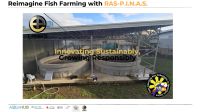
This presentation by Elisa Claire Sy of E-Primate, showcases how RAS-P.I.N.A.S - a closed-loop, water-efficient technology - enables high-density, land-based fish farming using biofiltration, aeration, and mechanical treatment strategies. Discover how RAS conserves water and land, minimises disease risk, and offers flexibility in farm siting, while recognising the trade-offs of energy demands and infrastructure costs. Learn why RAS is gaining momentum as a key innovation in Asia's sustainable aquaculture future.
This video by Montakan Tamtin, Department of Fisheries, features two presentations from Thailand’s delegation to the 3rd High-Level Meeting on Aquaculture Transformation in Asia and the Pacific Region. The first showcases innovation and nature-based solutions in aquaculture via the IDRC-funded AQUADAPT Project; the second presents Thailand’s pilot initiative for low-carbon shrimp farming under an FAO Technical Cooperation Programme.
This video presents a summary of key insights and forward-looking actions from the closing session of the 3rd High-Level Meeting on Aquaculture Transformation in the Asia-Pacific Region. It highlights the critical role of low-cost fish for food security, the need for intuitive technologies suited to smallholders, and the barriers posed by regulation and financing gaps. Key themes include the importance of genetic improvement, knowledge-based farming, improved access to expertise, and alignment of incentives for sustainable and profitable aquaculture. The session emphasises inclusive investment strategies, farmer integration into financial systems, and the need for regional coordination and collaboration to drive transformation through 2030.
The project evaluated the effectiveness of various types of nature-based solution (NbS) in Fiji that contribute to climate change resilience by enabling off-grid farm operations and reducing reliance on costly fossil fuels. Aquaculture enterprises were assessed for this project based on the NbS they utilised and the potential benefits they offer in mitigating climate change impacts and enhancing production systems in Fiji. Four enterprises were selected, and their descriptions are provided within.
The project evaluated the effectiveness of various types of nature-based solution (NbS) in Thailand that contribute to climate change resilience by enabling off-grid farm operations and reducing reliance on costly fossil fuels. Aquaculture enterprises were assessed for this project based on the NbS they utilised and the potential benefits they offer in mitigating climate change impacts and enhancing production systems in Thailand. Three enterprises / innovations were selected and are described within.
The project conducted a preliminary survey of the effectiveness of various types of nature-based solution (NbS) in use in the Philippines that contribute to climate change resilience by enabling off-grid farm operations and reducing reliance on costly fossil fuels, renewable materials and improved designs that enhance efficiency. Aquaculture enterprises were assessed for this project based on the NbS they utilised and the potential benefits they offer in mitigating climate change impacts and enhancing production systems.
Based on BFAR Regional Field Office Submissions, 50 aquaculture innovations nationwide have been identified to date. The list will be extended and screened as further regions report, in cooperation with the BFAR National Research Centers.
The document provides an overall vision and framework intended to accelerate aquaculture transformation in Asia and the Pacific region through innovations and investment, and to provide guidance to partners from the public, private and development communities to actively engage with the region in transforming aquaculture to more efficient, inclusive, resilient and sustainable food systems. The document served as background information for discussion in the High-Level Meeting on Aquaculture Transformation in Asia and the Pacific Region, 22–23 November 2022, organised by the FAO Regional Office for Asia and the Pacific and the Network of Aquaculture Centres in Asia-Pacific. The document is broadly aligned with FAO’s Blue Transformation Roadmap, paying specific attention to the context and needs of aquaculture within Asia and the Pacific region. The Paper translates the Roadmap into a vision and priority actions for aquaculture transformation in the region by 2030.