China

China's involvement in NACA.

Creative Commons Attribution.

Related

NACA member governments

NACA member governments are: Australia, Bangladesh, Cambodia, China, Hong Kong SAR, India, Indonesia, I.R. Iran, Kingdom of Saudi Arabia, Korea (DPR), Lao PDR, Malaysia, Maldives, Myanmar, Nepal, Pakistan, Philippines, Sri Lanka, Thailand and Vietnam.

In this collection

STREAM Journal Volume 3, No. 3, July-September 2004

In this issue: What do we need to learn about to understand how people live? Taking steps to making livelihoods work. Reflections on the India-Nepal workshop. Reflections on the role of livelihoods approaches and analysis in Lao PDR. After the workshop on livelihood approaches and analysis. The relevance of livelihoods approaches in Yunnan, China. About the STREAM Journal. About STREAM. This edition is also available in Ilonggo, Khmer and Urdu.

NACA Newsletter Volume XIX, No. 3, July-September 2004

In this issue:

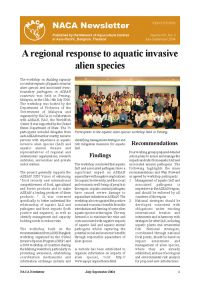
A regional response to aquatic invasive alien species. 6th Symposium on Diseases in Asian Aquaculture. Indonesia plan EC PREP seafood trade study. NACA Website: Guide to member services. Preparing and responding to health emergencies. New publication: Marine Finfish Aquaculture Magazine. STREAM Agreement with MOF Vietnam on Communications. STREAM Agreement with NAFEC Vietnam on Livelihoods Approaches. NACA-NACEE Cooperation. Training and study tours.

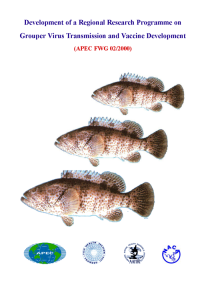
Development of a Regional Research Programme on Grouper Virus Transmission and Vaccine Development

These are the proceedings of a workshop, funded by the APEC Fisheries Working Group Project 02/2000. The project developed a framework with nine major research components: Health and production at hatcheries, regional collaborative disease resource centers, regional disease monitoring and surveillance, improving regional diagnostic capabilities, responsible trans-boundary movement, farm health management, vaccines and vaccination, funding mechanisms and establishment of an ad-hoc working group.

Quarterly Aquatic Animal Disease Report, January-March 2004

This report, the 23rd in the series, contains information about the aquatic animal health status of twenty states in the Asia-Pacific region. The foreword discusses a project on Capacity and Awareness Building on Import Risk Analysis for Aquatic Animals, funded by the APEC Fisheries Working Group.

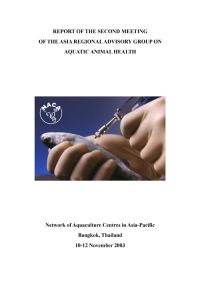
Report of the second meeting of the Asia Regional Advisory Group on Aquatic Animal Health, 10-12 November 2003

The Asia Regional Advisory Group on Aquatic Animal Health meets annually to discuss regional health issues including emerging disease threats. This report includes a review of regional disease status circa 2003, global and regional disease reporting arrangements, global issues and standards, progress in implementation of the the Regional Technical Guidelines on Health management for the Responsible Movement of Live Aquatic Animals, identification and designation of regional aquatic animal health resources and regional and international cooperation.

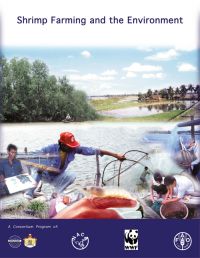
Shrimp Farming and the Environment

This collection of publications originates from the International Consortium Program on Shrimp Farming and the Environment, which was implemented by the World Bank, the Network of Aquaculture Centres in Asia-Pacific (NACA), the World Wildlife Fund (WWF), the Food and Agriculture Organization of the United Nations (FAO), and the United Nations Environment Programme (UNEP). The consortium supported 35 complementary case studies prepared by more than 100 researchers in more than 20 shrimp farming countries.

Report of the Expert Consultation on Aquaculture Education in the Asia-Pacific, Hanoi, Vietnam, 11-15 May 2000

The Expert Consultation on Aquaculture Education in the Asia-Pacific was held in, Vietnam, 2000. The consultation was the final activity of APEC project FWG/02/99 “Collaborative Aquaculture Education Program”. This report gives the findings and papers presented to the Expert Consultation, including the follow-up recommendations for establishing an Aquaculture Educational Consortium, in the form of a network, comprising academic and training institutions in the Asia and Oceania regions.

Economics and Management of Shrimp and Carp Farming in Asia

The sixteen papers in this volume were largely based on the data from a survey of more than 5,000 shrimp and close to 6,000 carp farms in sixteen countries and territories in the Asia-Pacific region. They provide an economic and technical efficiency of production analysis for Asian shrimp and carp farming systems. This survey was conducted under the ADB/NACA regional study and workshop on aquaculture sustainability and the environment (RETA 5534).

Quarterly Aquatic Animal Disease Report, October-December 2003

This report, the 22nd in the series, contains information about the aquatic animal health status of seventeen states in the Asia-Pacific region. The foreword discusses the role of disease surveillance programmes and issues realted to the OIE Aquatic Animal Health Standards Commission.

Quarterly Aquatic Animal Disease Report, July-September 2003

This report, the 21st in the series, contains information about the aquatic animal health status of sixteen states in the Asia-Pacific region. The foreword discusses the outcomes of the second meeting of the Asia Regional Advisory Group on Aquatic Animal Health.

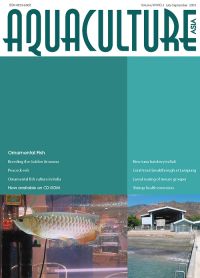
Aquaculture Asia Magazine, July-September 2003

In this issue:

Ornamental fish farming in India. Tilapia for Indian aquaculture? Peri-urban food production in southeast Asia. Socio-economic consequences of shrimp farming in Andhra Pradesh. Breeding techniques for golden arowana Scleropages formosus. Captive breeding of peacock eel Macrognathus aculeatus. Substrate-based aquaculture systems. Extension in shrimp health management - experiences from India. Treatment of disease in freshwater shrimps and crabs in China. Larval rearing techniques for humpback grouper Cromileptes altivelis.

Report of the Second STREAM Regional Conference, Tagaytay City, the Philippines, 8-10 June 2003

The Second STREAM Regional Conference was held in Tagaytay City, Philippines, from 8-10 June 2003 with the participation of 23 people from Australia, Cambodia, India, Nepal, Philippines, Thailand, Vietnam and Yunnan Province of China. Following a regional overview of STREAM’s themes, country partners, donors and funding, and activities, participants visited four “stations” on the themes of livelihoods, institutions, policy development, and communications, working in groups representing National Coordinators, Communications Hub Managers, and Partners. STREAM operations were discussed.

Quarterly Aquatic Animal Disease Report, April-June 2003

This report, the twentieth in the series, contains information about the aquatic animal health status of nineteen states in the Asia-Pacific region. The editorial discusses health risks associated with trans-boundary movement of live aquatic animals and the role of risk analyses.

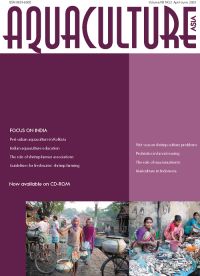
Aquaculture Asia Magazine, April-June 2003

In this issue:

Peri-urban aquaculture in Kolkata. Diffusion and adoption of shrimp farming technologies. Aquaculture education in India. Information system on fish germplasm resources in China. Freshwater crustacean aquaculture in China. The role of macronutrients. Innovations by Bengal farmers. Scientific guidelines for freshwater prawn farmers in India. Status of mariculture in Indonesia. Use of probiotics in larval rearing. Problems in shrimp culture during the wet season.

Quarterly Aquatic Animal Disease Report, January-March 2003

This report, the nineteenth in the series, contains information about the aquatic animal health status of sixteen states in the Asia-Pacific region. The editorial discusses the role of the Quarterly Aquatic Animal Disease Reporting System.

NACA Newsletter Volume XVII, No. 4, October-December 2002

In this issue:

Outcomes of Advisory Group on Health. New FAO Regional Representative for Asia and the Pacific. Chinese Regional Lead Centre provides training in Rice-Fish farming under China-ASEAN Agriculture Cooperation. Development of Second Phase of APARIS. Building the leading source of global information on aquaculture. AFS/Fish Health Section 5th Symposium on Diseases in Asian Aquaculture. Upcoming training courses.

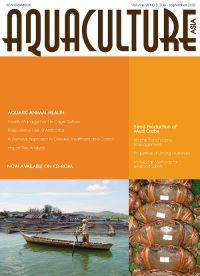
Aquaculture Asia Magazine, July-September 2002

In this issue:

Aquaculture for poverty alleviation and food security. Shrimp pond waste management. Properties of liming materials. Seed production of mud crab Scylla spp. The dilemmas of strain selection. Seed production of the crucifix crab Charybdis feriatus. A general approach to disease treatment and control. Breeding and seed production of mangrove snapper Lutjanus argentimaculatus. Responsible use of antibiotics in shrimp farming. Health management for cultured marine fishes. Molecular methods for rapid detection of pathogens in seafood.

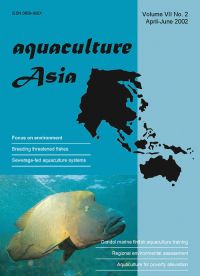
Aquaculture Asia Magazine, April-June 2002

In this issue:

Prawn farm energy audits. Freshwater fish farming and poverty alleviation in Bangladesh. Artificial propagation for conservation of endangered species. Sewerage-fed aquaculture systems of Kolkata. Rice-fish farming in India. The use of lime, gypsum, alum and potassium permanganate in water quality management. Fish gene technology research in China. Low-salinity shrimp farms. Seed production of Clarius batrachus. Supplying good-quality seed for sustainable aquaculture and more.

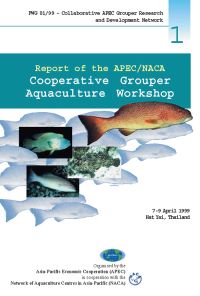
Report of the APEC/NACA Cooperative Grouper Aquaculture Workshop, Hat Yai, Thailand, 7-9 April 1999

These are the proceedings of a workshop hosted by APEC and NACA under the project 'Collaborative APEC-NACA Grouper Aquaculture Network' (APEC Project FWG 01/99). The objectives of the workshop included the establishment of a regional research network to facilitate development of a sustainable grouper aquaculture industry; reduction of reliance on wild fingerlings for coastal grouper aquaculture, facilitate development of new aquaculture industries.

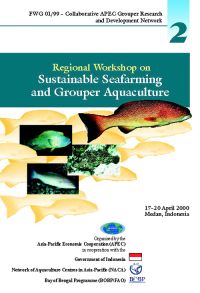
Report of the Regional Workshop on Sustainable Seafarming and Grouper Aquaculture, Medan, Indonesia, 17-20 April 2000

These are the proceedings of a workshop focussed on grouper culture, but also explored management strategies required to support the sustainable development of seafarming in the Asian region. The emphasis was on technology transfer and management strategies for the benefit of farmers and coastal communities. The workshop included special sessions on diversification of seafarming systems and culture species, the role of seafarming in the livelihoods of coastal communities.