NACA member governments are: Australia, Bangladesh, Cambodia, China, Hong Kong SAR, India, Indonesia, I.R. Iran, Kingdom of Saudi Arabia, Korea (DPR), Lao PDR, Malaysia, Maldives, Myanmar, Nepal, Pakistan, Philippines, Sri Lanka, Thailand and Vietnam.
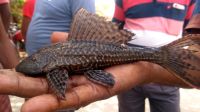
Loricariid catfish species of the genus Pterygoplichthys, known in the aquarium trade as 'plecos' and 'algae eaters', have extensively invaded and proliferated in the East Kolkata Wetlands in West Bengal. Loricariids have capacity to alter the ecosystem and biodiversity of invasion sites, by physically altering the invaded habitats and by competing with native animals for food and space. The aquarium trade pathway is the most significant source of loricariid introductions globally. This article discusses the invasion of loricariid catfish in the East Kolkata Wetlands, and the environmental and economic impact on local fishers.
The 84th edition of the Quarterly Aquatic Animal Disease Report contains information from eleven governments. The foreword discusses meetings of the ad hoc Steering Committee of the Regional Collaboration Framework on Aquatic Animal Health in Asia and the Pacific.
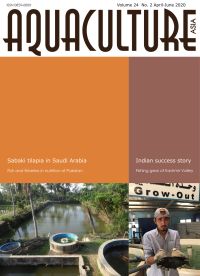
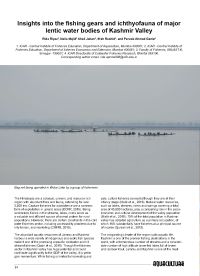
Potential new species in the Kingdom of Saudi Arabia: Sabaki tilapia (Oreochromis spilurus); Role of fish & fisheries in national nutrition of Pakistan; Success story of first fish farmer in India to be awarded ‘Padma Shri’; Insights into the fishing gear and ichthyofauna of major lentic water bodies of Kashmir Valley; NACA Newsletter.
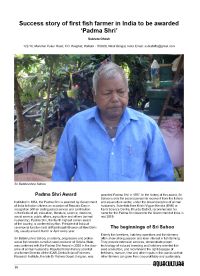
Instituted in 1954, the Padma Shri is awarded by the Government of India to Indian citizens on occasion of Republic Day in recognition of their distinguished service and contribution. Sri Batakrushna Sahoo, an elderly, progressive fish breeder and seed producer of Odisha State, was conferred with the Padma Shri Award in 2020 in the discipline of animal husbandry. He is only the second person to receive it from the fishery and aquaculture sector. This article documents Sr Sahoo’s beginnings, early entry into fish seed production, his success and role in educating others over the years.
The abundant aquatic resources of Jammu and Kashmir harbour a wide variety of indigenous and exotic fish species make it one of the promising areas for coldwater and hill stream fisheries. The fish fauna of Kashmir Valley is mainly represented by the families Cyprinidae, Cobitidae, Silurideae, Poecilideae, Sisorideae and Salmonideae. The fisheries sector in Kashmir valley has huge potential but is yet to gain momentum. This article describes the fish fauna of the lakes of Jammu and Kashmir, and some of the indigenous fishing gears commonly used by people living in the area.
Mahseer sanctuaries of Meghalaya: A conservation and recreational perspective; Impacts of climate change on aquaculture in Vietnam: A review of local knowledge; Simple means of water aeration adopted by progressive fish breeders in West Bengal, India; Breeding striped snakehead (Channa striata) using the concrete tank method in the Cangkringan Area, Special Region of Yogyakarta; NACA Newsletter.
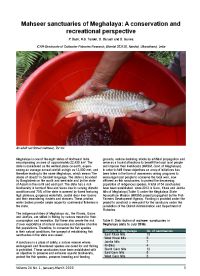
This article presents available information regarding the present status of chocolate mahseer and the conservation measures been undertaken in the East Garo Hills of Meghalaya. A total of 54 sanctuaries have been established since 2012 in Garo, Khasi and Jaintia hills under the Meghalaya State Aquaculture Mission project of the Fish Farmers Development Agency. The sanctuaries have been established with the objective to preserve and enhance aquatic biodiversity, protect indigenous fish species, preserve breeding and feeding grounds, and serve as tourist attractions to provide livelihood opportunities.
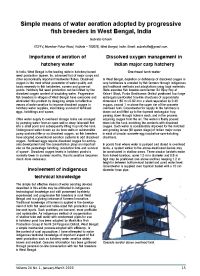
In India, West Bengal is the leading state in hatchery-based seed production (spawn, fry, advanced fry) of major carps and other economically important freshwater fishes. Dissolved oxygen is the most critical parameter of water quality and basic necessity in fish hatcheries, nursery and grow-out ponds. Hatchery fish seed production can be limited by the dissolved oxygen content of circulating water. Progressive fish breeders in villages of West Bengal have overcome and eliminated this problem by designing simple but effective means of water aeration to improve dissolved oxygen in hatchery water supplies, maximising survival of fertilised eggs, hatchlings and spawn. This article describes some of the techniques that have been adopted using low-cost and recycled materials.
The 83rd edition of the Quarterly Aquatic Animal Disease report contains information from twelve governments. The foreword discusses the upcoming 11th Symposium on Diseases in Asian Aquaculture (DAA 11), which will be held from 29 September to 2 October 2020, at the Borneo Convention Center, Kuching, Sarawak, Malaysia.
The 35th Session of Asia-Pacific Fishery Commission has identified the lack of effective governance as a major threat to sustainable aquaculture growth for greater contribution to achievement of the Sustainable Development Goals. The objectives of the consultation were to: Share the results of country studies on aquaculture governance in respective countries; identify gaps, issues and challenges in aquaculture governance; and recommend strategies and actions to improve and strengthen aquaculture governance.
Audio recording of presentation delivered at the Consultation on Strengthening Governance of Aquaculture for Sustainable Development in Asia-Pacific, 5-6 November 2019, Bangkok, Thailand.
Trends in water chestnut Trapa bispinosa farming in West Bengal, India; Improving livelihoods and increasing coastal resilience: A look at integrated mangrove-shrimp aquaculture in Vietnam; Snow trout fisheries in Arunachal Pradesh of the Eastern Himalayas; Gender issues in the fisheries sector of India; NACA Newsletter.
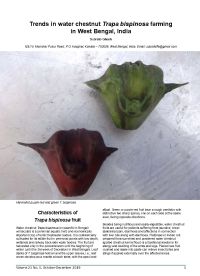
Water chestnut Trapa bispinosa (or paanifol in Bengali vernacular) is a perennial aquatic herb and economically important crop of lentic freshwater bodies. It is commercially cultivated for its edible fruit in shallow perennial ponds, wetlands and railway track-side water bodies. The fruit are harvested only in the post-monsoon until the beginning of winter. This article describes the farming and management of water chestnut, market chains, economic returns and role of this crop in the livelihoods of farmers in West Bengal, India.
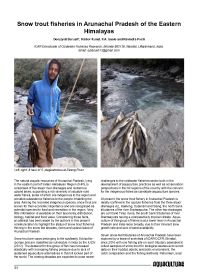
Snow trout are known for their economic importance and are recognised as potential species for food and recreation. However, very little information is available on their taxonomy, distribution, biology, habitat and food value. The demand for this group of fish has increased drastically with increasing fishing pressure due to the lack of sustained aquaculture alternatives in this hill locked part of the world. This article describes the status of snow trout fisheries in the snow fed streams, rivers and upland lakes of Arunachal Pradesh, India.
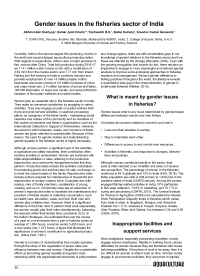
Women play an essential role in the fisheries sector of India. They make an immense contribution by engaging in varied activities. They may engage as paid or unpaid workers both in pre and post-harvest activities, in seafood processing plants, as caregivers of the fisher family - maintaining social networks and culture of the community and as members of fish worker movements and fisher’s organisations. However, their contribution often remains invisible or understated. This article examines the contribution of women to the fisheries sector in India, identifies constraints and suggests ways to address these issues.
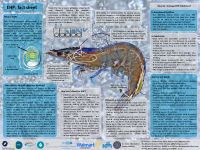
EHP or Enterocytozoon hepatopenaei is a fungal microsporidian parasite that infects the hepatopancreas (hp) of tiger shrimp (Penaeus monodon) and whiteleg shrimp (P. vannamei) in Thailand and results in slow growth and, in chronic infections, mortalities. EHP is also known from Brunei, China, India, Indonesia, Malaysia, Philippines, Venezuela and Vietnam. This fact sheet provides information on the EHP life cycle, signs of infection, diagnosis and management in both hatcheries and growout, as well technical contacts for further information.
The 82nd edition of the Quarterly Aquatic Animal Disease report contains information from eleven governments. The foreword welcomes Dr Huang Jie, NACA's new Director General, a health specialist that has previously participated in the Asia-Pacific Regional Advisory Group on Aquatic Animal Health.
Two consultations were held back to back in Thailand from 5-7 November, namely the Consultation on Strengthening Governance of Aquaculture for Sustainable Development in Asia-Pacific and the Consultation on Demographic Changes in Fishing Communities in Asia. The consultations were held at the Centara Grand Hotel at Ladprao, Bangkok. The consultations were attended by 29 participants from 15 countries in the Asia-Pacific region. The consultations were jointly organised by FAO and NACA. Audio recordings are available of some presentations.
The 81st edition of the Quarterly Aquatic Animal Disease report contains information from twelve governments. The foreword discusses the proposed Regional Collaboration Framework on Aquatic Animal Diseases in Asia and the Pacific. This will initially focus on building a framework of actors with the aim of strengthening laboratory capacity for aquatic animal disease activities in Asia and the Pacific, for example to support emergency response.
Farming of Asian seabass Lates calcarifer in freshwater impoundments in West Bengal, India; An integrated approach to contemporary fish farming practice incorporating traditional knowledge in mid hills in India: A success story; Mud crab farming: An alternative livelihood in the Indian Sundarban; Trout fisheries resources and potentialities in the Menchukha region of Arunachal Pradesh; NACA Newsletter.