NACA member governments are: Australia, Bangladesh, Cambodia, China, Hong Kong SAR, India, Indonesia, I.R. Iran, Kingdom of Saudi Arabia, Korea (DPR), Lao PDR, Malaysia, Maldives, Myanmar, Nepal, Pakistan, Philippines, Sri Lanka, Thailand and Vietnam.
With the implementation of the new aquatic animal disease reporting in the Asia Pacific region from January 2021, and in lieu of the published QAAD Reports (last issue published was 4th quarter of 2020), NACA is publishing reported aquatic animal diseases submitted by countries in the Asia-Pacific region. This report covers the second quarter of 2022 and the original and updated reports can be accessed at the QAAD page.
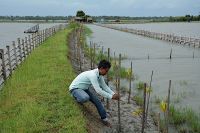
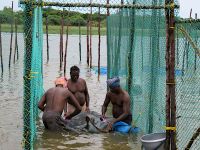
NACA welcomed five delegates from India on an aquaculture training and exposure visit from 31 October to 4 November. The visit began with a discussion at the NACA Secretariat on Thai mariculture, the recently established International Artemia Aquaculture Consortium, and better management practices concerning hatchery production and use of live feeds. The delegates left Bangkok the next day to visit seabass cage and pond culture and a shrimp nursery in the Chachengsao area and Bangprakong River. The following day they travelled to the Rayong Coastal Aquaculture Center and visited local farm sites before overnighting in Chantaburi. On the final day they visited the Kung Krabae Bay Royal Development Study Center and mangrove walk; and a freshwater fish farm to observe intensive carp and pangasius culture.
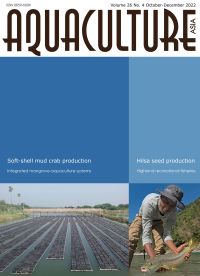
Sustainable livelihood model for coastal families through seabass fingerling production: A success story; A pilot of integrated mangrove-aquaculture as a nature-based solution to mitigate climate change in West Bengal, India; Recreational fisheries in Uttarakhand; Soft-shell mud crab production for export in Purba Medinipur, West Bengal, India; Conducting artificial fertilisation, hatching and spawn development of Indian shad, Tenualosa ilisha: Pathfinding hilsa domestication; NACA Newsletter.
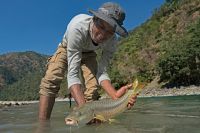
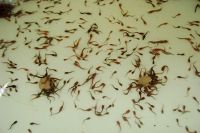
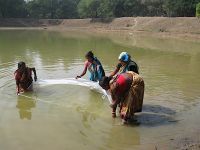
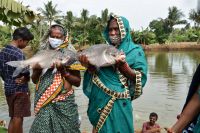
Hilsa (Tenualosa ilisha) is highly favoured as a food fish by consumers but has a complex life cycle and has proven very difficult to breed. Domestication of hilsa requires extra effort while nurturing the larval stage, which is very sensitive and susceptible to mortality. This article describes standardised protocols developed by the Kalyani Field Station of the ICAR-CIFA Regional Research Centre, Rahara, for artificial fertilisation, incubation and larval rearing of hilsa, as the first steps towards the goal of hilsa domestication and culture.
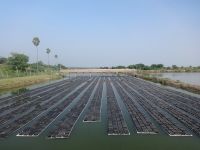
In West Bengal wild-caught juvenile and sub-adult orange-clawed mud crabs Scylla olivacea are purchased by farms for grow out, fattening, and the production of soft-shell crab for export. This article describes the management practices for producing soft-shell mud crab at National Aqua Farm, using individual box enclosures, and their subsequent processing and packing for export. Details of the crab rearing unit are provided, along with observations of moulting cycles and post-harvest management of soft shell mud crab.
Establishing recreational fisheries in Uttarakhand's highland lakes and river systems offers new opportunities to generate livelihoods and income for hill people. The development of catch-and-release sport fisheries can also contribute to conservation of aquatic biodiversity through development of captive breeding technologies, supportive breeding based stock enhancement, and community participation in management of both fishery and habitat. This article describes established and emerging sport fisheries in the highlands of Uttarakhand including for mahseer, goonch and brown trout. It also addresses as yet unrealised opportunities for establishment of recreational fisheries identified through geoinformatic approaches, and partnerships between local communities and government in natural resource management.
Nature-based solutions are interventions that aim to protect, restore and sustainably manage natural and modified ecosystems to benefit human well-being and biodiversity and address societal concerns. Integrated mangrove-shrimp farming or simply aquaculture is the coexistence of mangroves and shrimp aquaculture in a tide-fed environment. In comparison to other shrimp farming systems, integrated mangrove-shrimp farming can additionally produce timber and supports biodiversity. To understand the possible benefits of mangrove integration, our consortium compared three integrated mangrove-aquaculture systems together with three local farmers in North 24 Parganas. This article describes our findings, and important factors to consider before deploying integrated mangrove-aquaculture systems.
Brackish waters offer good prospects for future aquaculture development, as there are fewer competing uses for these resources. Kilarkollai Village (Tamil Nadu, India) has brackish waters on the village periphery, which are under utilised. The majority of the population are landless poor, economically and socially marginalised, and live below the poverty line. A team from the ICAR-Central Institute of Brackishwater Aquaculture demonstrated nursery rearing technologies in partnership with four Scheduled Caste families from the village, with a view to providing supplementary livelihoods and income. The team provided training, initial inputs and technical support.
Training Course on Mariculture Technologies in Asia-Pacific; FAO/NACA Virtual Workshop on Aquaculture Transformation in Asia and the Pacific Region; Belt & Road Forum for International Freshwater Fishery Industry Innovation; 8th Global Conference on Gender in Aquaculture and Fisheries, 21-23 November; Reported Aquatic Animal Diseases in the Asia-Pacific Region during the First Quarter of 2022; International Training Course on Biology and Pathology of the Penaeid Shrimp 2022; Angkasa Putra inaugurated as first President of the South-East Asian Fisheries and Aquaculture Student Association; Artemia webinars: Video recordings of technical presentations available.
GAF-8, the 8th Global Symposium on Gender in Aquaculture and Fisheries – will be held from 21-23 November, 2022, hosted by the Society of Fisheries Technologists (India) (SOFTI), Kochi and the ICAR-Central Institute of Fisheries Technology, Kochi. GAF-8 is a stand-alone event, that will be packed with a variety of different activities and sessions covering all aspects. The GAF8 session and event themes, call for abstracts and other information will be available shortly. Please see the GAF website for registration and other details.
Dynamics of small-scale aquaculture development in India: A review; Green water technology as an essential support to larval rearing of hilsa shad; Collection of freshwater molluscs and sale of meat by women in Purba Medinipur, West Bengal, India; A success story of ornamental fish farming as a tool for alternative livelihood of tribal women in Keonjhar District, Odisha, India; Recent trends in seed production of stinging catfish, Heteropneustes fossilis, in India; NACA Newsletter.
Hatchery production of stinging catfish (Heteropneustes fossilis) seed is increasing as it is a good fish species favoured by consumers due to its high protein and lower fat content. Stinging catfish naturally breeds in the monsoon season, and is found gravid in the wild during July-September. In captivity it can be successfully produced using either induced or natural breeding techniques. This article summarises what is known about stinging catfish biology, and methods for its captive breeding, rearing of larvae and fry, feeding strategies and health concerns, to aid production of seed of this valuable catfish.
In Odisha, India, ornamental fish farming, culture and seed production are being utilised by self help groups to provide livelihoods for poor people in rural communities. The objective of self help groups is to sustainably increase the income of poor families to bring them above the poverty line. This is being achieved through a process of social mobilisation, training and capacity building, and provision of some necessary facilities. This article documents the evolution of ornamental fish farming by the Pragati Self Help Group in Bhatunia Village.
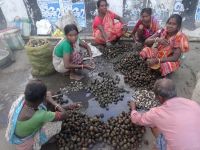
The common freshwater snail Bellamya bengalensis, golden apple snail Pila globosa and freshwater pearl mussel Lamellidens marginalis are naturally found in West Bengal. These molluscs are also an important source of protein for poor rural communities, and are also gaining popularity in middle and high income suburban areas for their nutritional and traditional medicinal values. They also represent a significant source of employment and income generation for women from Scheduled Tribes and Scheduled Castes. This article documents the collection, preparation, trade and use of freshwater molluscs in Paschim Medinipur and Purba Medinipur districts of West Bengal.
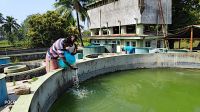
Green water technology is a technique that promotes phytoplankton to grow profusely, and includes several methods by which desirable microalgae are produced for the purpose of rearing larval fish and crustaceans. Naturally occurring phytoplankton, which serve as feed for fish and crustacean larvae, are grown and proliferate under a controlled system. This article describes the use of greenwater and co-feeding techniques in the rearing of hilsa, Tenualosa ilisha, principally making use of Chlorella and rotifers.
Development of small-scale aquaculture has dominated development discourse because of its potential to fight malnutrition and poverty, to ensure food security and enhance the socio-economic condition of people living at the bottom of the pyramid. Aquaculture has contributed to strengthening livelihoods and food security in southeast Asian countries, contributing to the livelihood of the poor farmers through improved food supply, income and employment.
With the implementation of the new aquatic animal disease reporting in the Asia Pacific region from January 2021, and in lieu of the published QAAD Reports (last issue published was 4th quarter of 2020), NACA is publishing reported aquatic animal diseases submitted by countries in the Asia-Pacific region. This report covers the fourth quarter of 2021 and the original and updated reports can be accessed from the QAAD page.
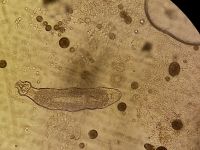
The aquatic environment contains many opportunistic pathogens and fish are frequently infected by a range of parasites, bacteria, viruses, and fungi. In most incidences of disease, the involvement of two or more pathogens are often seen, which in turn complicates diagnosis and treatment. Here we present a few case studies on mixed infections in aquaculture systems, which may become more common in future due to changing climatic patterns and associated adverse impacts on water quality. Mixed infections seem to be a big challenge to diagnostic laboratories and health specialists in terms of providing a correct diagnosis and treatment.
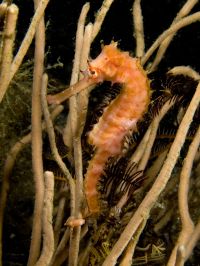
Seahorses are charismatic livebearers that come under the genus Hippocampus spp. Seahorses are widely distributed in tropical and temperate waters (mostly in the Indo-Pacific region) and different species can tolerate a salinity range of 6-35 ppt.
Seahorses are highly in demand for traditional medicines and curio trade purposes in the dried form and live ones are popular in the marine ornamental aquarium trade. As a result, they are vulnerable to overfishing. Since over-exploitation of these charismatic species has resulted in a drastic reduction in their natural populations, aquaculture of seahorses on a commercial scale may help to reduce pressure on wild stocks. This article provides an overview of seahorse aquaculture in India including research, the production cycle, production systems, and disease issues.