8 July 2021Meera D. Ansal and Asha Dhawan | 1597 Downloads | .pdf | 3.93 MB
In the north-western states of India there is great scope for aquaculture to generate employment opportunities, improve the socio-economic status of farming communities, furnish additional food and nutritional security and boost the national economy. This article describes the present state of Indian aquaculture and prospects for increasing production through diversification, use of village/community ponds and inland saline aquaculture of shrimp and other species, along with major concerns and action plans.
29 June 2021Somu Sunder Lingam, R., Stephen Sampath Kumar, J., Chidambaram, P., Aanand, S. Velmurugan, P. and Bhosle Rameshwar Venkatrao | 6113 Downloads | .pdf | 2.21 MB
The aquaculture of red tilapia is proving to be highly successful due to its attractive colour, faster growth rate and good market demand. Expansion of the industry will depend on adequate supply of quality seed. This article describes the status of red tilapia aquaculture and good practices in broodstock management and nursery rearing using hapa systems and all-male seed production techniques, including hapa installation, breeding, egg collection and related issues.
28 June 2021Food and Agriculture Organization of the United Nations
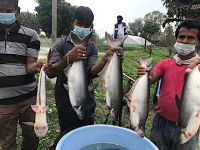
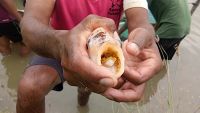
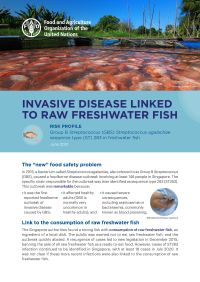
In 2015, a bacterium called Streptococcus agalactiae, also referred to as Group B Streptococcus (GBS), caused a foodborne disease outbreak involving at least 146 people in Singapore, associated with the consumption of raw freshwater fish. The specific strain responsible for the outbreak was later identified as sequence type 283 (ST283). Invasive GBS ST283 disease is also found in other countries in and around Southeast Asia. FAO has published a fact sheet and a risk profile for GBS ST283, which are available for free download. These documents provide guidance on risk reduction, and practical recommendations for food safety competent authorities.
28 June 2021Woro Yuniati, Ratna Fadillah, Sri Rejeki, Lestari Widowati, Restiana Ariyati, Apri Astra, Roel Bosma | 1831 Downloads | .pdf | 3.33 MB
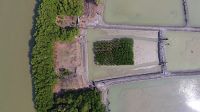
Over the last five decades, over 30 million people along Java’s north coast have experienced subsidence and subsequent soil erosion. In 2015, Building with Nature Indonesia (BwNI-Demak) started a coastal protection project in 10 communities of nine coastal villages of Demak regency. The protection measures introduced included the use of permeable structures (dams) that successfully capture sediment and support natural recovery of mangroves, and aquaculture field schools, to train small-scale farmers on good aquaculture practices such as low external inputs sustainable aquaculture, associated mangrove aquaculture and multi-trophic srhimp aquaculture.
The 88th edition of the Quarterly Aquatic Animal Disease Report contains information from thirteen governments. The foreword provides an announcement on the new format for the Aquatic Animal Disease Report from January 2021 onwards.