Presenters who identify themselves as youth (< 35 years) as part of their registration in the Global Conference on Aquaculture Millennium +20 will automatically be entered into a poster competition. Winners have a chance of receiving travel funding (please note the availability of this award will depend on the realities of global travel in September). Winners will also receive an opportunity to present a “lightening presentation” during a plenary session on the last day. This is an opportunity for young researchers to present to a large audience. Winners will also be invited to prepare a brief article for the FAO Aquaculture Newsletter and will have their names included in the Conference Proceedings.
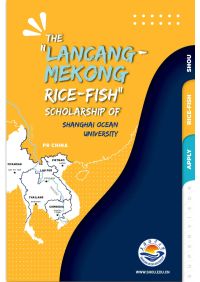
Shanghai Ocean University is offering master and PhD scholarships for aquaculture and hydrobiology-related majors interested in studying rice-fish farming in the Lancang Mekong River area. The scholarship programme is open to nationals of Myanmar, Cambodia, Lao PDR, Thailand and Vietnam who are less than 35 years old and have a bachelor degree with good academic record. The scholarships include full tuition fee waiver, accommodation, living allowance and medical insurance. Applications close 30 May 2021.
This report summarises the proceedings of the 19th meeting of the Advisory Group, held 26-27 November 2020 via video conference. The group's role includes reviewing disease trends and emerging threats in the region, identifying developments in global aquatic disease issues and standards, evaluating the Quarterly Aquatic Animal Disease Reporting Programme and providing guidance on regional strategies to improve aquatic animal health management.
Video recordings of technical presentations from the Online Consultation on Strategies for Hepatopancreatic Microsporidiosis caused by Enterocytozoon hepatopenaei (9-10 February 2021) are now available for viewing via Youtube. Presentations include information on the history of EHP, development of research tools, transmission route and recommendations for its control on farm.
Please visit NACA's Youtube channel to access the videos. Our Youtube channel is brand new, please consider subscribing for more technical aquaculture videos!
The 87th edition of the Quarterly Aquatic Animal Disease Report contains information from fifteen governments. The foreword discusses the 19th Meeting of the Asia Regional Advisory Group on Aquatic Animal Health, held 26-27 November 2020.