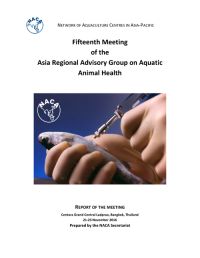
The Asia Regional Advisory Group on Aquatic Animal Health meets annually to discuss regional health issues including emerging disease threats. This report includes a review of regional disease status circa 2002, global and regional disease reporting arrangements, global issues and standards, progress in implementation of the Regional Technical Guidelines on Health management for the Responsible Movement of Live Aquatic Animals, identification and designation of regional aquatic animal health resources and regional and international cooperation.
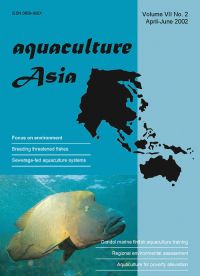
Prawn farm energy audits. Freshwater fish farming and poverty alleviation in Bangladesh. Artificial propagation for conservation of endangered species. Sewerage-fed aquaculture systems of Kolkata. Rice-fish farming in India. The use of lime, gypsum, alum and potassium permanganate in water quality management. Fish gene technology research in China. Low-salinity shrimp farms. Seed production of Clarius batrachus. Supplying good-quality seed for sustainable aquaculture and more.
The Kathmandu symposium on coldwater fishes made recommendations covering three major themes: (1) distribution and conservation of coldwater fishes; (2) role of coldwater fishes in rural development and poverty alleviation; and (3) coldwater fisheries and aquaculture development. This report presents the the recommendations of the three working groups. The symposium recommended regional cooperation among countries of the Trans-Himalayan region be strengthened for effective sharing and exchange of skills, experiences and technical cooperation.
1 January 2002 | T. Petr and S.B. Swar (eds.) | 9664 Downloads | .pdf | 2.17 MB
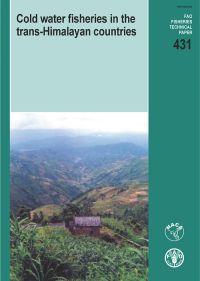
This volume is the proceedings of the Symposium on Cold Water Fishes of the Trans-Himalayan Region, held in July 2001 in Kathmandu, Nepal. In 32 presentations it reviewed information, experiences, ideas and findings related to fish and fisheries in the region, including fish species distribution, fishing intensity, socio-economic conditions and livelihoods of fisher communities, as well as to the impact of environment degradation, conservation measures and aquaculture technologies for indigenous and exotic cold water fish.
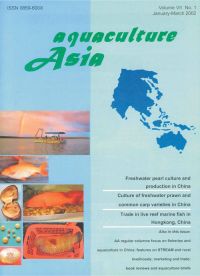
Chemical residues. Live reef fish trade in Hong Kong. Barramundi farming in Australia. Freshwater pearl and prawn production in China. Status of common carp varieties under culture in China. Induced spawning of Pangasius sutchi. Cambodian farmers innovate cost-effective variations on Chinese hatcheries. Genes and fish. Improving rural livelihoods in Cambodia, Vietnam, Nepal and the Philippines through the STREAM Initiative. Marine finfish news, book reviews and more.
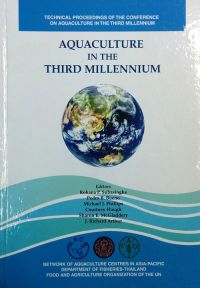
This volume, the third major publication arising from the Conference on Aquaculture in the Third Millennium, contains the information essential to conduct well-informed discussion of sustainable aquaculture development - both at the Conference, as well as after. The information provide basic reference points on the progress, direction and magnitude of aquaculture changes, and the factors associated with these changes, within global, regional, sectoral, thematic and technical perspectives.
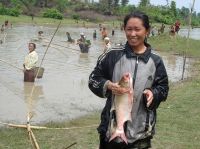
Culture-based fisheries (CBF) are practices to enhance fish stocks in waters that don't have enough natural recruitment to sustain a fishery. CBF practices are usually applied in small water bodies such as village dams and irrigation reservoirs. Fish growth is driven by the natural productivity of the waters. Usually there is no feeding and the fish are left to forage on natural food supplies. Ownership and management of the stock distinguish CBF as form of extensive aquaculture.
The Asia Regional Advisory Group on Aquatic Animal Health meets annually to discuss regional disease issues including emerging disease threats. The group was established by the Governing Council of NACA to provide advice to member governments in the Asia-Pacific region. This collection comprises the reports of the annual meetings of the group. The reports are a rich source of information concerning the current disease status of the region and new or emerging diseases of aquatic animals.
1 December 1998 | Din Jie-yi, Guo Xianzhen, Fang Xiu-zhen, Liu Mei-zhen and Zhang Wen-you | 1526 Downloads | .pdf | 188.68 KB
An investigation on the effect of application of livestock manure, the biomass of aerobic heterotrophic bacteria and Colicin population and distribution of Aeromonas, Pseudomonas and pathogenic bacteria of the human digestive tract which are also present in the body mucus of black carp, grass carp, silver carp and bighead carp as well as in pond water (on the application of manure of chicken, duck, cow and pig) was conducted in the fish farming areas in Wuxi, China.
1 December 1985 | Mali Boonyaratpalin, E.W. McCoy and Tanaporn Chittapalapong | 2973 Downloads | .pdf | 194.65 KB
This publication describes the culture practices and socio-economic aspects of snakehead farming in Thailand circa 1985. It covers snakehead biology, culture systems, site selection, stocking and rearing, feeding and health aspects. The paper also describes economic profile of snakehead farmers, seed procurement, feed costs and feeding issues, fixed, variable and opportunitic costs of production. It also investigates the relationship between farmer experience, farm size, and profitability of snakehead farming.
Ths paper enumerates different carp integrated farming systems being prevalent in Asia along with successful case studies indicating potential and constraints of such systems. It recommends to integrate carp farming with agriculture and irrigation, livestock farming, sewage utilisation and water pollution control not only to increase the productivity of land and water and improve the economic conditions of poor farmers but also to maintain health and hygiene of the rural poor and city dwellers alike.
This document briefly describes the status of the aquaculture in the Regional Aquaculture Lead Centre for Thailand circa 1981, in terms of available species and research priorities. Work was conducted on air-breathing catfish Clarias batrachus, snakehead Channa striatus, giant freshwater prawn Macrobrachium rosenbergii, silver barb Puntius gonionotus, snakeskin gourami Trichogaster pectoralis, mussels Perna viridis and oysters Crassostrea spp. Includes brief descriptions of culture methods prevalent for these species at the time.