Health and Biosecurity

The Health and Biosecurity Programme assists members to reduce the risks of aquatic animal disease impacting the livelihoods of farmers, national economies, trade, environment and human health by:

  • Improving regional cooperation in aquatic animal health and welfare.
  • Developing and implementing national strategies on aquatic animal health.
  • Improving surveillance, reporting and response to disease emergencies.
  • Promoting harmonisation of diagnostic procedures and risk assessment.
  • Widespread promotion of better aquatic animal health management practices at the farm level.

Key activities

Key activities of the programme include:

  • Convening the annual meeting of the Asia Regional Advisory Group on Aquatic Animal Health, coordinating the Quarterly Aquatic Animal Disease Report and bringing regional issues to the attention of global standard setting bodies such as the Office International des Epizooties.
  • Establishment and expansion of a three-tier shared resource in aquatic animal health.
  • Development of farm-level health management tools for key aquaculture commodities.
  • Supporting regional disease surveillance and reporting.
  • Strengthening aquatic animal health and biosecurity in the region.
  • Facilitating harmonisation in disease diagnostic techniques.
  • Developing resource material in support of diagnosis and surveillance.

Contacts

Creative Commons Attribution.
Related

Subject tags

A collection of subject tags relating to technical matters.

In this collection

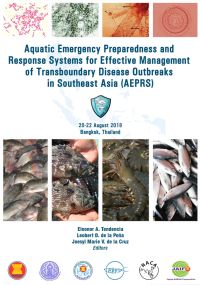
ASEAN Regional Technical Consultation on Aquatic Emergency Preparedness and Response Systems for Effective Management of Transboundary Disease Outbreaks in Southeast Asia

The ASEAN Regional Technical Consultation on Aquatic Emergency Preparedness and Response Systems for Effective Management of Transboundary Disease Outbreaks in Southeast Asia was held from 20-22 August 2018 in Bangkok, Thailand. The consultation discussed the status of and/or need for aquatic emergency preparedness and response systems for effective management of transboundary disease outbreaks in Southeast Asia. Issues were addressed through country reports, technical presentations and a workshop.

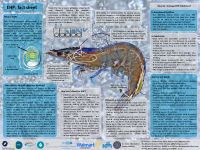
Fact sheet on Enterocytozoon hepatopenaei, a microsporidian parasite of shrimp

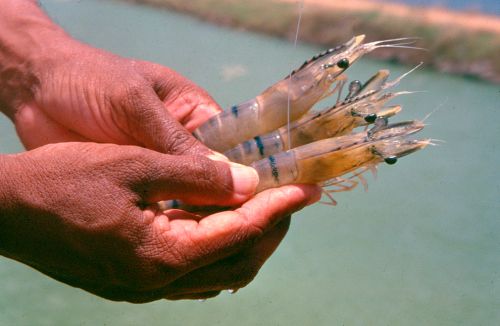
EHP or Enterocytozoon hepatopenaei is a fungal microsporidian parasite that infects the hepatopancreas (hp) of tiger shrimp (Penaeus monodon) and whiteleg shrimp (P. vannamei) in Thailand and results in slow growth and, in chronic infections, mortalities. EHP is also known from Brunei, China, India, Indonesia, Malaysia, Philippines, Venezuela and Vietnam. This fact sheet provides information on the EHP life cycle, signs of infection, diagnosis and management in both hatcheries and growout, as well technical contacts for further information.

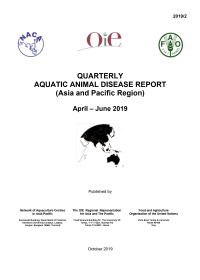
Quarterly Aquatic Animal Disease Report, April-June 2019

The 82nd edition of the Quarterly Aquatic Animal Disease report contains information from eleven governments. The foreword welcomes Dr Huang Jie, NACA's new Director General, a health specialist that has previously participated in the Asia-Pacific Regional Advisory Group on Aquatic Animal Health.

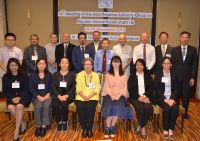
18th Meeting of the Asia Regional Advisory Group on Aquatic Animal Health

The Advisory Group (AG) is a body of technical experts that meets annually to provide advice to NACA member governments on aquatic animal health management. The group is drawn from academia, the private sector and government. The role of the AG is to review disease trends in the region, identify emerging threats and developments in global aquatic disease issues and standards, evaluate the Quarterly Aquatic Animal Disease Reporting Programme operated by NACA/FAO/OIE and regional governments, and to provide guidance on strategies to improve aquatic animal health management. This year’s meeting took place from 18-19 November at the Amari Don Muang Airport Hotel in Bangkok.

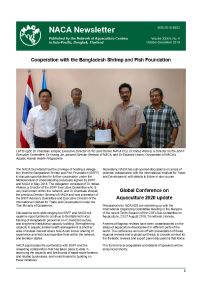
NACA Newsletter, Vol. XXXIV No. 4, October-December 2019

In this issue:

Cooperation with the Bangladesh Shrimp and Fish Foundation; Global Conference on Aquaculture 2020 update; Quarterly Aquatic Animal Disease Report, January-March 2019; A fresh look at inland fisheries and their role in food security and livelihoods; Tuskfish 2 Beta: Testers wanted; APAARI Regional Workshop on Underutilized Fish and Marine Genetic Resources and Their Amelioration; Joint Research Project on Utilization of Thailand Local Genetic Resources to Develop Novel Farmed Fish for Global Market; Impacts of climate change on fisheries and aquaculture.

Quarterly Aquatic Animal Disease Report, January-March 2019

The 81st edition of the Quarterly Aquatic Animal Disease report contains information from twelve governments. The foreword discusses the proposed Regional Collaboration Framework on Aquatic Animal Diseases in Asia and the Pacific. This will initially focus on building a framework of actors with the aim of strengthening laboratory capacity for aquatic animal disease activities in Asia and the Pacific, for example to support emergency response. 

NACA Newsletter, Vol. XXXIV No. 3, July-September 2019

In this issue:

First announcement: Global Conference on Aquaculture 2020, 26-30 October, Shanghai, China; Bangladesh delegation visits Thailand to study shrimp aquaculture; Expert Consultation on Development of Sustainable Aquaculture Guidelines, Rome; Report of the Seventeenth Meeting of the Asia Regional Advisory Group on Aquatic Animal Health; Quarterly Aquatic Animal Disease Report, October-December 2018; Tuskfish 2 Alpha: Testers wanted.

Report of the Seventeenth Meeting of the Asia Regional Advisory Group on Aquatic Animal Health

This report summarises the proceedings of the 17th meeting of the Advisory Group, held 13-14 November 2018 in Bangkok, Thailand. The group's role includes reviewing disease trends and emerging threats in the region, identifying developments in global aquatic disease issues and standards, evaluating the Quarterly Aquatic Animal Disease Reporting Programme and providing guidance on regional strategies to improve aquatic animal health management.

Quarterly Aquatic Animal Disease Report, October-December 2018

The 80th edition of the Quarterly Aquatic Animal Disease report contains information from twelve governments. The foreword discusses revisions to the regional reporting system for 2019.

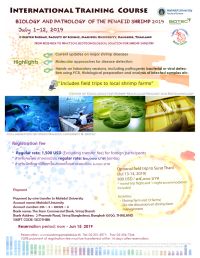
International Training Course - Biology and Pathology of the Penaeid Shrimp

This year’s International Training Course on the Biology and Pathology of Penaeid Shrimp will take place from 1-12 July at Centex Shrimp, Mahidol University, Bangkok. Tailored to those interested in doing shrimp research or learning about shrimp diseases, you will get to learn from the very best in the field about major and emerging shrimp diseases, shrimp farm management, gross inspection and molecular diagnosis of infectious shrimp diseases. You will have opportunities to try your hand in a series of practical sessions.

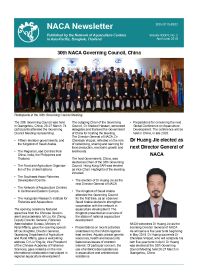
NACA Newsletter, Vol. XXXIV No. 2, April-June 2019

In this issue:

30th NACA Governing Council Meeting, China; Dr Huang Jie elected as the next Director General of NACA; Expert Consultation on Genetically Responsible Aquaculture; Launch of AGRISI: Aquatic Genetic Resource System of India; Aquatic animal epidemiology training course held at NBFGR; Asia-Pacific Laboratory Proficiency Testing Workshop; Proceedings of the FishAdapt Conference; Quarterly Aquatic Animal Disease Report, July-September 2018; Centex Shrimp International Training Course on Biology and Pathology of Penaeid Shrimp; INFOFISH World Shrimp Trade Conference and Exposition.

Asia-Pacific Laboratory Proficiency Testing Workshop

A regional proficiency testing workshop for aquatic animal health laboratories was held from 13-14 March in Bangkok, Thailand. The workshop is part of a programme to provide laboratories with the opportunity to assess their own diagnostic performance, and improve their practices. Eight rounds of proficiency testing will be carried out over a period of four years. 34 laboratories from thirteen countries in the region are participating in the programme. The programme is an initiative of the Australian Government.

Aquatic animal epidemiology training course held at NBFGR

The ICAR-NACA School on Aquatic Epidemiology and Disease Surveillance was held at the ICAR National Bureau of Fish Genetic Resources (NBFGR) from 1-6 March. The school was a collaboration between the Indian Council of Agricultural Research and NACA. The school covered:

  • Concepts and principles of epidemiology.
  • Use of epidemiological principles in design and implementation of surveillance programmes.
  • Sampling considerations for surveillance programmes.
  • Population surveys.
  • Estimation of sensitivity and specificity of diagnostic tests.
  • Questionnaire design.

Quarterly Aquatic Animal Disease Report, July-September 2018

The 79th edition of the Quarterly Aquatic Animal Disease report contains information from eleven governments. The foreword discusses the outcomes of the 17th Meeting of the Asia Regional Advisory Group on Aquatic Animal Health, held in Bangkok, 13-14 November 2018.

Training opportunity: School on Aquatic Animal Epidemiology and Disease Surveillance (ICAR/NACA)

The ICAR-National Bureau of Fish Genetic Resources, Lucknow, India is conducting a School on Aquatic Animal Epidemiology and Disease Surveillance from 1-6 March, 2019. Five seats are available in the school for researchers from NACA member countries (outside of India) on first-come first-served basis. Participants should be nominated by research centres participating in NACA or by member governments. Accommodation, hospitality and meals will be provided for the duration of the training. Travel grants are not available. Please apply / express interest by 13 February 2019.

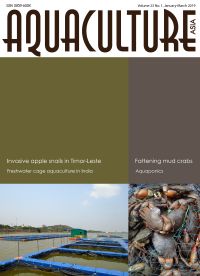
Aquaculture Asia Magazine, January-March 2019

In this issue:

Current status of freshwater cage aquaculture in India; Fattening of mud crab Scylla serrata in estuarine region of south-eastern West Bengal; Aquaponics - sustainable farming method in the fight against hunger; aquatic invasive apple snails (Pomacea spp.) in Timore-Leste - current status, spread and management in rice fields; NACA Newsletter.

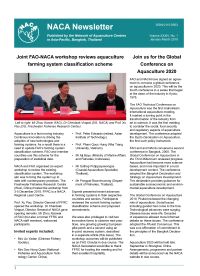
NACA Newsletter, Vol. XXXIV No. 1, January-March 2019

In this issue:

Joint FAO-NACA workshop reviews aquaculture farming system classification scheme; Join us for the Global Conference on Aquaculture 2020; Expert Consultation on Genetically Responsible Aquaculture; Strengthening governance in aquaculture; Pike perch and in-pond raceways; Quarterly Aquatic Animal Disease Report, April-June 2018.

FAO and NACA to convene Global Conference on Aquaculture 2020

FAO and NACA have signed an agreement to convene a global conference on aquaculture in 2020. This will be the fourth conference in a series that began at the dawn of the industry in Kyoto, 1976. Aquaculture 2020 will be held late in the year in China. Arrangements, programme and partner details will be announced via the NACA website in due course.

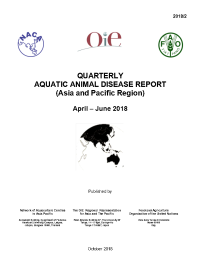
Quarterly Aquatic Animal Disease Report, April-June 2018

The 78th edition of the Quarterly Aquatic Animal Disease Report contains information from twelve governments in the Asia-Pacific region. The foreword discusses three recent aquatic animal health consultations: The ASEAN Regional Technical Consultation on Aquatic Emergency Preparedness and Response Systems for Effective Management of Transboundary Disease Outbreaks in Southeast Asia; the Regional Consultation and Related Study on Antimicrobial Resistance Risk to Aquaculture in Asia; and the Preliminary Consultation on Monitoring of Antimicrobial Resistance in Bacterial Pathogens in Aquaculture.

National Aquatic Animal Health Coordinators and OIE National Focal Points for Aquatic Animals

A contact list of national focal points for NACA's Aquatic Animal Health Programme and OIE.