Livelihoods, gender and social issues

Aquaculture livelihoods and social issues in rural communities.

Creative Commons Attribution.

Related

Subject tags

A collection of subject tags relating to technical matters.

In this collection

Role of fish and fisheries in national nutrition of Pakistan

The fisheries sector of Pakistan comprises over 290,000 square kilometres of marine waters and 8.6 million hectares of inland water resources including the world’s largest irrigation system and favourable climatic conditions for aquaculture development. Despite these promising circumstances Pakistan stands thirty-third in world fisheries production. This article considers the true fish production potential of Pakistan and makes a comparison with other regional countries that produce more despite having less water resources, e.g. Bangladesh. Considering the ground reality and gaps in fisheries statistics collection, assessment and reporting, the possibility that fish production and consumption are under reported is explored.

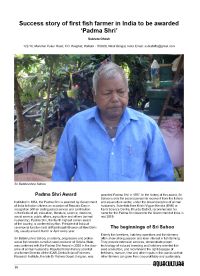
Success story of first fish farmer in India to be awarded ‘Padma Shri’

Instituted in 1954, the Padma Shri is awarded by the Government of India to Indian citizens on occasion of Republic Day in recognition of their distinguished service and contribution. Sri Batakrushna Sahoo, an elderly, progressive fish breeder and seed producer of Odisha State, was conferred with the Padma Shri Award in 2020 in the discipline of animal husbandry. He is only the second person to receive it from the fishery and aquaculture sector. This article documents Sr Sahoo’s beginnings, early entry into fish seed production, his success and role in educating others over the years.

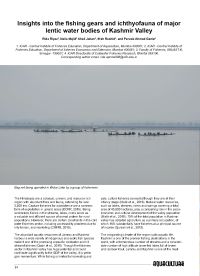
Insights into the fishing gear and ichthyofauna of major lentic water bodies of Kashmir Valley

The abundant aquatic resources of Jammu and Kashmir harbour a wide variety of indigenous and exotic fish species make it one of the promising areas for coldwater and hill stream fisheries. The fish fauna of Kashmir Valley is mainly represented by the families Cyprinidae, Cobitidae, Silurideae, Poecilideae, Sisorideae and Salmonideae. The fisheries sector in Kashmir valley has huge potential but is yet to gain momentum. This article describes the fish fauna of the lakes of Jammu and Kashmir, and some of the indigenous fishing gears commonly used by people living in the area.

NACA Newsletter, Vol. XXXV No. 2, April-June 2020

In this issue:

Urgent warning: Positive PCR detection results for infectious myonecrosis virus (IMNV) and decapod iridescent virus 1 (DIV1) in captured Penaeus monodon from the Indian Ocean; COVID-19 news; Urgent announcement on usefulness of the lymphoid organ (LO) as an additional prime target for diagnosis of decapod iridescent virus 1 (DIV1) in diseased P. vannamei; Fresh or frozen seafood?; Report of the Eighteenth Meeting of the Asia Regional Advisory Group on Aquatic Animal Health; COVID-19 fallout could push half a billion people into poverty in developing countries; Simple techniques double crablet production.

NACA Newsletter, Vol. XXXV No. 1, January-March 2020

In this issue:

Join us for the aquaculture event of the decade! 18th Meeting of the Asia Regional Advisory Group on Aquatic Animal Health; New Director General of the Department of Fisheries, Thailand; Thailand holds National Sea Bass Fair; Tuskfish CMS 2.0 is available; Regional consultations on strengthening aquaculture governance and demographic changes in fishing communities; INFOFISH World Shrimp Conference and Exposition.

Aquaculture Asia Magazine, October-December 2019

In this issue:

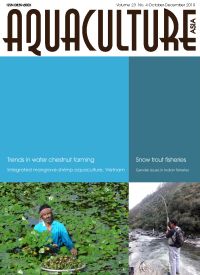
Trends in water chestnut Trapa bispinosa farming in West Bengal, India; Improving livelihoods and increasing coastal resilience: A look at integrated mangrove-shrimp aquaculture in Vietnam; Snow trout fisheries in Arunachal Pradesh of the Eastern Himalayas; Gender issues in the fisheries sector of India; NACA Newsletter.

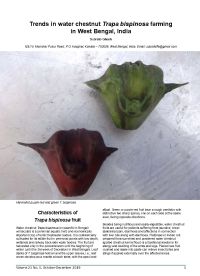
Trends in water chestnut Trapa bispinosa farming in West Bengal, India

Water chestnut Trapa bispinosa (or paanifol in Bengali vernacular) is a perennial aquatic herb and economically important crop of lentic freshwater bodies. It is commercially cultivated for its edible fruit in shallow perennial ponds, wetlands and railway track-side water bodies. The fruit are harvested only in the post-monsoon until the beginning of winter. This article describes the farming and management of water chestnut, market chains, economic returns and role of this crop in the livelihoods of farmers in West Bengal, India.

Improving livelihoods and increasing coastal resilience: A look at integrated mangrove-shrimp aquaculture in Vietnam

In the last decade, integrated mangrove-shrimp aquaculture has emerged as a means of cultivating shrimp while maintaining the benefits of rearing shrimp in their natural environment. Furthermore, mangrove-shrimp aquaculture provides an additional means for farmers to secure livelihoods. Increased mangrove coverage provides considerable benefits to ecosystems and communities. Mangrove forests have also been shown to increase coastal resilience to climate change as they mitigate the effects of climate change and erosion. This research attempts to assess the feasibility of large scale implementation of integrated mangrove-shrimp aquaculture in coastal Vietnam.

Regional consultations on strengthening aquaculture governance and demographic changes in fishing communities

Two consultations were held back to back in Thailand from 5-7 November, namely the Consultation on Strengthening Governance of Aquaculture for Sustainable Development in Asia-Pacific and the Consultation on Demographic Changes in Fishing Communities in Asia. The consultations were held at the Centara Grand Hotel at Ladprao, Bangkok. The consultations were attended by 29 participants from 15 countries in the Asia-Pacific region. The consultations were jointly organised by FAO and NACA. Audio recordings are available of some presentations.

NACA Newsletter, Vol. XXXIV No. 4, October-December 2019

In this issue:

Cooperation with the Bangladesh Shrimp and Fish Foundation; Global Conference on Aquaculture 2020 update; Quarterly Aquatic Animal Disease Report, January-March 2019; A fresh look at inland fisheries and their role in food security and livelihoods; Tuskfish 2 Beta: Testers wanted; APAARI Regional Workshop on Underutilized Fish and Marine Genetic Resources and Their Amelioration; Joint Research Project on Utilization of Thailand Local Genetic Resources to Develop Novel Farmed Fish for Global Market; Impacts of climate change on fisheries and aquaculture.

Aquaculture Asia Magazine, July-September 2019

In this issue:

Farming of Asian seabass Lates calcarifer in freshwater impoundments in West Bengal, India; An integrated approach to contemporary fish farming practice incorporating traditional knowledge in mid hills in India: A success story; Mud crab farming: An alternative livelihood in the Indian Sundarban; Trout fisheries resources and potentialities in the Menchukha region of Arunachal Pradesh; NACA Newsletter.

Mud crab farming: An alternative livelihood in the Indian Sundarban

Mud crab is one of the most valuable crustaeceans in both domestic and export markets. They are hardy and can survive out of water for extended periods at lower temperatures, making them idea for live export. Mud crab fattening predominates farming practices in Sundarban as opposed to grow-out culture. This report describes current practces adopted by mud crab farmers in India with special reference to the Indian Sundarban, where mud crab capture and farming are an important livelihood for small holder farmers.

An integrated approach to contemporary fish farming practice incorporating traditional knowledge in mid hills in India: A success story

Farming in the mid hills is largely characterised by small land holdings, low productivity, scarcity of agricultural land and irrigation facilities, and uneven terrain. Low returns in farming and unemployment problems in the mid-hills are compelling youth to move to the cities to find livelihoods. Adoption of integrated farming practices utilising available land, water and waste products more efficiently can improve farm productivity and income. The achievements of a young farmer from a remote village working to motivate others are documented in this article.

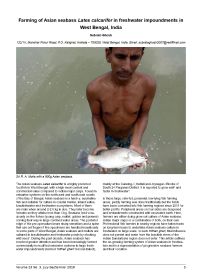
Farming of Asian seabass Lates calcarifer in freshwater impoundments in West Bengal, India

The Asian seabass Lates calcarifer is a highly preferred foodfish in West Bengal, with a high meat content and commercial value compared to Indian major carps. Found in estuarine systems on the north-east and south-east coasts of the Bay of Bengal, Asian seabass is a hardy, euryhaline fish and suitable for culture in coastal marine, inland saline, brackishwater and freshwater ecosystems. During the past decade, Asian seabass has received greater attention and has been increasingly farmed commercially in modified-extensive systems in large freshwater impoundments (termed ‘mithen gheri’ in local dialect).

Aquaculture Asia Magazine, April-June 2019

In this issue:

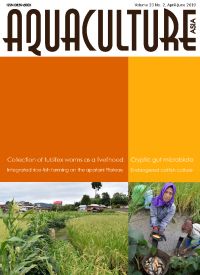
Collection of tubifex worms from the Adi Ganga canal, West Bengal as means of livelihood; Some facts for the grow-out culture of an endangered catfish, Clarias magur; The cryptic domain of gut microbiota in composite culture of Indian major carps; Integrated rice-fish farming in hilly terraces of the Apatani Plateau, Arunachal Pradesh.

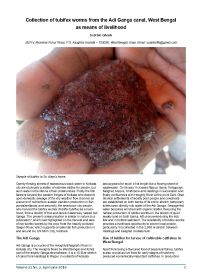
Collection of tubifex worms from the Adi Ganga canal, West Bengal as means of livelihood

Nutrient-laden canal water from Kolkata is the lifeline of two communities: Firstly the fish farmers beyond the eastern fringes of Kolkata who depend upon domestic sewage of the dry weather flow channel as a source of nutrients to sustain plankton production in fish ponds/wetlands; and secondly, the semi-poor city people, who harvest the tubifex worms (Tubifex tubifex) as a livelihood, from a stretch of derelict waterway named Adi Ganga. This article describes the practices of tubifex collectors and the market chain for the worms.

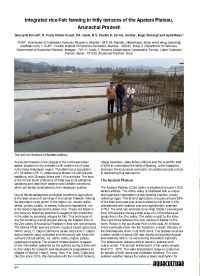
Integrated rice-fish farming in hilly terraces of the Apatani Plateau, Arunachal Pradesh

Rice-fish farming is a popular activity amongst the Apatani tribe of the Ziro valley, conducted in their wet rice terraces. The strains of fish cultured include mirror carp Cyprinus carpio specularis, scale carp C. carpio communis and leather carp C. carpio nudus, cultivated synchronously with local rice cultivars (Oryza sativa), viz. eamo, ampu, mipya, pyapu, pyaping and eylang. This article describes the integrated farming practices and socio-economic circumstances of the Apatani in the Yachuli, Hapoli, Hong, Hari, Hija, Bula, Dutta and Old Ziro villages.
FAO and NACA to convene Global Conference on Aquaculture 2020

FAO and NACA have signed an agreement to convene a global conference on aquaculture in 2020. This will be the fourth conference in a series that began at the dawn of the industry in Kyoto, 1976. Aquaculture 2020 will be held late in the year in China. Arrangements, programme and partner details will be announced via the NACA website in due course.

Aquaculture Asia Magazine, October-December 2018

In this issue:

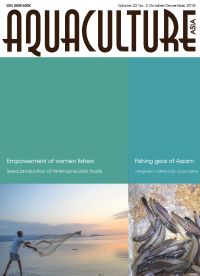
Concept of seed production of Heteropneustes fossilis in farmers' fields in West Bengal, India; Fishing gear and practices in flood waters of Assam; Fisherwomen empowerment: Shedding light on the invisible gender; Integrated multi-trophic aquaculture systems: A solution of sustainability.

Fishing gear and practices in flood waters of Assam

Annual flooding of the Brahmaputra and Barak rivers provides Assam with some of the finest floodplain wetlands in India. Local people have adapted their livelihoods to the flood cycle and fishing remains a traditional activity of tremendous importance in rural communities, with a diverse range of fishing gear and methods developed. This article documents some of the major fishing gears of Assam, with reference to their efficacy and targeted fish species.