Aquatic plants

Information relating to the aquaculture and mangroves, seaweeds and aquatic plants.

Creative Commons Attribution.

Related

Species / commodity tags

Major farmed commodity or species groups.

In this collection

Training of Trainers: Strengthening capacity of small holder ASEAN aquaculture farmers

This is the manual for the "train the trainers" course aiming to increase the capacity of small-scale farmers in ASEAN countries. The manual focusses on five countries and commodities: Snakehead (Cambodia), Tilapia (Thailand), seaweed (Philippines), marine fish (Indonesia) and shrimp (Vietnam). In this volume, lectures presented by experts are included. The training program included technical aspects related to the culture of commodities, marketing, access to information, organization of farmer groups, gender and good culture practices.
The changes of mangrove ecosystem in Mahakam Delta, Indonesia: A complex social-environmental patter on linkages in resources utilisation

The vegetation in Mahakam Delta is predominantly mangrove forest that consists of a pedada zone, Rizophora zone, transition zone, Nipa zone and nibung zone. Prior to 1980, mangrove vegetation in Mahakam Delta was pristine. Considerable changes in the extent of mangrove ecosystem occurred between 1990-2002 until 2001 when about 63% mangrove areas was deforested mainly due to conversion for shrimp ponds. Since 2002, partial efforts for restoration had been taken in mangrove replanting at some sites.

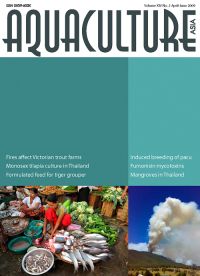
Aquaculture Asia Magazine, April-June 2009

In this issue:

GLOBALGAP standard in Thai shrimp farms: Mission (im)possible? The Victorian trout industry and the bushfires. Small-scale aquaculture in the Ayeyarwady Delta, Myanmar. The history, status and future prospects of monosex tilapia culture in Thailand. Mangroves of Nakhon Si Thammaarat Province in Souther Thailand. Induced breeding of pacu Piaractus brachypomus in captivity. Fumosins - mycotoxins of increasing importance in fish. Microsatellite DNA markers, a fisheries perspective. Formulated feed for tiger grouper grow out.

Multidisciplinary situation appraisal of mangrove ecosystems in Thailand

This report provides an appraisal of the status of mangrove ecosystems and linkages with associated communities and their livelihoods. The report addresses ecosystem health and function, the livelihoods of poor people, goods and services and gender issues. The major causes of impacts to mangrove forest and related aquatic resources are considered along with community perceptions of trends in natural resource quantity, economy, social relations and conflicts. Relevant policies and laws are briefly reviewed.

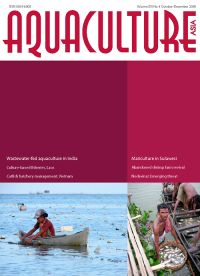
Aquaculture Asia Magazine, October-December 2008

In this issue:

An increasingly secure future for wastewater-fed aquaculture in Kolkata, India? First culture-based fisheries growth cycle in Lao PDR is overhwelmingly encouraging. Revival of abandoned shrimp farms in Andhra Pradesh. Growth of industries linked with aquaculture in Kolleru Lake area, India. Applications of nutritional biotechnology in aquaculture. Technical and management aspects of catfish hatcheries in Vietnam. Asian seabass farming. Mariculture development opportunities in southeast Sulawesi, and much more.

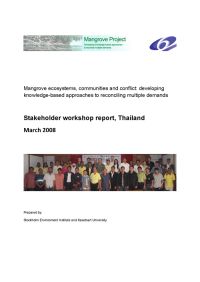
Mangrove Project: Stakeholder workshop report, Thailand

In this report, we summarise the outcome of the first MANGROVE Project stakeholder workshop in Nakhon Si Thammarat in the Gulf of Thailand. The objectives of the workshop, held 6 March 2008, were to review and discuss project problem definition from different stakeholder perspectives, to understand how different stakeholders are affected in different ways, and to understand what kind of solutions are presented and by whom? The workshop was attended by community, local government and NGOs.

Aquaculture Asia Magazine, April-June 2008

In this issue:

From integrated carp polyculture to intensive monoculture in the Pearl River Delta, China. Better management practices for Vietnamese catfish. Ipomoea aquatica - an aquaculture friendly macrophyte. Status of fisheries and aquaculture development in Pakistan. The changing face of post-grad education in aquaculture: Contributing to soaring production and sustainable practices. Hatchery management in Bangladesh. Production of Cirrhinus molitorella and Labeo chrysophekadion for culture-based fisheries in Lao PDR and much more.

Aquaculture Asia Magazine, January-March 2008

In this issue:

Developing guidelines for sustainable freshwater aquaculture planning in Vietnam. Aquaculture production, certification and trade for small-scale farmers. Backyard hatcheries for crustaceans in Thailand. Alternative carp species for diversification in India. Genetic and reproduction technologies for aquaculture and fisheries management of Murray cod. Status of sahar domestication in Nepal. Comparative advantage analysis of shrimp production in Asia. Strategies to improve the livelihoods of the rural poor, Vietnam, and more.

NACA Newsletter Volume XXIII, No. 1, January-March 2008

In this issue:

Better management practices for catfish aquaculture in the Mekong Delta, Vietnam. Developing better management practices for marine finfish aquaculture. Workshop on modelling carrying capacity for tropical finfish cage culture: Towards a consensus view. First comprehensive genetic management plan for Asian fish species: Mahseer. NACA and World Fisheries Trust sign agreement on collaboration. Fish Health Master Class. Second Workshop on Application of Molecular Genetic Techniques in Inland Fisheries and Aquaculture Management. Two new species of spiny eels described from Myanmar. Importance of species identification in conservation. Koh Yao Noi mangrove replanting in celebration of 80th birthday of His Majesty the King of Thailand. Responsible movement of live food finfish within ASEAN: Implementation workshop. Consultation on aquaculture certification guidelines. Strengthening regional mechanisms to maximise benefits to small-holder shrimp farmer groups adopting better management practices.

Aquaculture Asia Magazine, July-September 2007

In this issue:

Buffaloes in favour of culture-based fisheries in Sri Lanka. Aquafeeds in Myanmar: A change from farm-made to factory-made feeds. Challenging myths about seed quality and potential benfits to the rural poor. Catfish Clarius batrachus production using low cost hatcheries. Cage fish culture and livelihoods in the mid-hill lakes of Pokhara, Nepal. Marine fish hatchery training. Rabbitfish Siganus guttatus breeding and larval rearing. Vietnamese extension manual on culture-based fisheries.

Principes Internationaux pour l'Elevage Responsable de la Crevette

L'élevage de la crevette est l’un des secteurs d'aquaculture le plus en essor dans beaucoup de régions du monde, il est également l’un des plus controversés. L'expansion rapide de ce secteur a généré, certes, des sources de revenus pour plusieurs pays, mais elle a été accompagnée par une préoccupation croissante sur les impacts environnemental et social. Les Principes Internationaux pour l'Elevage Responsable de la Crevette fournissent la base sur laquelle les parties prenantes peuvent collaborer pour un développement plus durable de l'élevage de crevette.

负责任虾类养殖国际准则

在世界许多地方,虾类养殖是水产养殖业增长最快,而且也是最具争 议的部门之一。这一部门的快速发展为许多国家创造了收入,但也伴随着 对环境和社会影响的忧虑。《负责任虾类养殖国际准则》在以更可持续的 方式发展虾类养殖方面为利益相关者之间开展合作提供了基础。《国际准 则》由虾类养殖与环境协作计划制定。该协作包括联合国粮食及农业组织 (粮农组织)、亚太水产养殖中心网、联合国环境规划署保护海洋环境免 受陆上活动污染全球行动纲领协调办公室、世界银行和世界自然基金会。

Principios Internacionales para el Cultivo Responsable de Camarón

El cultivo de camarón es uno de los sectores de la acuicultura de más rápido crecimiento y también uno de los más polémicos en muchas partes del mundo. La rápida expansión de este sector generó ingresos para muchos países, pero ha estado acompañada por preocupaciones crecientes relacionadas con sus impactos ambientales y sociales. Los Principios Internacionales para el Cultivo Responsable de Camarón proporcionan las bases sobre las cuales los diversos participantes pueden colaborar en pro de un desarrollo más sostenible de la camaronicultura.

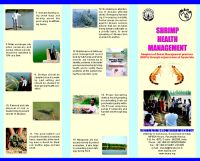
Shrimp health management brochures

Shrimp Health Management brochures provide better management practices in a reader friendly format. These brochures were prepared as extension materials through the village based demonstration programme by the Marine Products Export Development Authority of India and NACA. The programme continues building success and involved a total of 29 villages and 29 Aquaclubs in five Indian states (Andhra Pradesh, Tamilnadu, Orissa, Gujarat, and Karnataka) in 2006.

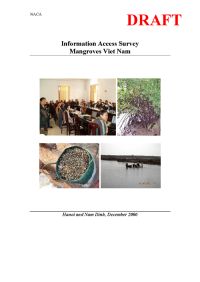
Information access survey on mangroves, Viet Nam

Viet Nam's mangrove forests have been severely impacted by human interventions, with a reduction in forestation from 408,000 ha in 1943 to a low of 150,000 ha in 2000. This study provides an overview of the information needs and communication issues surrounding people living in mangrove regions of Viet Nam. It is hoped that this study will help to raise the awareness of issues surrounding mangrove environments and improve the accessibility to information, for all stakeholders.

Capacity building on sustainable livelihoods analysis and participatory rural appraisal

The practical application of livelihoods approaches is still relatively new in development work and guidance is much sought by field teams. The concept aims to build a comprehensive picture of how people within communities live, rather than approaching development planning from a sectoral perspective such as agriculture, forestry or fisheries, to assist in planning interventions that will benefit present and future generations. This document discusses the concepts of livelihoods and sustainable livelihoods analyses with these objectives in mind.

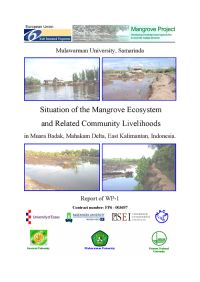
Situation of the mangrove ecosystem and related community livelihoods in Muara Badak, Mahakam Delta, East kalimantan, Indonesia

This reports describes the status of mangrove ecosystems and associated communities in the Mahakam Delta, Indonesia. It describes historical degradation of the mangrove ecosystems for shrimp farming and land speculation. The report describes the livelihoods of the local communities, their usage and connections with the mangrove forests and farming activities, and socio-economic factors impeding the restoration of mangrove habitats, which are in large part related to poverty. Attempts to replant areas are described.

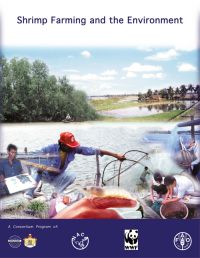
International Principles for Responsible Shrimp Farming

Shrimp farming is one of the fastest growing aquaculture sectors in many parts of the world and also one of the most controversial. Rapid expansion of this sector generated income fo many countries, but has been accompanied by rising concerns over environmental and social impacts. The International Principles for Responsible Shrimp Farming provide the basis upon which stakeholders can collaborate for a more sustainable development of shrimp farming.

หลักปฏิบัติระหว่างประเทศว่าด้วยการเลี้ยงกุ้งอย่างรับผิดชอบ

Shrimp farming is one of the fastest growing aquaculture sectors in many parts of the world and also one of the most controversial. Rapid expansion of this sector generated income fo many countries, but has been accompanied by rising concerns over environmental and social impacts. The International Principles for Responsible Shrimp Farming provide the basis upon which stakeholders can collaborate for a more sustainable development of shrimp farming.

Aquaculture in the Asia-Pacific and the outlook for mariculture in southeast Asia

This paper provides an overview of seafood consumption production in southeast Asia circa 2006. It forecasts a need for aquaculture to expand area under culture and intensity; highlights the potential for fishmeal to constrain growth, and identifies a trend towards cultivation of high-value species. Sources for the review included a regional synthesis of aquaculture developed for a regional workshop in 2005, a review of marine finfish hatchery development and a regional survey of cage fish culture.